A small closet can feel impossible. The rod is full, the shelf is stacked to the ceiling, and there is still a pile of clothes waiting for a home. It is tempting to think the answer is a bigger closet, but most small closets are not actually full — they are just badly used. A few inches are wasted here, a dead corner there, and the door itself takes up space every time it swings open.
Maximizing a small closet is about using every inch on purpose. These 15 smart tricks work with the closet you already have: measuring first, going vertical, and choosing storage that fits tight spaces instead of fighting them. Try them one at a time, and your small closet will hold more, look calmer, and be far easier to use every morning.
1. Measure First and Sketch the Layout
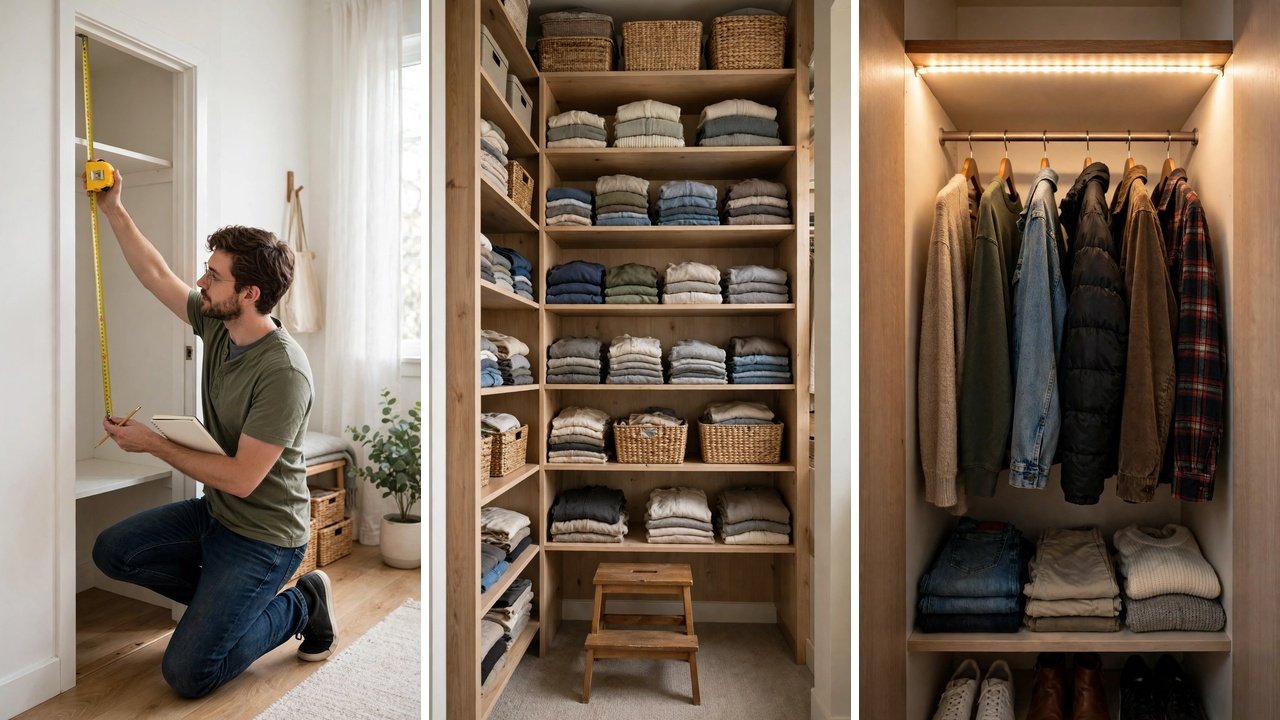
Before you buy a single organizer, measure your closet. Write down the width, depth, and height, and note where the rod sits and how much space is under it. A rough sketch on paper — even a quick one — shows you exactly where the wasted space is, and stops you from buying storage that does not fit.
Most small closets hide at least a foot of unused space above the top shelf or below the hanging clothes. Once you see the measurements, the fixes become obvious: a shelf here, a cart there. Ten minutes with a tape measure saves money and a lot of trial and error later.
2. Take the Door Off
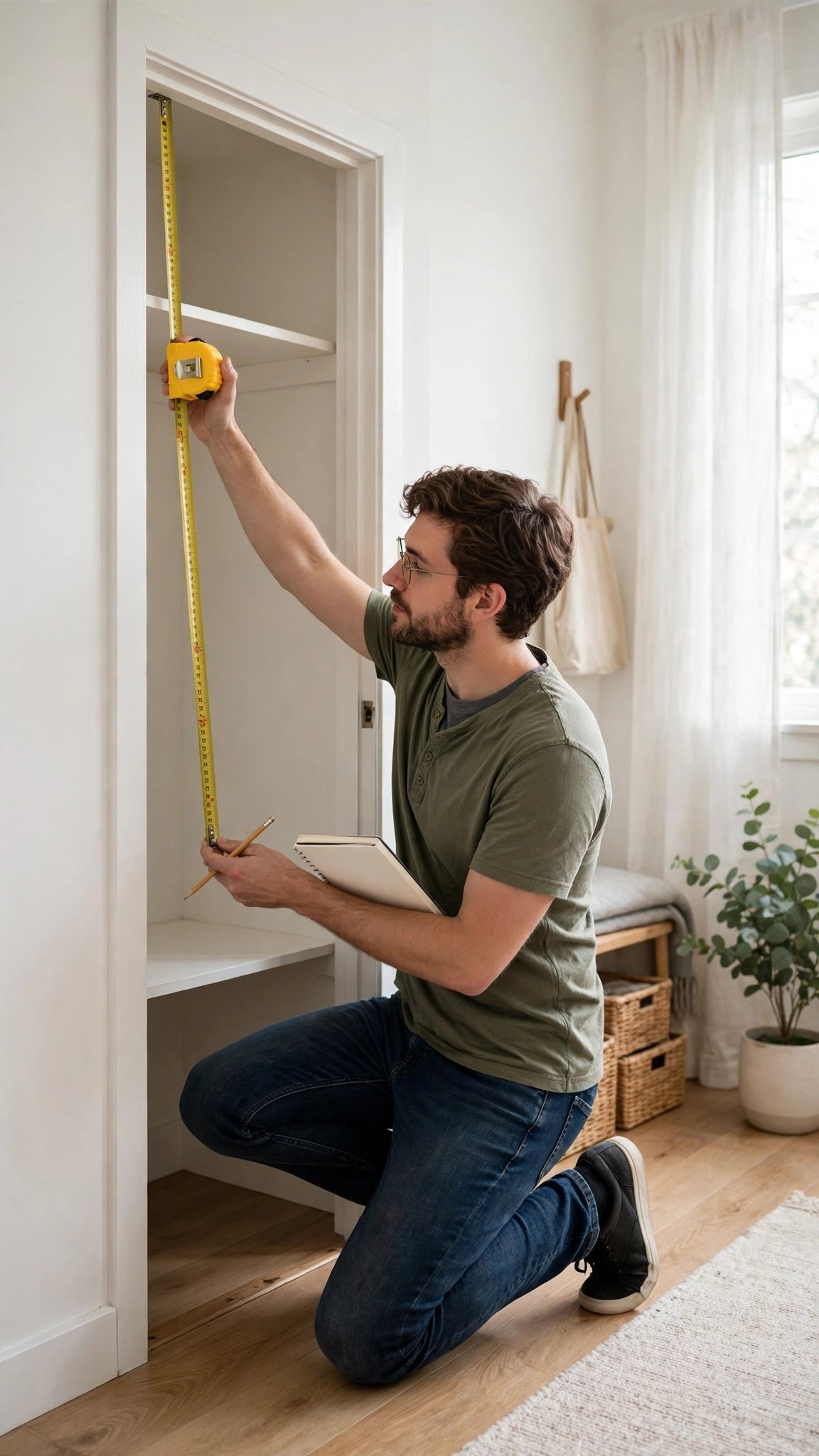
Closet doors, especially swinging ones, eat up space twice — the door itself needs room to swing, and the frame blocks part of the opening. Taking the door off instantly makes a small closet feel bigger and easier to reach into, because you can see and grab everything without standing in a doorway.
If an open closet feels too exposed, hang a simple curtain on a tension rod instead. A curtain takes up no floor space, softens the look, and can be pulled aside completely when you are choosing an outfit. It is a five-minute change with a surprisingly big effect.
3. Shelves Right Up to the Ceiling
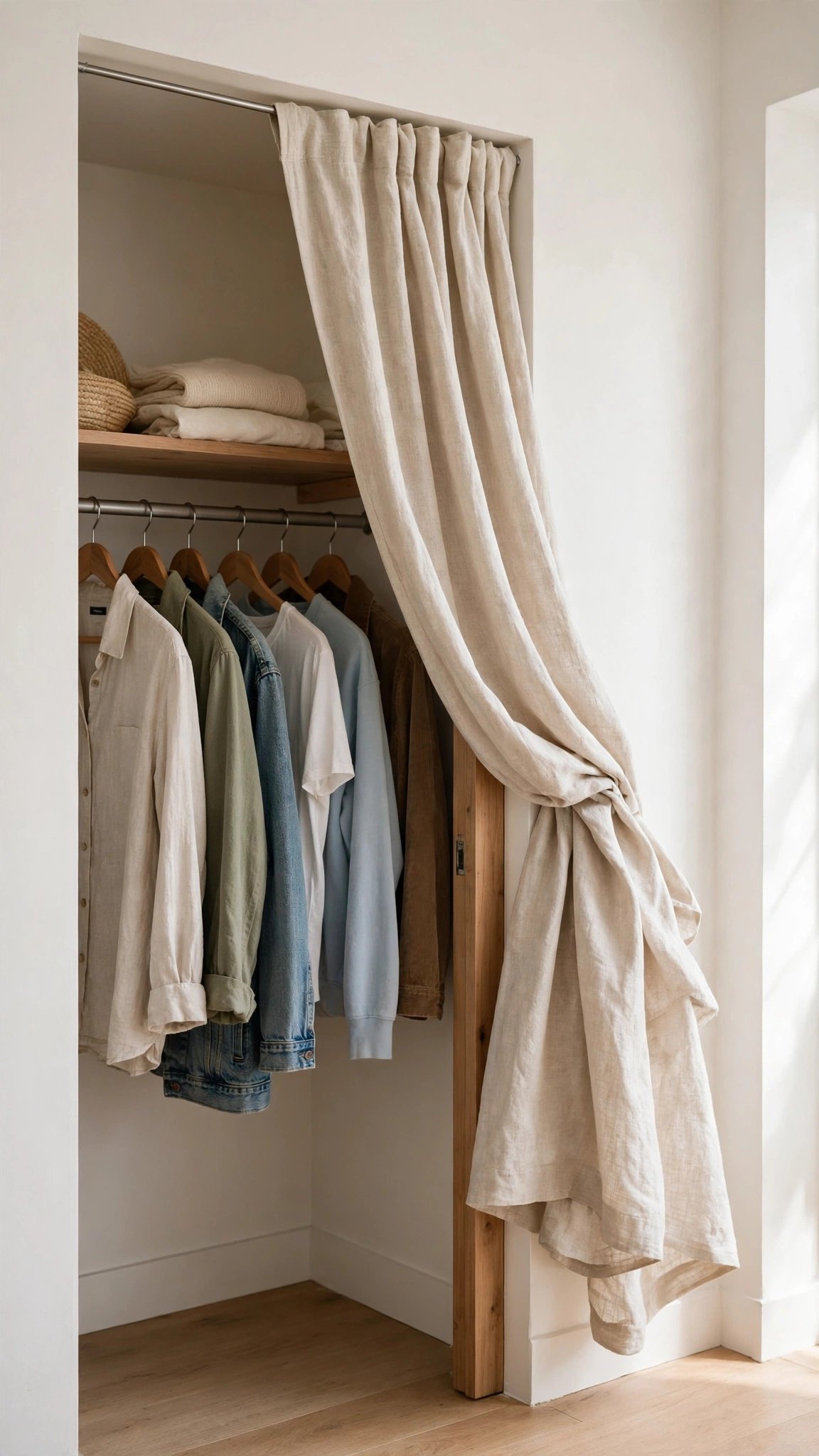
The space near the ceiling is the most wasted part of a small closet, because it feels too high to be useful. Adding one or two shelves that run right up to the ceiling turns that dead zone into real storage for the things you rarely need — spare bedding, out-of-season clothes, or memory boxes. You only reach up there a few times a year, so the height does not matter.
Keep the top shelf for light, bulky things rather than heavy ones, and use bins so nothing falls down on you. A small step stool makes the top shelf genuinely usable. That one extra shelf can hold as much as a whole drawer.
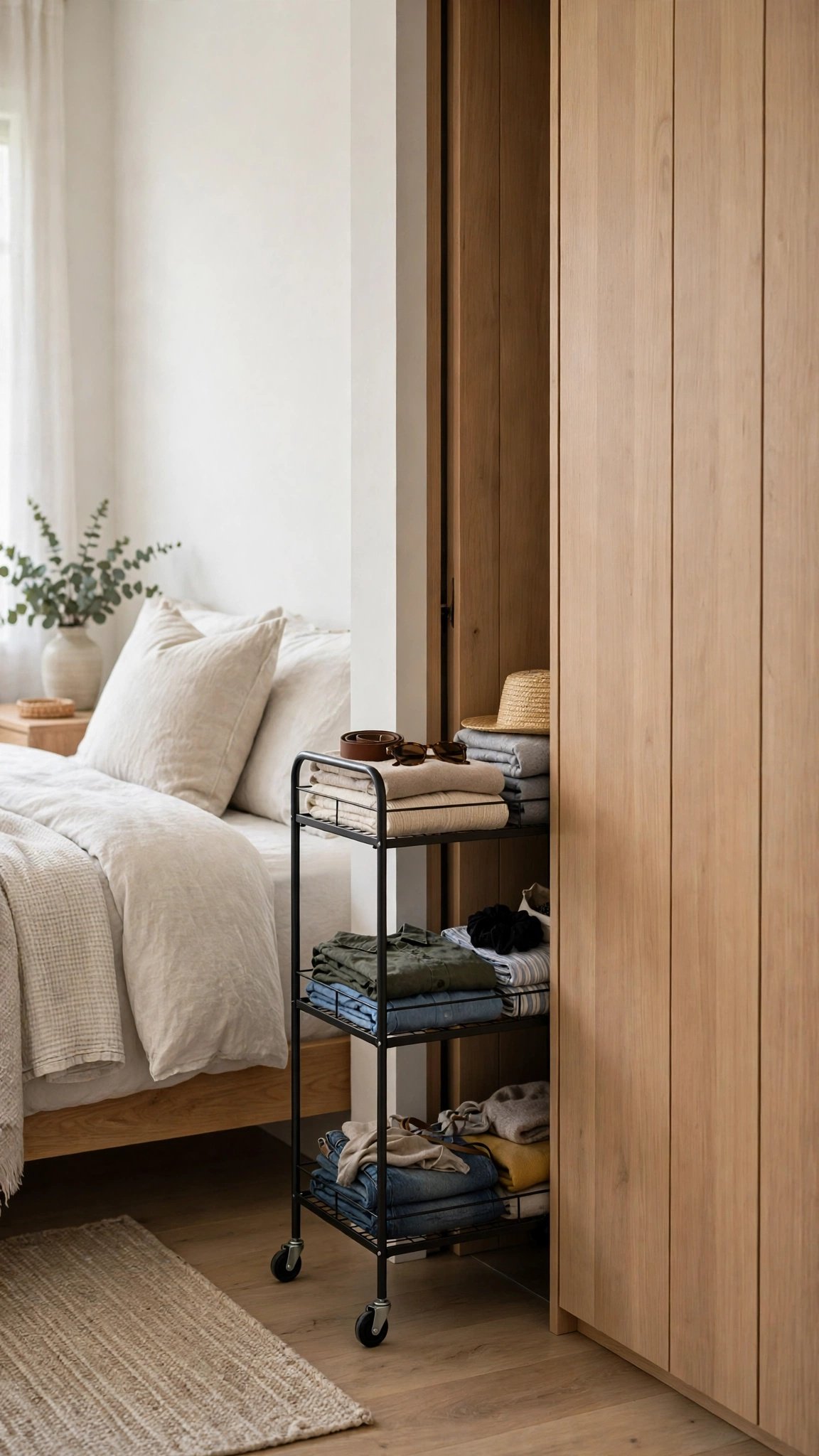
4. A Narrow Rolling Cart for the Gap
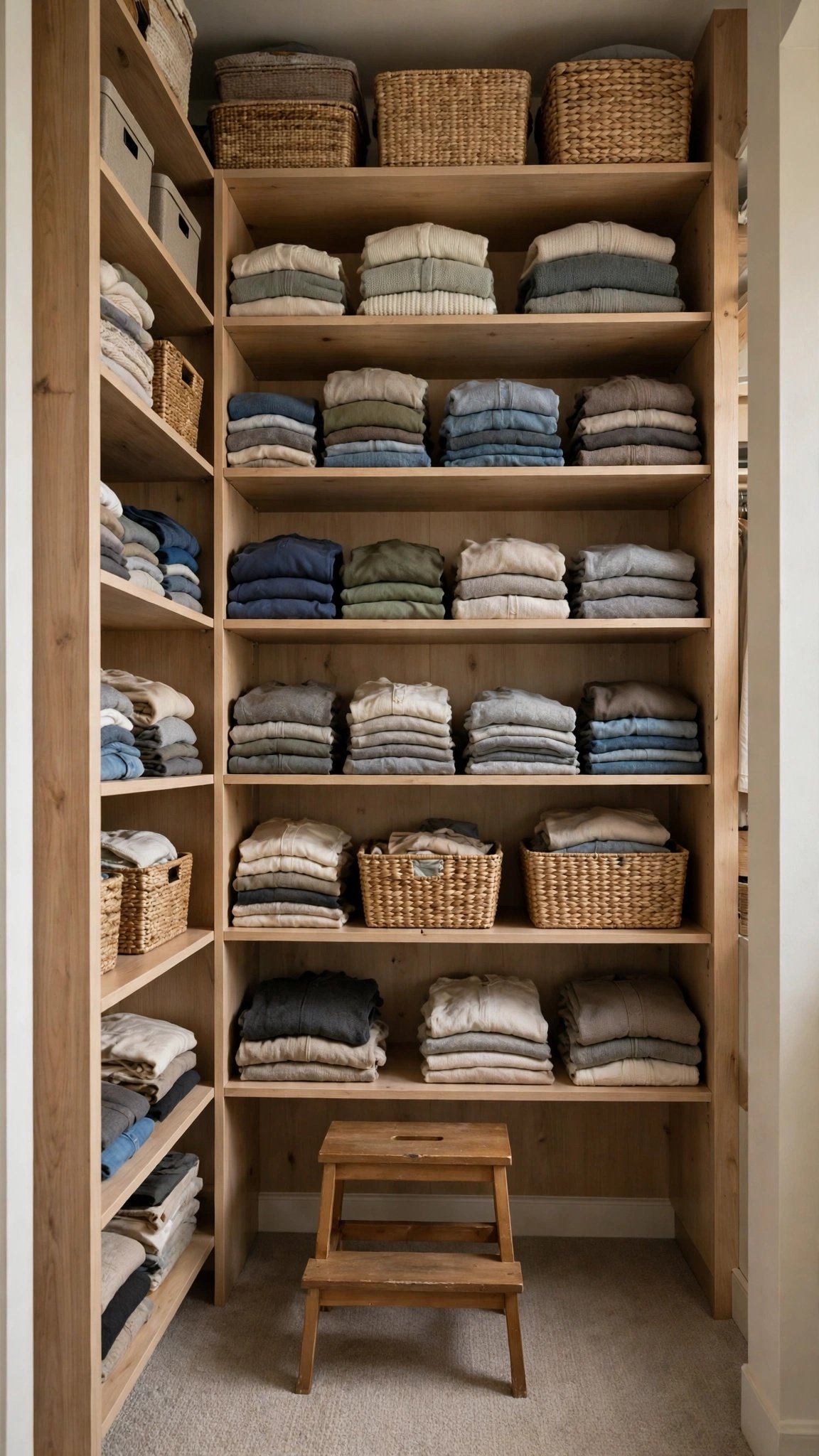
Almost every closet has a gap — a narrow strip between the closet unit and the wall, or beside the door frame — too thin for a shelf and too awkward to ignore. A narrow rolling cart, the kind made for kitchen gaps, slides right into that space and turns it into storage for folded clothes, accessories, or shoes.
Because it rolls out, you can reach everything in it without squeezing your hand into a gap. Measure the gap first, since these carts come in a few widths, and pick the widest one that still slides freely. It is the easiest way to use space that was doing nothing at all.
5. Cascading Hangers to Hang Vertically
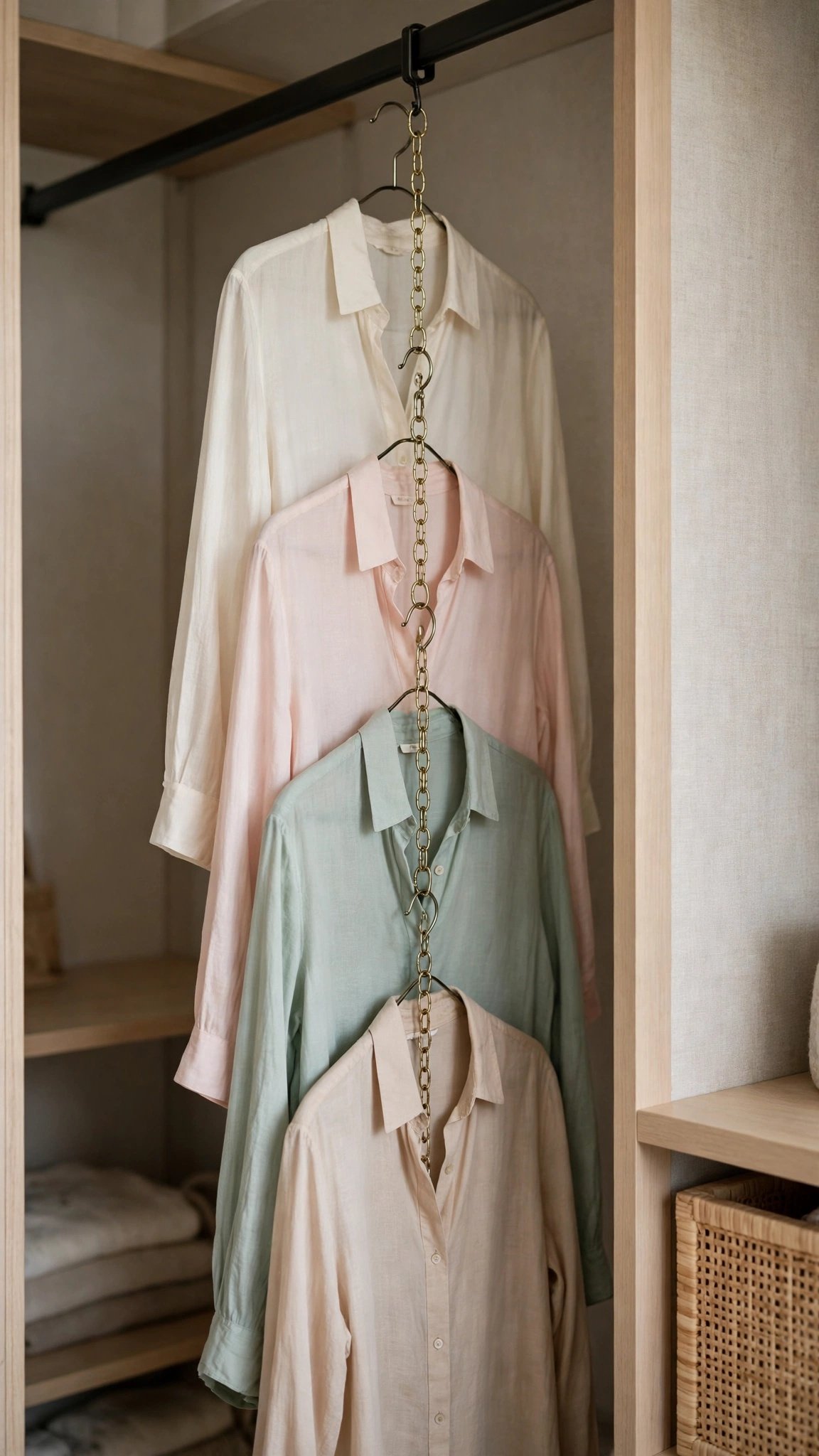
A rod only holds one row of hangers, but cascading hangers let you hang several garments from a single hook, one below the other. Each hook holds a chain of hangers that drops down vertically, so five shirts take up the rod space of one. It is one of the cheapest space tricks there is, and it works best for lightweight tops and blouses.
Keep the chains short — three or four hangers per hook — so the bottom garments do not drag on the shelf below. Group similar items on one chain, like all your work blouses together, so you can lift the whole set out at once. The rod suddenly holds twice as much.
6. Multi-Tier Hanging Shelf Organizer
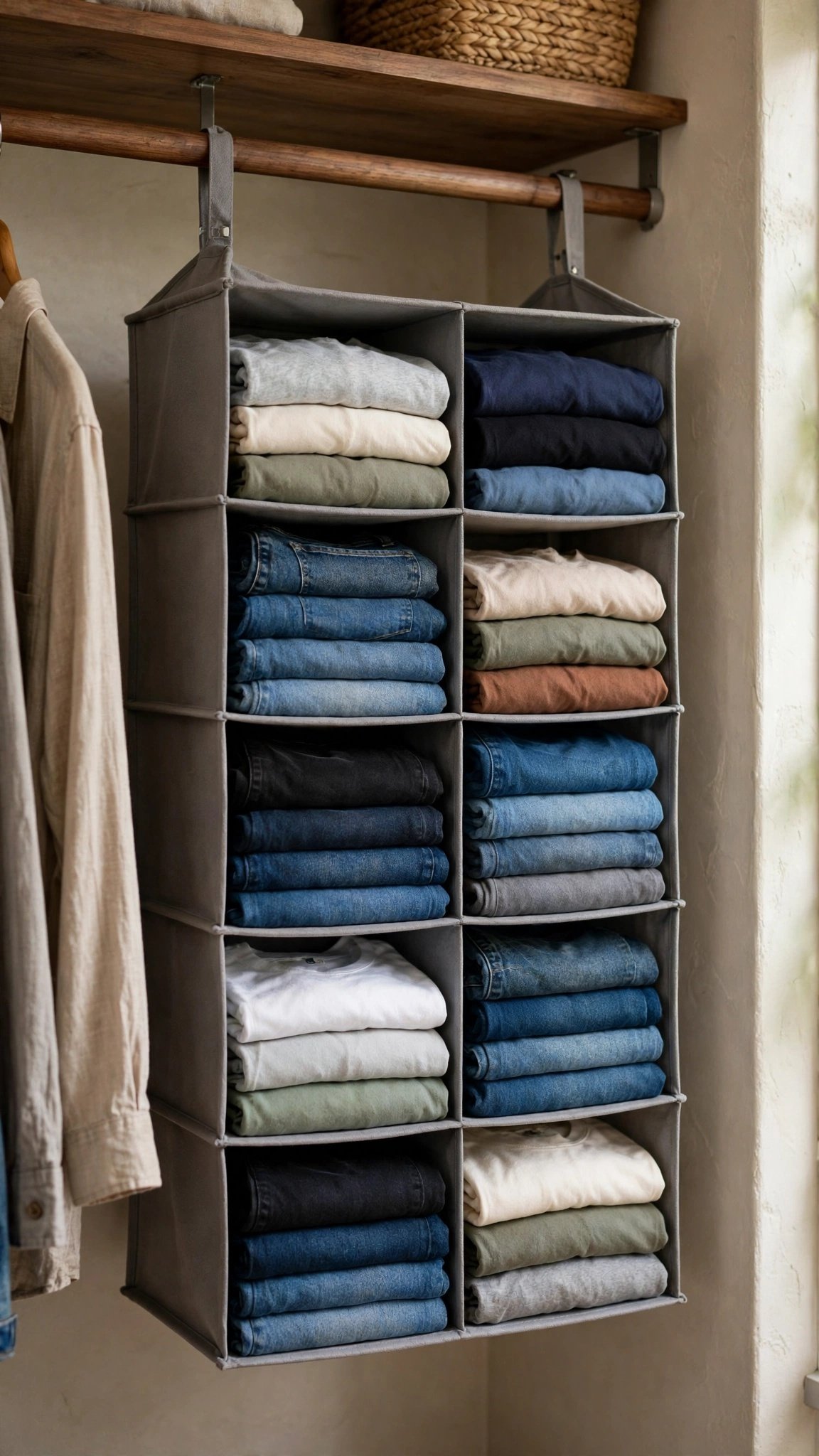
A hanging shelf organizer is a set of fabric shelves that hangs from the rod itself, and it is perfect for small closets with no built-in shelving. It gives you four or five cubbies in the space of a few hangers, ideal for folded T-shirts, jeans, or underwear. It installs in seconds and can be moved or folded away whenever you want.
Use the top cubby for the things you grab most and the bottom ones for heavier items. Because it hangs from the rod, it uses vertical space that would otherwise be empty air beside your hanging clothes. For a rented home or a closet you cannot modify, it is the closest thing to adding shelves without a drill.
7. Fold Bulky Knits Instead of Hanging Them
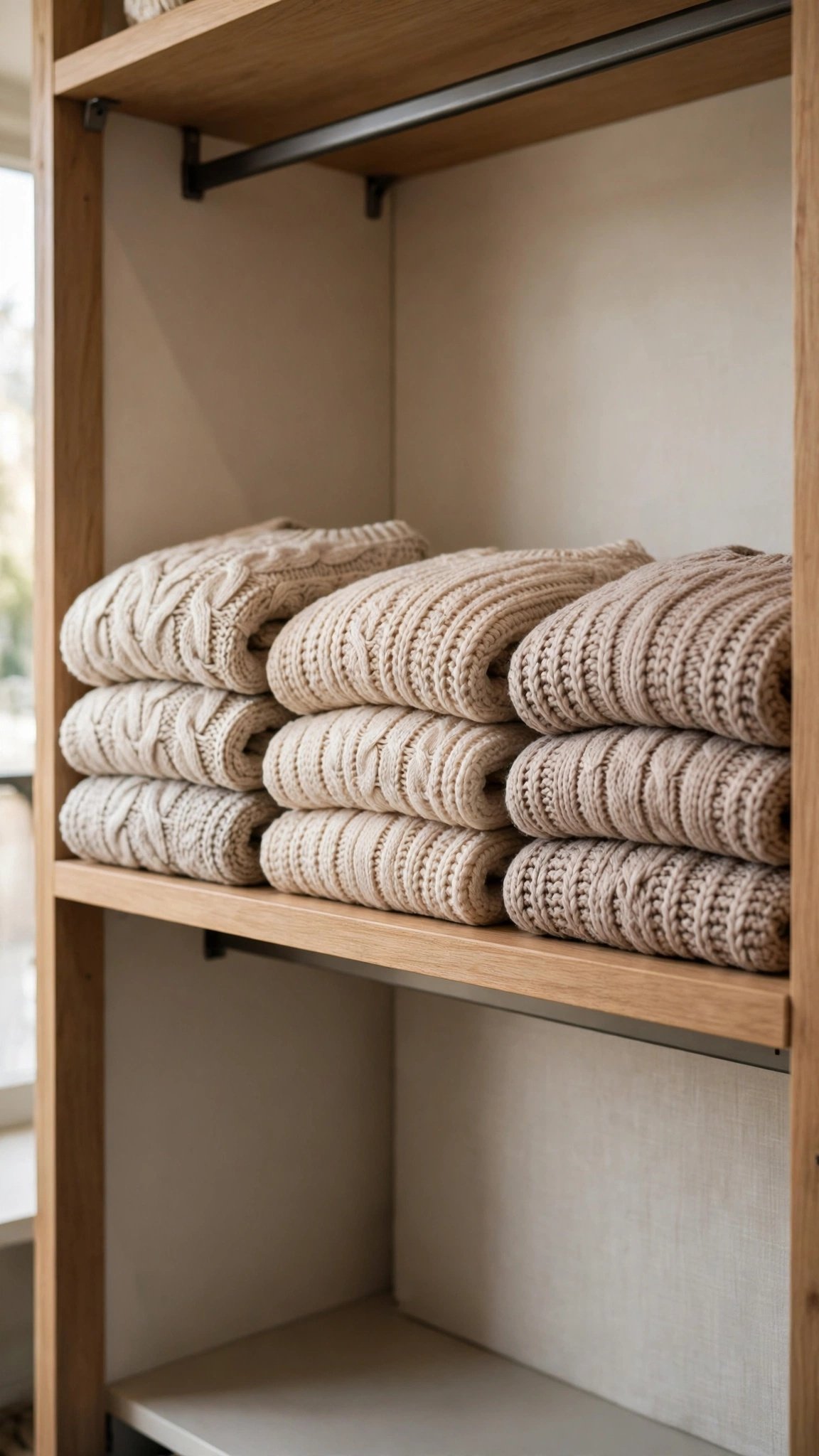
Heavy knit sweaters stretch out of shape on hangers, and each one takes up a wide slice of the rod. Folding them instead saves rod space and keeps them looking better for longer. A neat stack of folded knits on a shelf takes up far less room than the same sweaters spread across the rod.
Fold them loosely so they do not crease, and keep the stacks low — four or five sweaters per stack — so you can pull one out without toppling the rest. The rod space you free up can hold the lighter clothes that actually need hanging. It is a small habit change that makes a visible difference.
8. Hang Clothes by Length
Hanging clothes in a random order wastes the space underneath them, because a long dress next to a short top leaves an awkward gap below the top. Arranging clothes by length — shortest on one side, longest on the other — creates one clean slope, and the space under the short clothes becomes one usable block instead of a dozen little gaps.
That block is the perfect size for a shoe rack, a small drawer unit, or a storage box. The trick costs nothing and takes ten minutes, and it makes the whole closet look instantly more orderly. You can spot what you need faster too, because the shape of the row tells you where things are.
9. The One In, One Out Rule
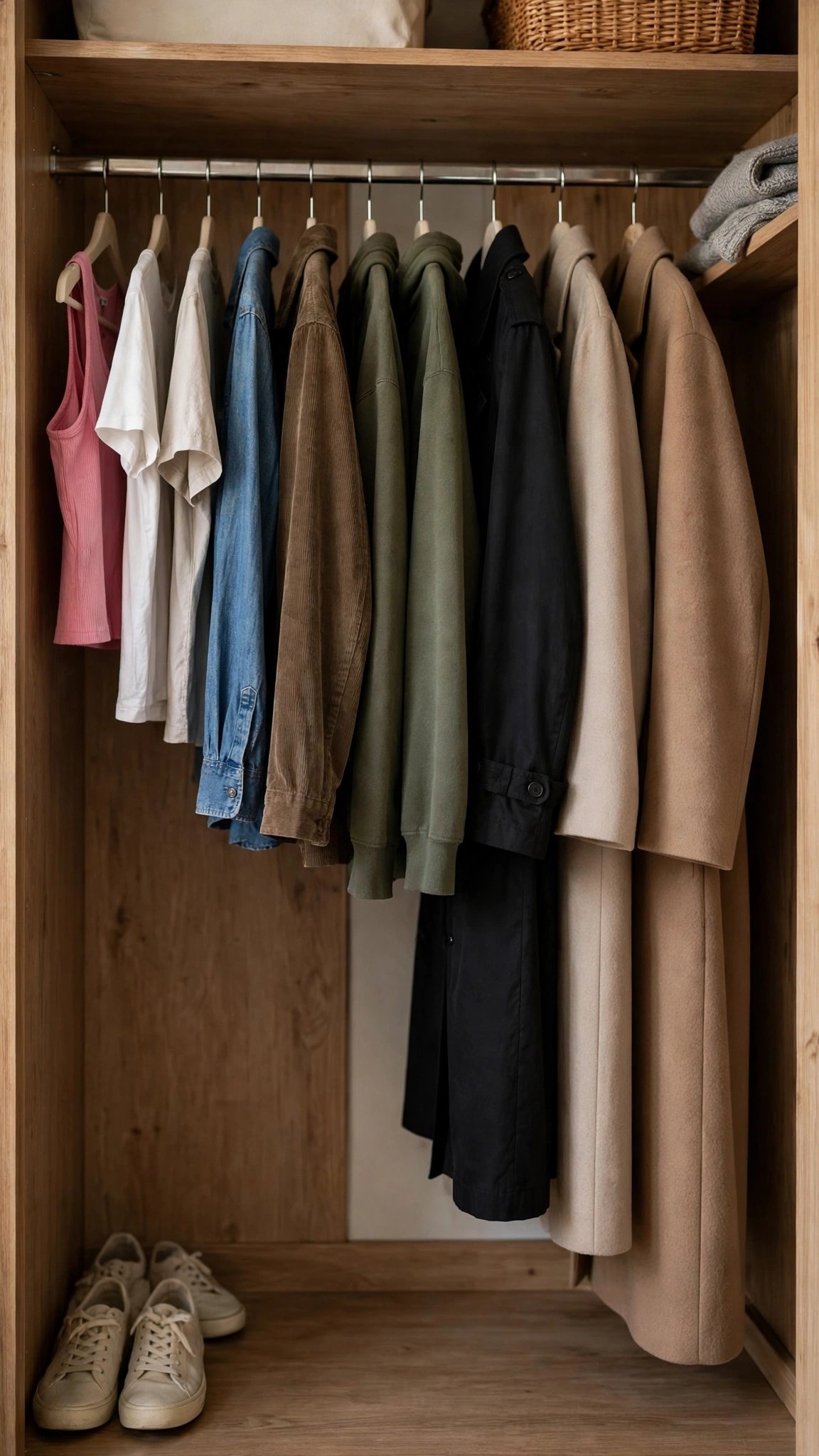
A small closet has a fixed capacity, and the simplest way to respect it is the one in, one out rule: every time something new comes in, something old goes out. It stops the slow creep that fills a closet back up after every clean-out, and it makes you think twice before buying something you do not truly need.
Keep a small bag or box in the closet for the outgoing item, so the rule is easy to follow in the moment. When the bag is full, donate it. The rule only works if you follow it every time, but it is the single best habit for keeping a small closet small-clothes-sized instead of overflowing.
10. Build a Capsule Wardrobe
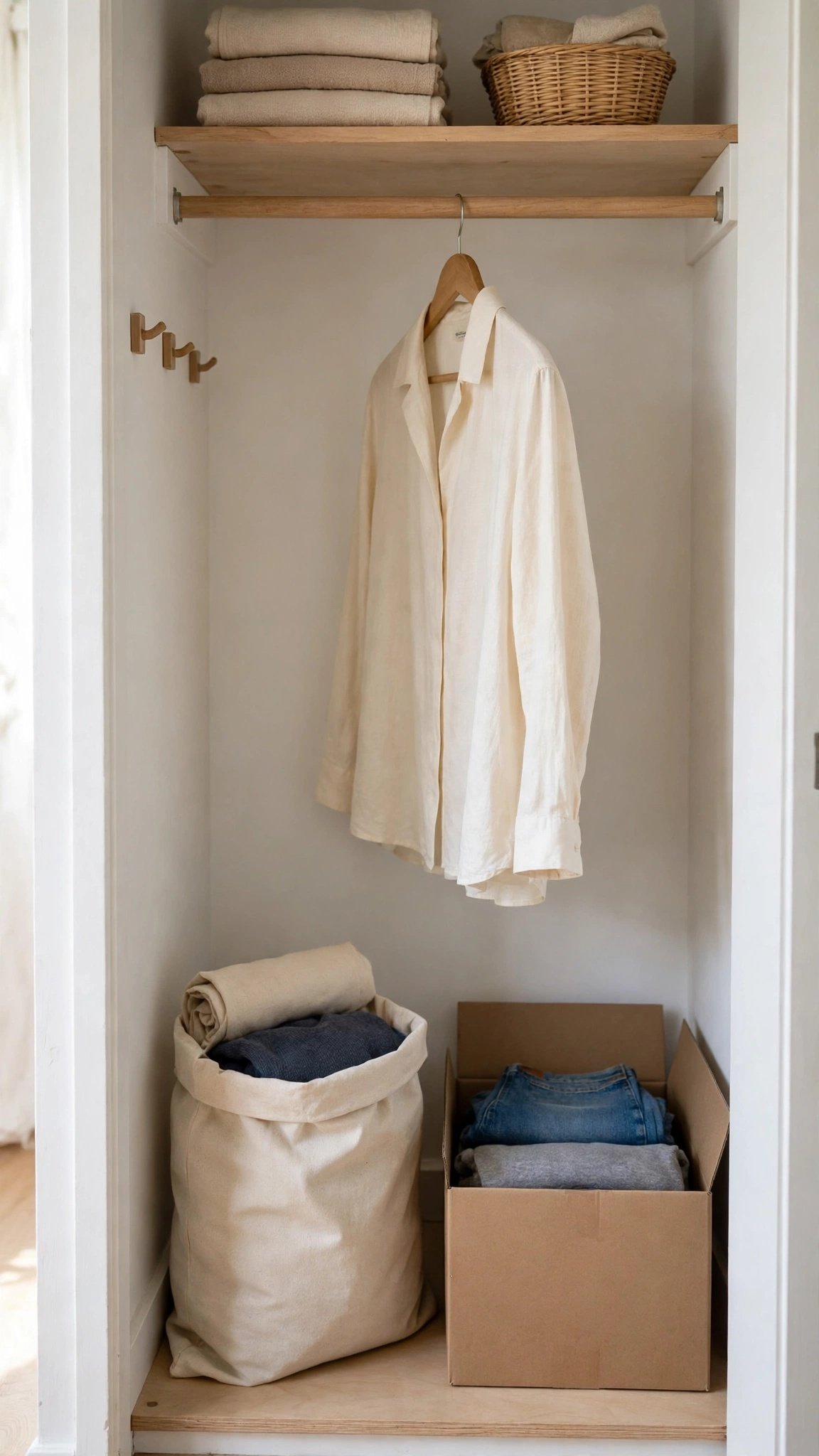
A capsule wardrobe is a small set of versatile clothes — around thirty pieces that all work together — instead of a closet stuffed with things you rarely wear. Fewer clothes means more space per item, and every outfit is easier to build because everything matches. It sounds drastic, but most people wear the same twenty percent of their closet anyway.
Start by pulling out the pieces you actually wore in the last month; that is the core of your capsule. Store the rest elsewhere for a season, and notice how little you miss it. A smaller wardrobe in a small closet feels generous, while a big wardrobe in the same space always feels cramped.
11. LED Strip Lights Inside
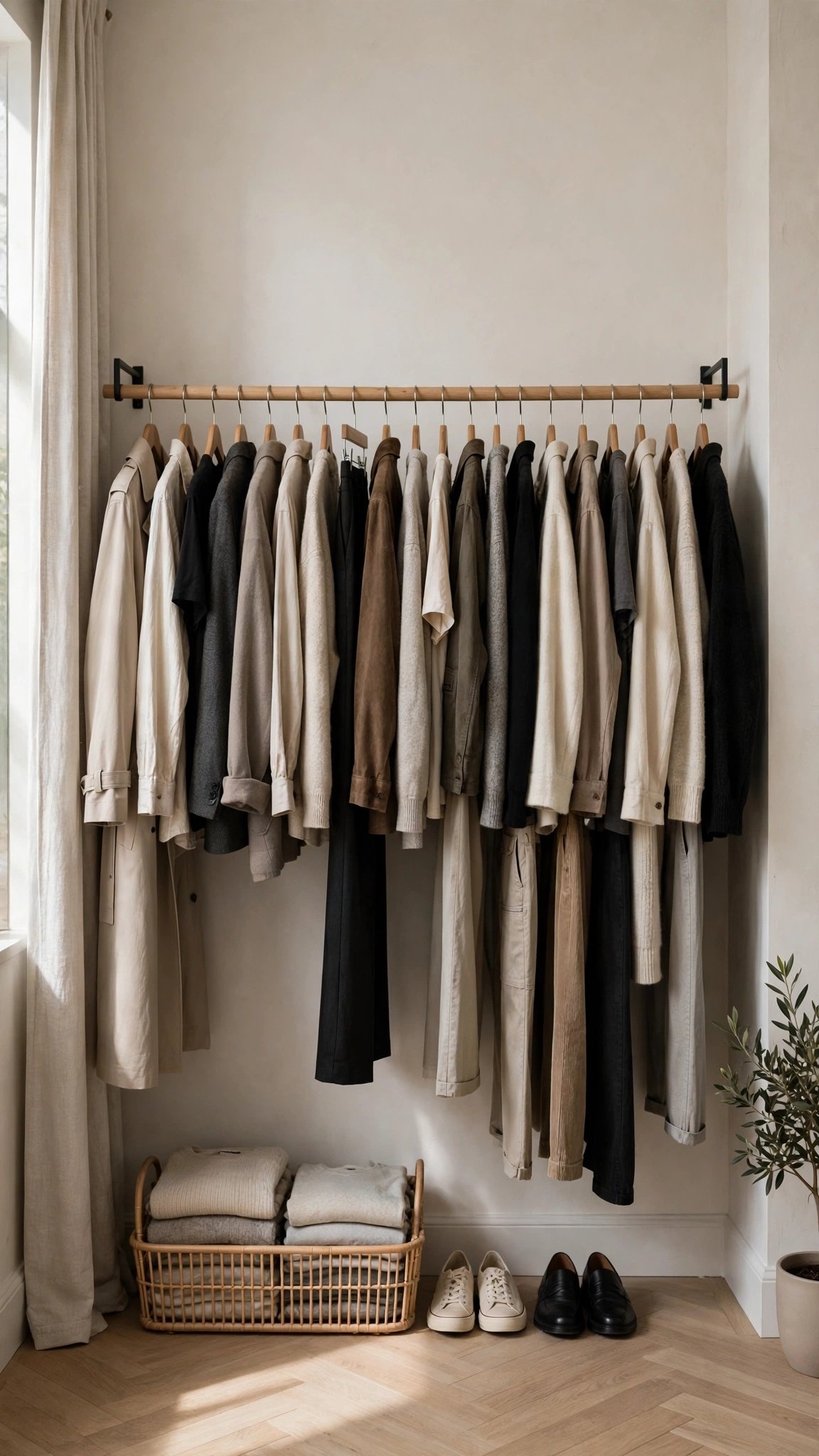
A dark closet feels smaller than it is, because you cannot see what is in the back corners. A battery-powered LED strip along the top of the closet, or under a shelf, lights up every corner and makes the whole space feel bigger and far more usable. You stop losing things in the dark, and choosing an outfit gets easier.
Pick a warm white strip so the light feels like daylight rather than a cold office. Motion-sensor strips are ideal, since they switch on when you open the door and off when you leave. It is a tiny upgrade that changes how the closet feels every single time you open it.
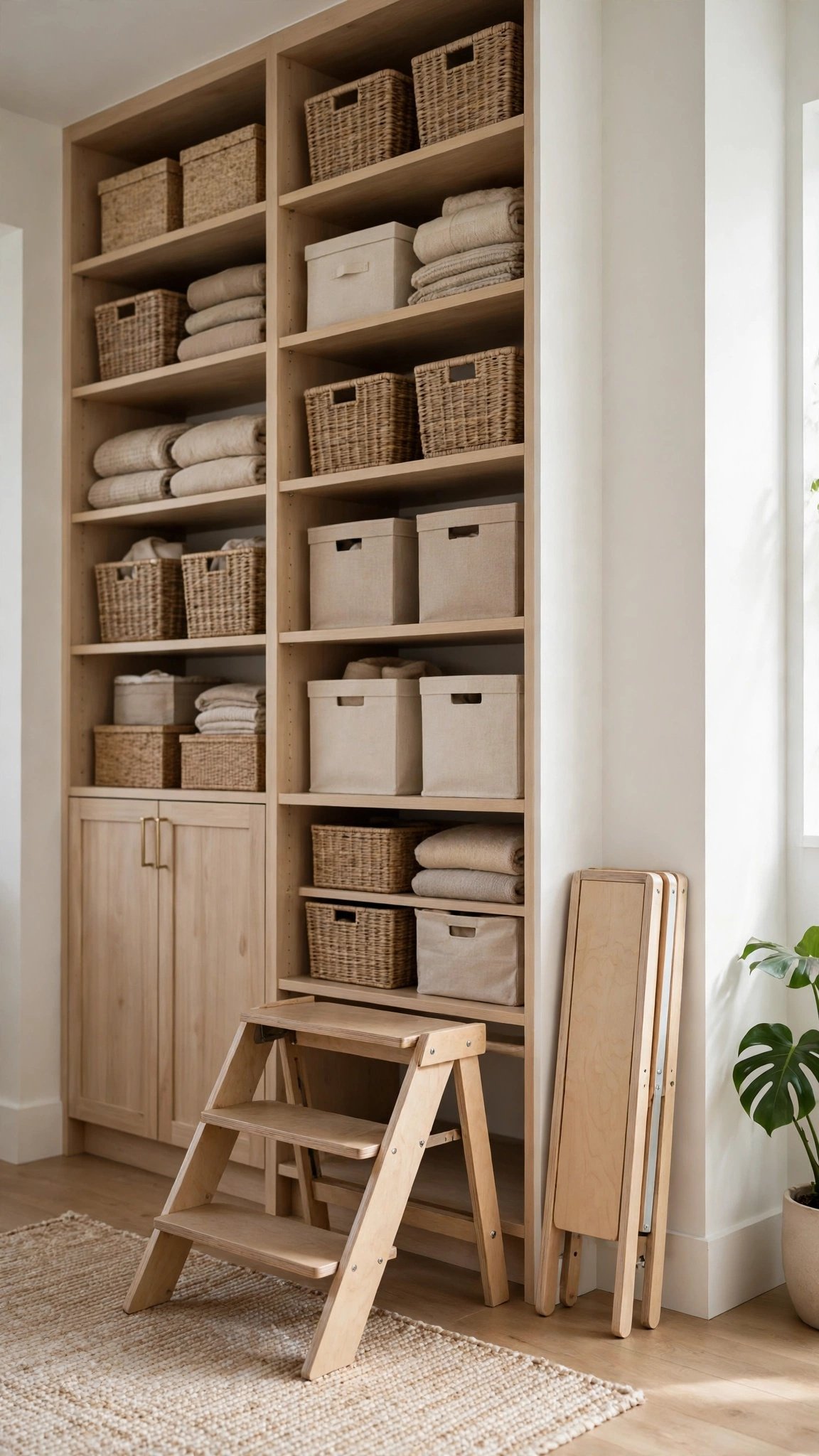
12. A Foldable Step Stool for High Shelves
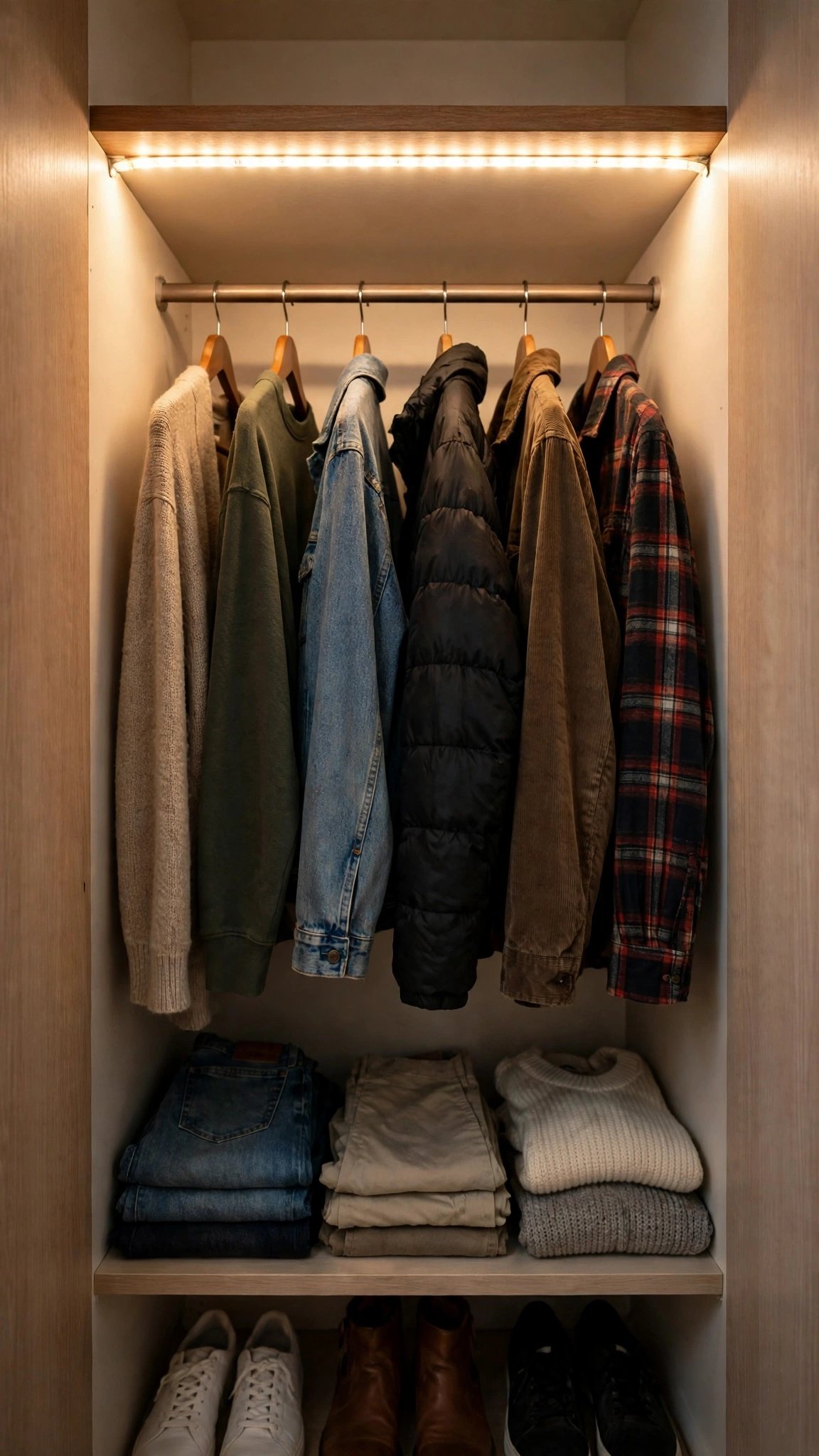
High shelves are only useful if you can actually reach them, and most people avoid their top shelf because it means dragging a chair across the room. A small foldable step stool that lives inside the closet solves that completely — it folds flat against the wall when you are done, and it makes the top shelf part of your everyday storage instead of a forgotten zone.
Choose a stool that folds to just a few inches thick and can hold your weight comfortably. Keep it in the same spot every time so you always know where it is. Once the top shelf is easy to reach, you will use it weekly instead of yearly.
13. Shelf Above the Door Frame
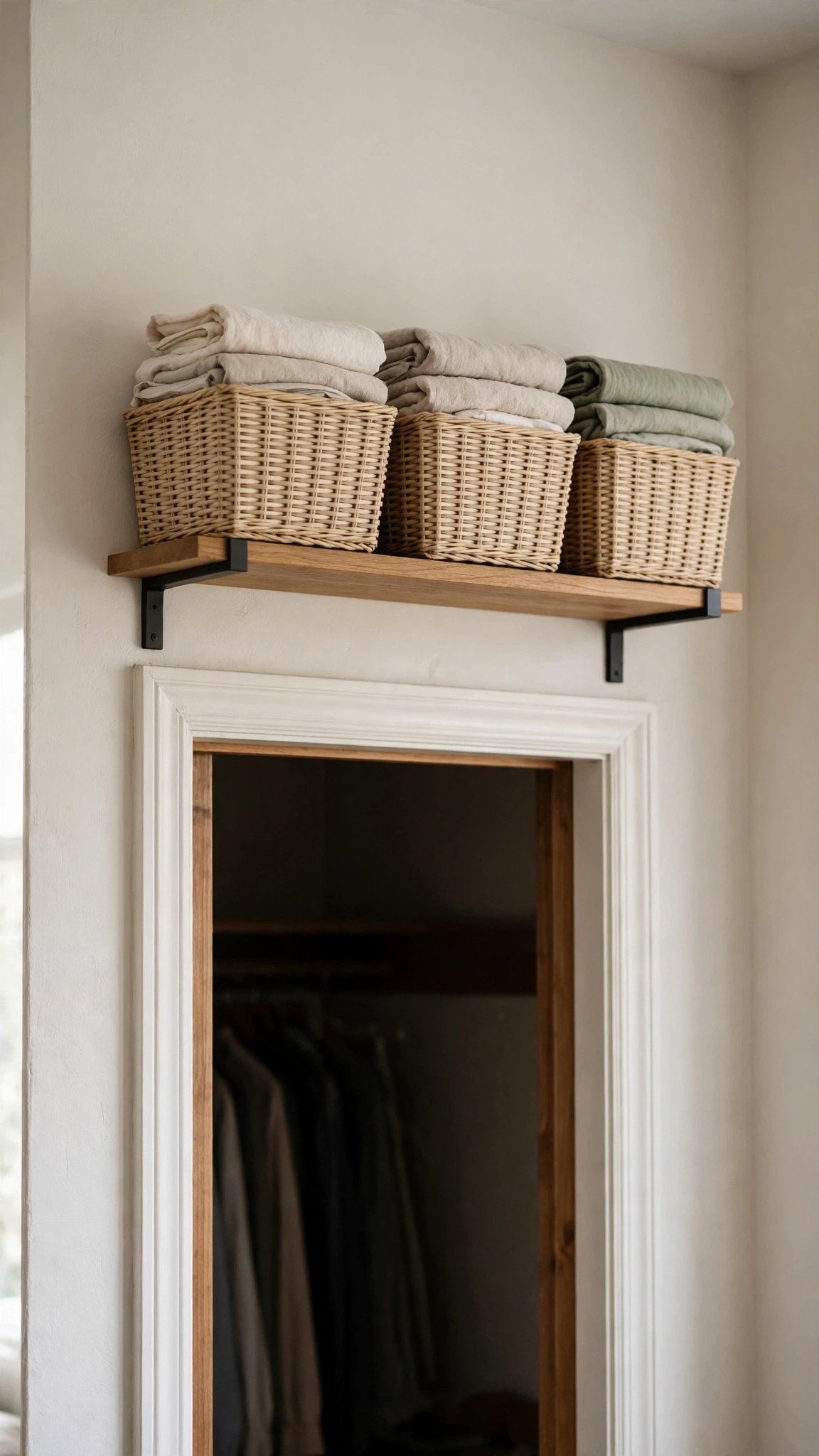
The wall above the closet door frame is almost always empty, and it is the perfect spot for one more shelf. A single shelf mounted above the door holds bins of spare linens, bags, or off-season accessories, using space that was completely wasted. It is out of the way, but still easy to reach with the step stool.
Keep the shelf shallow so it does not stick out into the room, and use matching bins so it looks tidy from below. This is a job for a drill and a level rather than a big renovation, and it adds real storage without taking a single inch from inside the closet.
14. Stackable Crates on the Closet Floor
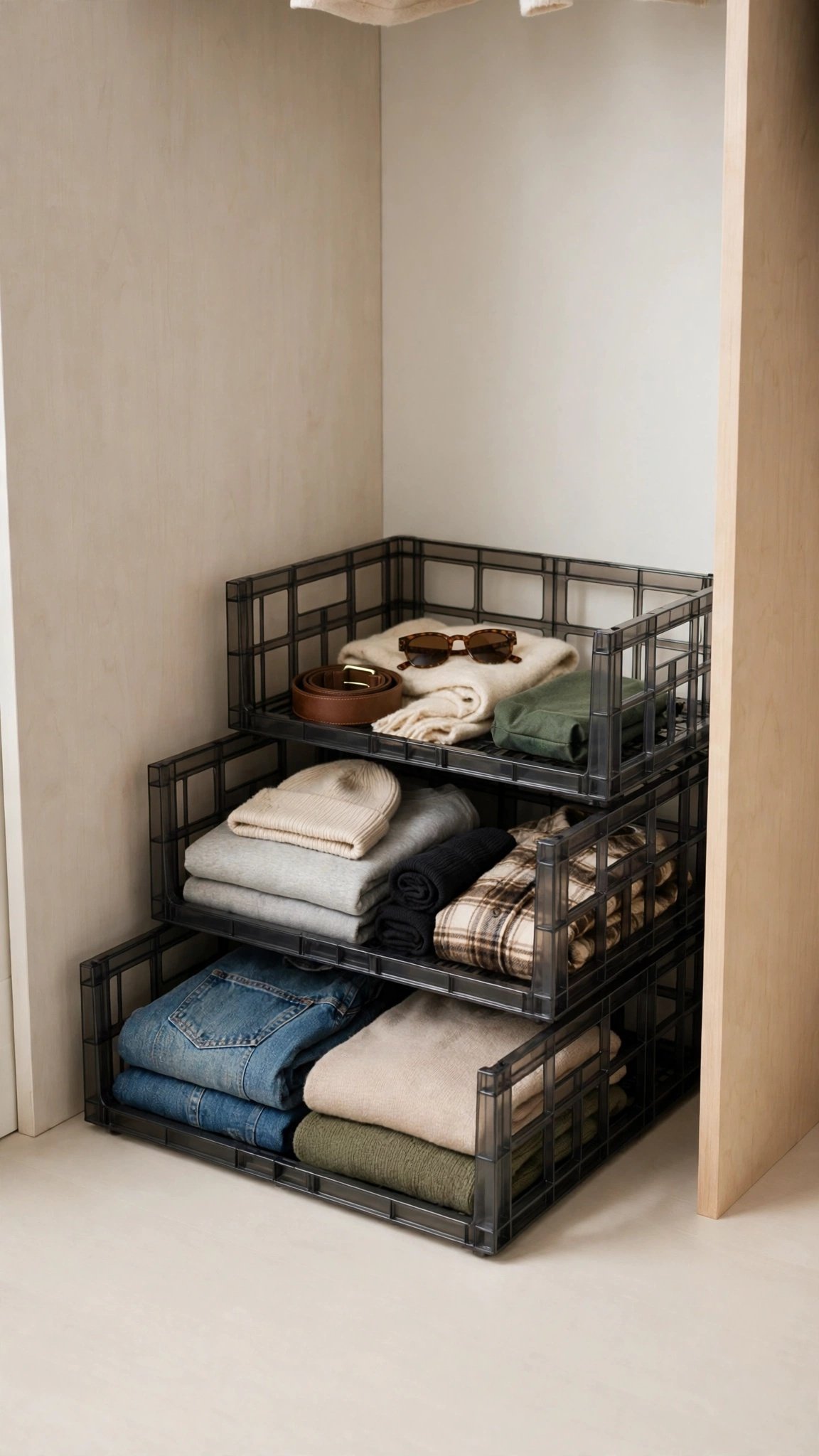
The closet floor is often a jumble of shoes and bags, but stackable crates turn it into organized storage. Two or three crates stacked in a corner hold folded clothes, accessories, or spare linens, and they can be rearranged whenever your needs change. Open-front crates work best, since you can see and grab things without unstacking.
Label each crate so you know what is inside, and keep the heaviest crate at the bottom. Crates are cheap, light, and easy to carry, which makes them ideal for a small closet that needs flexible storage. They also keep things off the floor itself, so the closet stays cleaner.
15. Daily Outfits on a Single Hook Rail
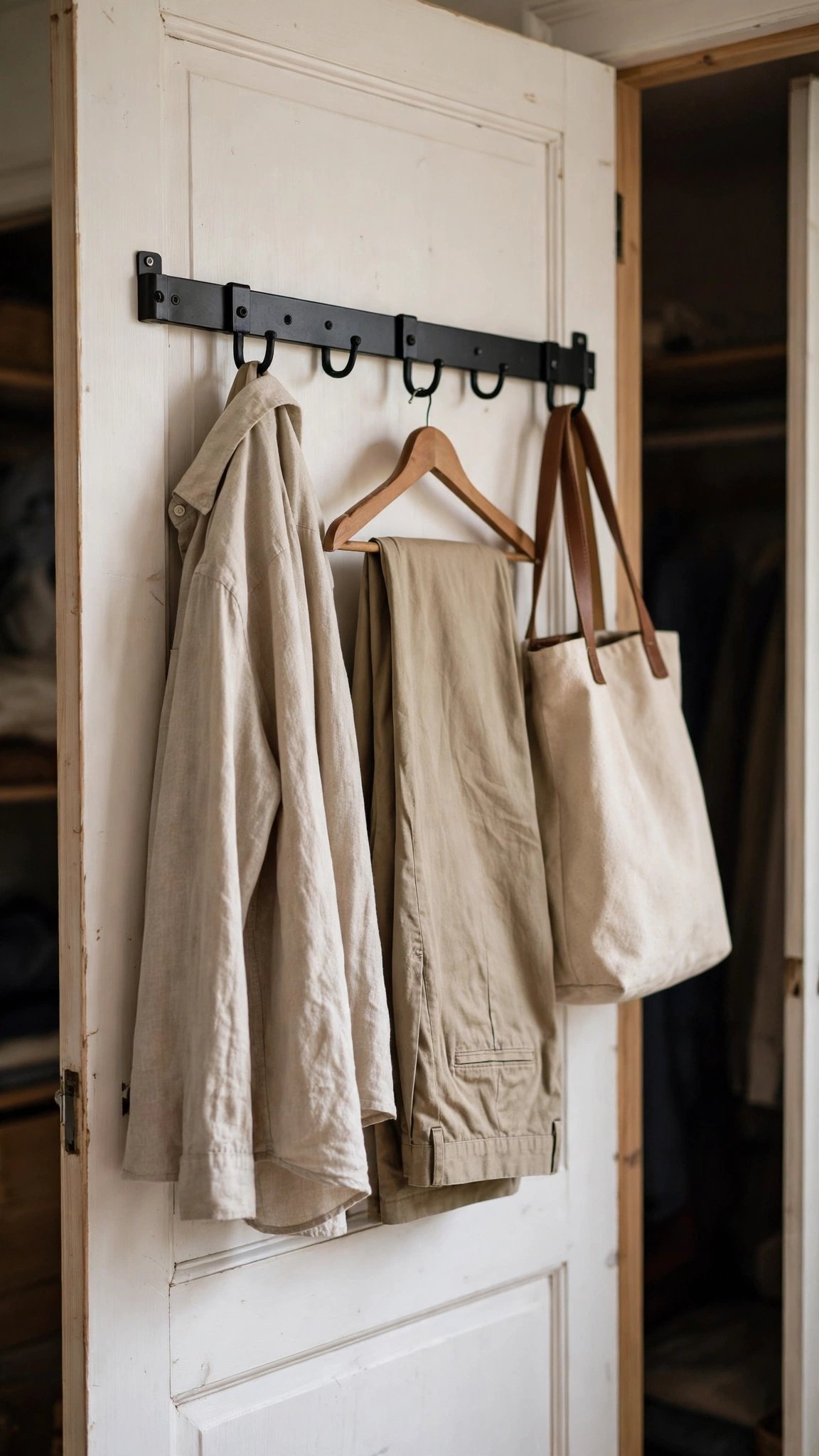
Decision fatigue wastes more closet time than clutter does. A single hook rail on the wall or the inside of the door, holding tomorrow’s outfit, turns the morning into a grab-and-go. Pick the outfit the night before, hang it on the rail, and you never have to stand in front of a full closet wondering what to wear.
Keep the rail to one outfit only — the moment it holds three, it becomes another cluttered rod. The rail also works for the clothes you wore today but are not ready for the wash, giving them a home that is not the floor or the back of a chair. It is a small habit that makes a small closet feel effortless.
Frequently Asked Questions
1. How can I make a small closet hold more clothes?
Use the vertical space first: shelves to the ceiling, cascading hangers, and a hanging shelf organizer. Then remove anything that wastes space, like bulky hangers and the door itself. Finally, keep only the clothes you actually wear by following the one in, one out rule.
2. What is the cheapest way to organize a small closet?
Start with what costs nothing: measure the space, hang clothes by length, fold bulky knits, and take the door off. Then add one low-cost item at a time — cascading hangers, a hanging shelf organizer, or a narrow rolling cart — instead of buying a whole system at once.
3. How do I organize a small closet with no shelves?
Hang a multi-tier fabric shelf organizer from the rod for folded clothes, add stackable crates on the floor, and use the back of the door or a wall rail for hooks. None of these need drilling, so they work well in a rented home too.
4. How often should I declutter a small closet?
Do a quick pass every season and a deeper one once a year. In a small closet, even five items leaving makes a visible difference, so small regular clear-outs work better than one big annual purge. The one in, one out rule keeps it tidy between clear-outs.
Final Thoughts
A small closet is not a problem to solve by buying more storage — it is a space to use more cleverly. Measure it, go vertical, and give every inch a job, from the shelf above the door to the rolling cart in the gap. Pair that with fewer, better clothes and one good habit like the one in, one out rule, and the smallest closet can hold everything you need. Start with the trick that fixes your biggest frustration, and let the rest follow.