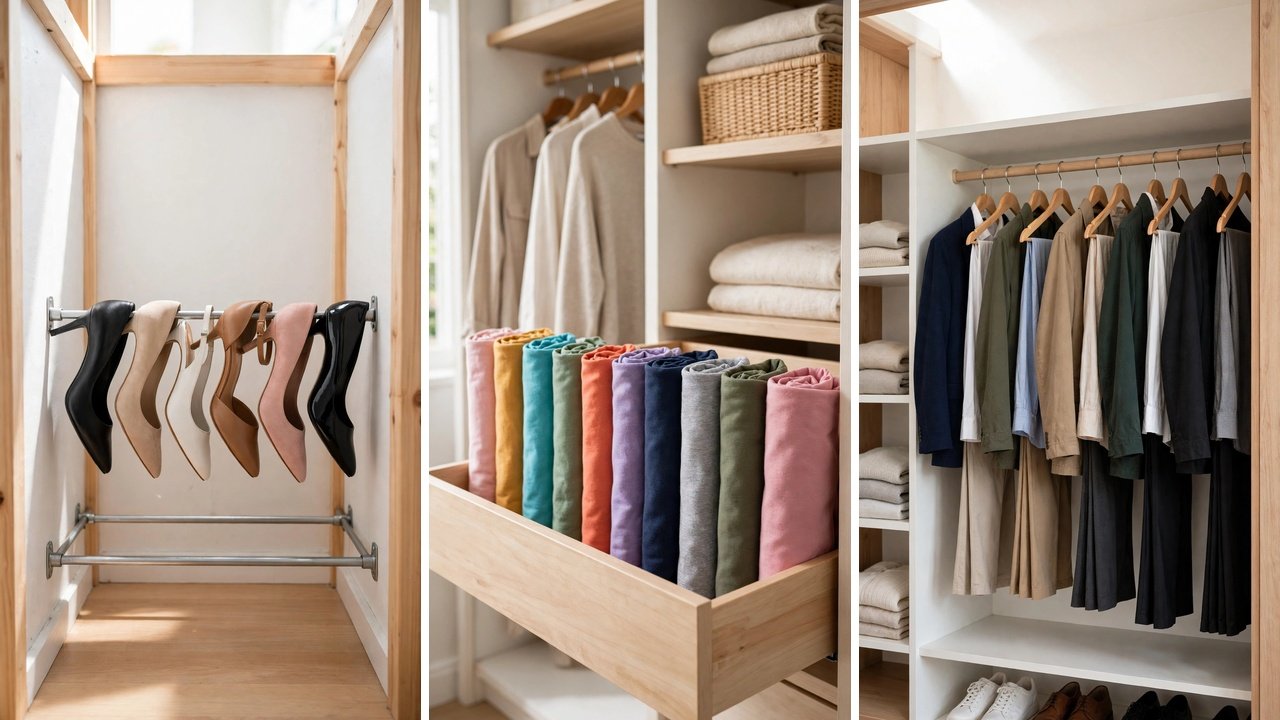
A small closet can feel impossible. The rod is full, the shelf is stacked to the ceiling, and there is still a pile of clothes waiting for a home. It is tempting to think the answer is a bigger closet, but most small closets are not actually full — they are just badly used. A few inches are wasted here, a dead corner there, and the door itself takes up space every time it swings open.
Maximizing a small closet is about using every inch on purpose. These 15 smart tricks work with the closet you already have: measuring first, going vertical, and choosing storage that fits tight spaces instead of fighting them. Try them one at a time, and your small closet will hold more, look calmer, and be far easier to use every morning.
1. Tension Rods as a Shoe Rack
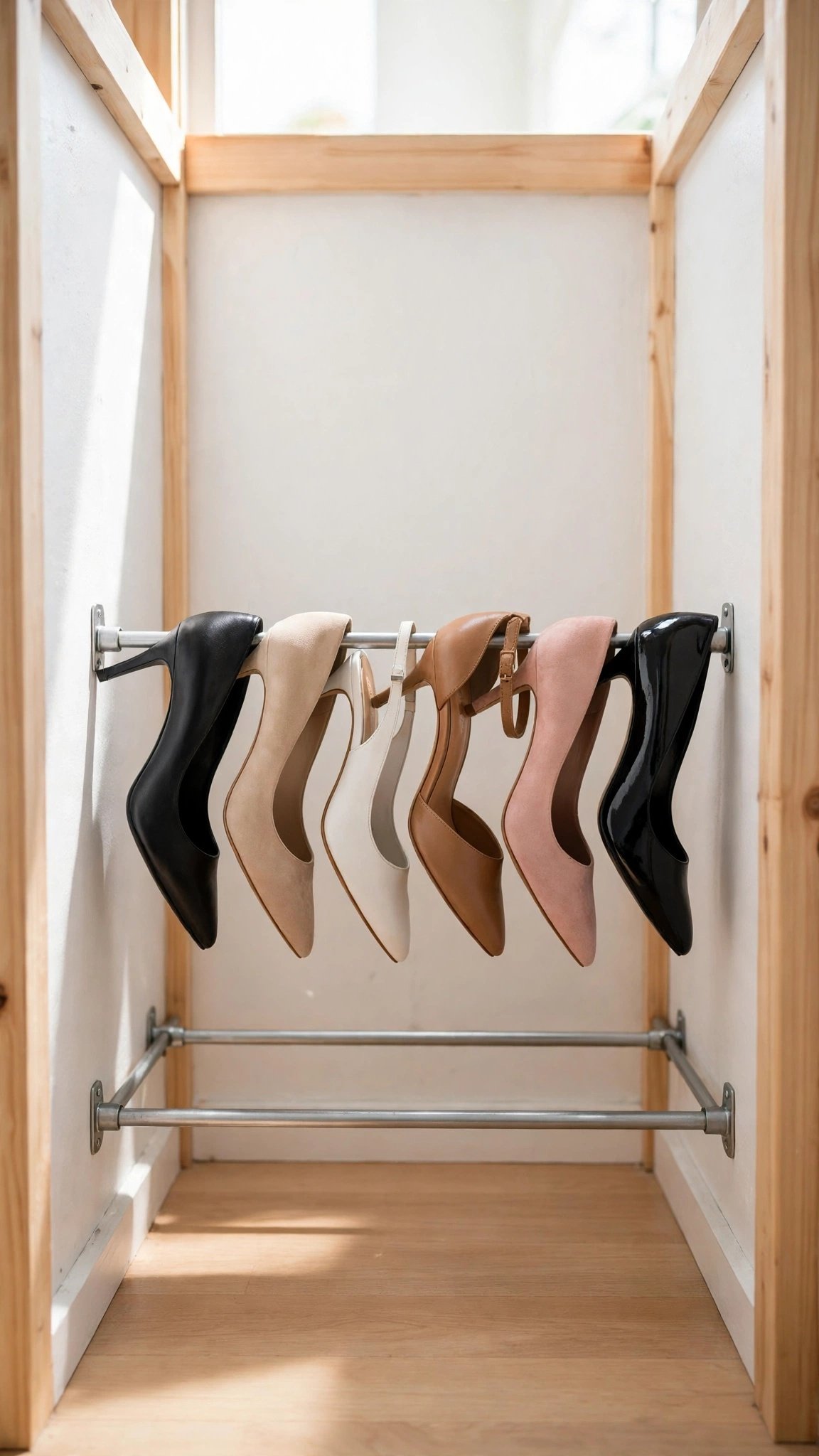
Shoes eat up the floor of a small closet, and a shoe rack often does not fit in the space that is left. Two tension rods, mounted horizontally a few inches apart near the floor, make a shoe rack out of thin air. The heels hook over the rods, the shoes hang neatly in a row, and the floor underneath stays clear for a second row or a storage box.
Measure the gap first and pick rods that fit snugly between the closet walls — no drilling, no screws, and you can move them whenever you want. This works best for heels and flat shoes with a heel to hook; boots and trainers still go on the floor below. It is the cheapest shoe rack you will ever own, and it uses space that was doing nothing.
2. Roll, Don’t Fold, Your T-Shirts
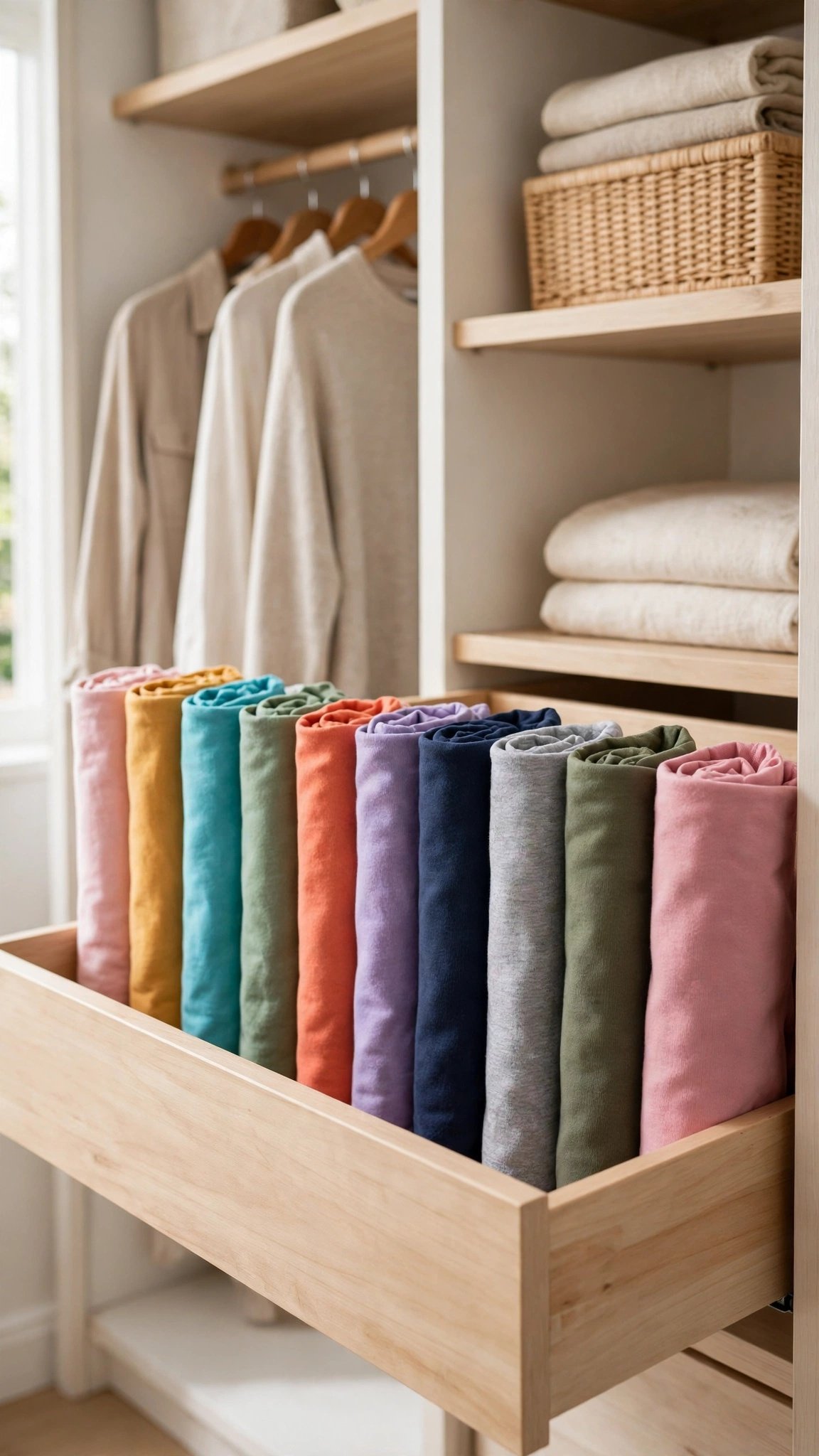
Flat stacks of T-shirts look tidy for about a day, then the bottom shirts disappear and the stack topples every time you pull one out. Rolling each T-shirt into a tight cylinder and standing the rolls side by side in a drawer or on a shelf fixes all of that. You can see every shirt at once, pull one out without disturbing the rest, and fit more in the same space because there are no air gaps between layers.
Roll from the bottom up, smooth and snug, and line the rolls up like a row of books. The same trick works for leggings, pajamas, and kids’ clothes. It takes a few minutes longer than folding, but it saves that time back every morning when you can actually find the shirt you want.
3. A Turntable on the Shelf for Accessories
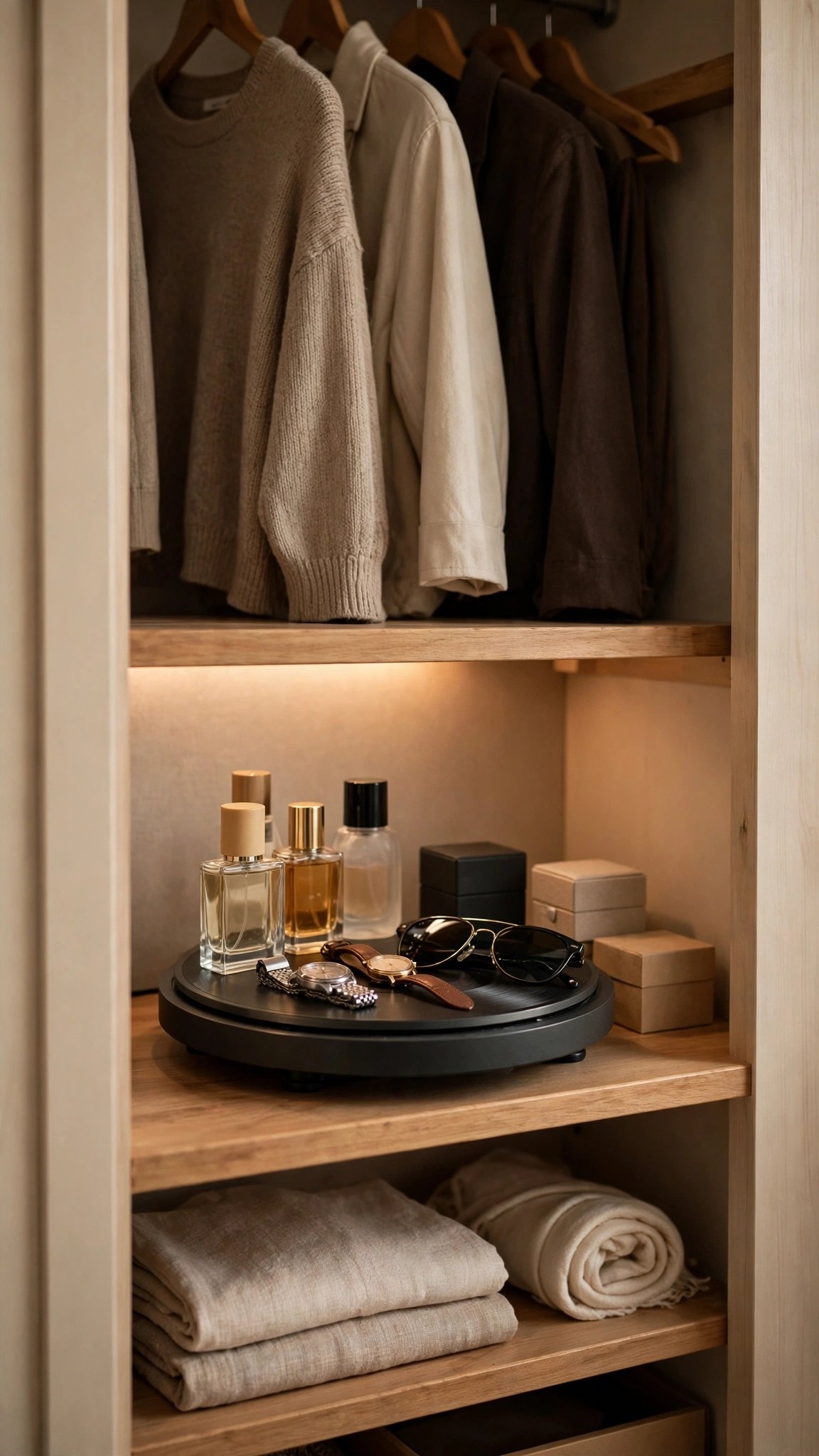
The back of a closet shelf is where accessories go to be forgotten. A small turntable — the kind made for kitchen cupboards — turns that dead corner into the easiest spot in the closet. Put perfumes, watches, sunglasses, and small boxes on it, give it a spin, and everything comes to you instead of you reaching into the dark.
Pick a turntable with a low rim so nothing slides off when it turns, and keep it to one shelf so it does not become another dumping ground. It works especially well on deep shelves where the back half is otherwise unreachable. One spin, and the thing you need is right in front of you.
4. Hang Clothes by Outfit, Not by Type
Most closets are organized by type — all the shirts together, all the trousers together — which is logical, but not how you actually get dressed. You dress in outfits, so try hanging complete outfits together instead: the shirt, the trousers, and the jacket for one look, all on one hanger or side by side on the rail. Getting dressed becomes grabbing one set, not assembling one from three places.
This works best for work clothes and the outfits you wear most often. Keep the rest of the closet by type, and reserve one stretch of rail for the ready-made outfits. On busy mornings, the difference is dramatic — and you will notice straight away which outfits you never actually reach for.
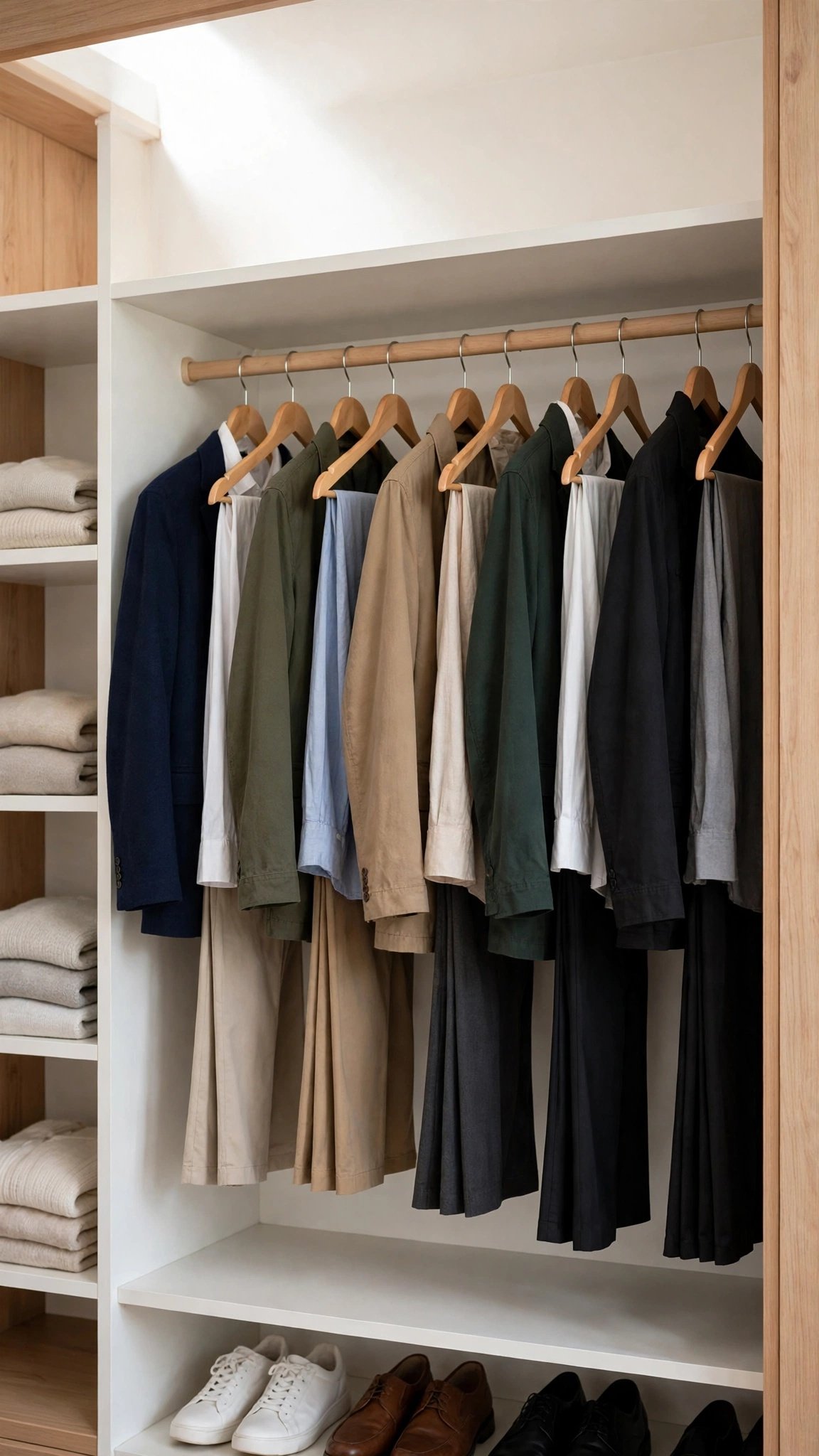
5. Clear Stacking Drawers as a Mini Dresser
A small closet often has no drawers at all, and adding built-in ones means a renovation. Clear stacking drawers — the plastic kind that clip together — give you a mini dresser inside the closet for a fraction of the cost. They stack on the floor or on a shelf, hold underwear, socks, T-shirts, and accessories, and because they are clear you can see what is inside without opening them.
Stack two or three high, no more, so the tower stays stable and the bottom drawer still slides out easily. Label the front of each drawer if the contents are hard to tell apart. When you move house, the drawers come with you — which is more than you can say for built-in storage.
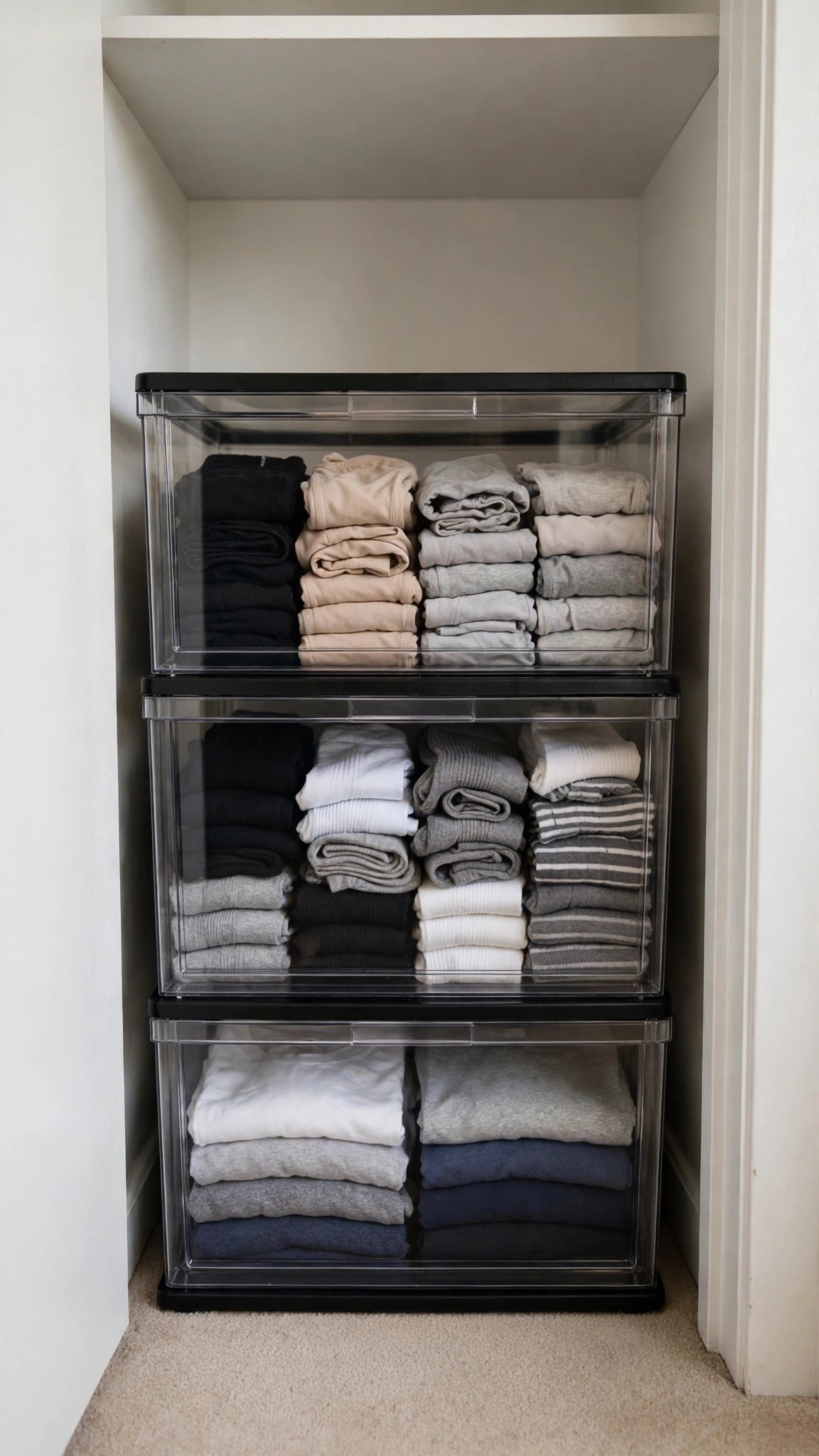
6. A Small Care Kit Station in the Closet
A closet is not just for storing clothes — it is where you get ready, so keep the tools of getting ready in there. A small basket or box with a lint roller, a handheld steamer, a stain-removal pen, and a spare button kit turns the closet into a one-stop station. No more running to another room to de-lint a jacket or steam a wrinkled shirt.
Keep the kit on a shelf near the rail, at arm’s reach, and refill it when something runs out. It takes up less space than a shoebox, and it saves the small emergencies that make you late. The closet stops being just storage and starts working like a dressing room.
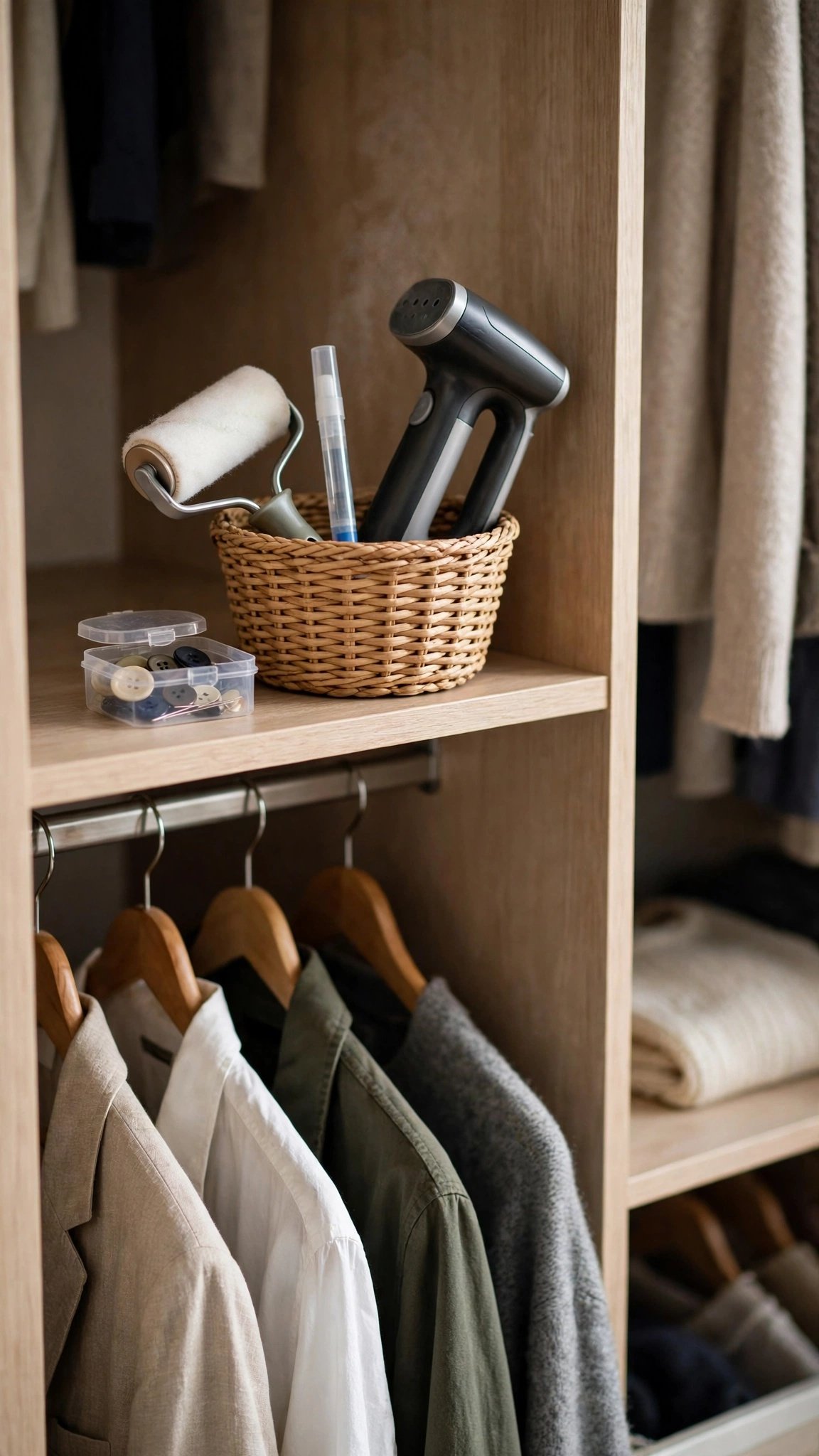
7. Paint the Inside Light to See Everything
A dark closet feels smaller than it is, and the back corners swallow whatever you put there. Painting the inside walls, shelves, and ceiling a light colour — bright white, pale cream, or a soft grey — bounces the light around and makes the whole space feel bigger and far easier to see into. It is the cheapest visual upgrade a closet can get.
Use a washable paint so scuffs wipe off, and paint the inside of the door too. The change is instant: suddenly you can see the colours of your clothes properly, and nothing hides in the shadows anymore. If you rent, a peel-and-stick light wallpaper does the same job without touching the paint.
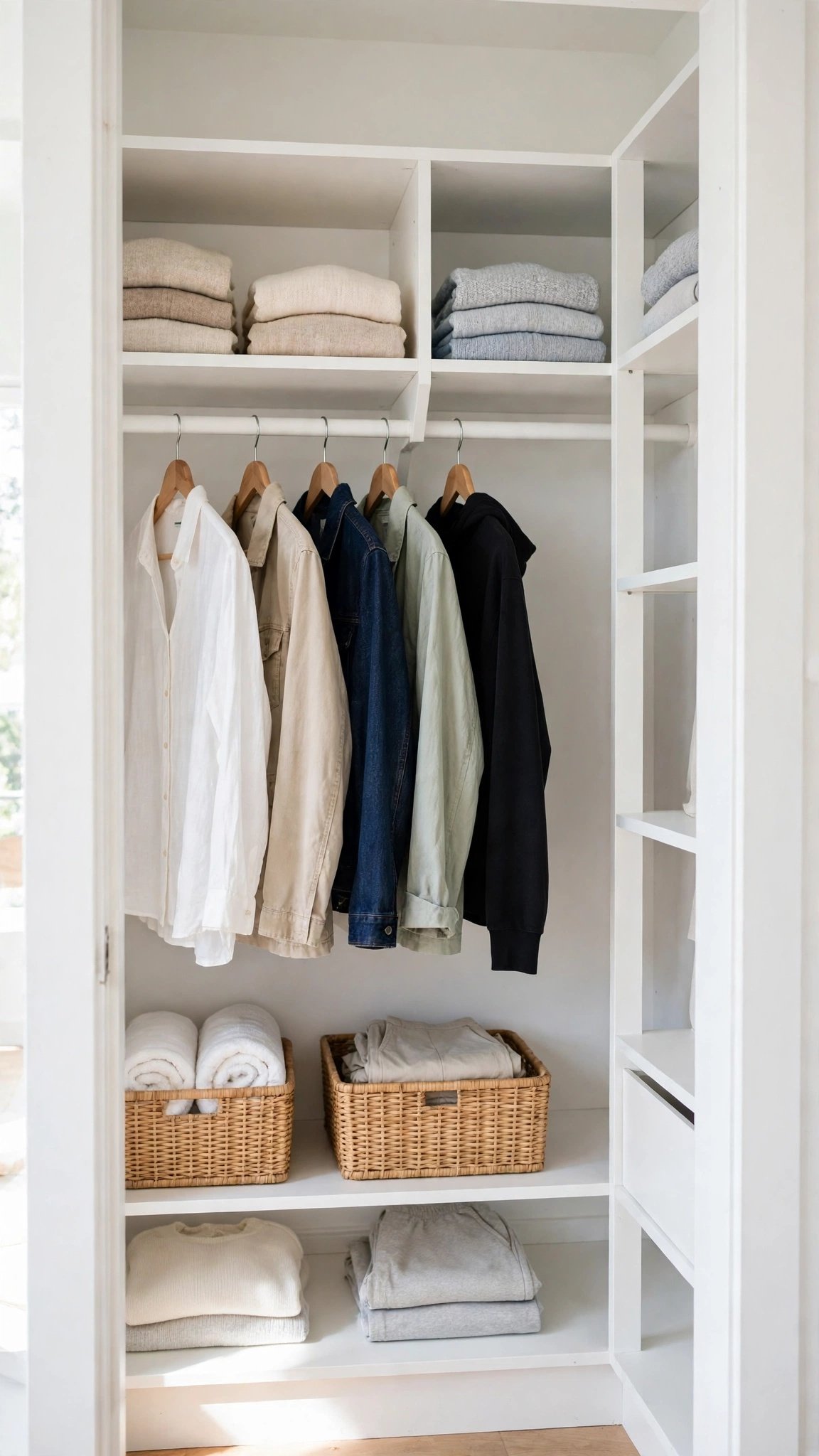
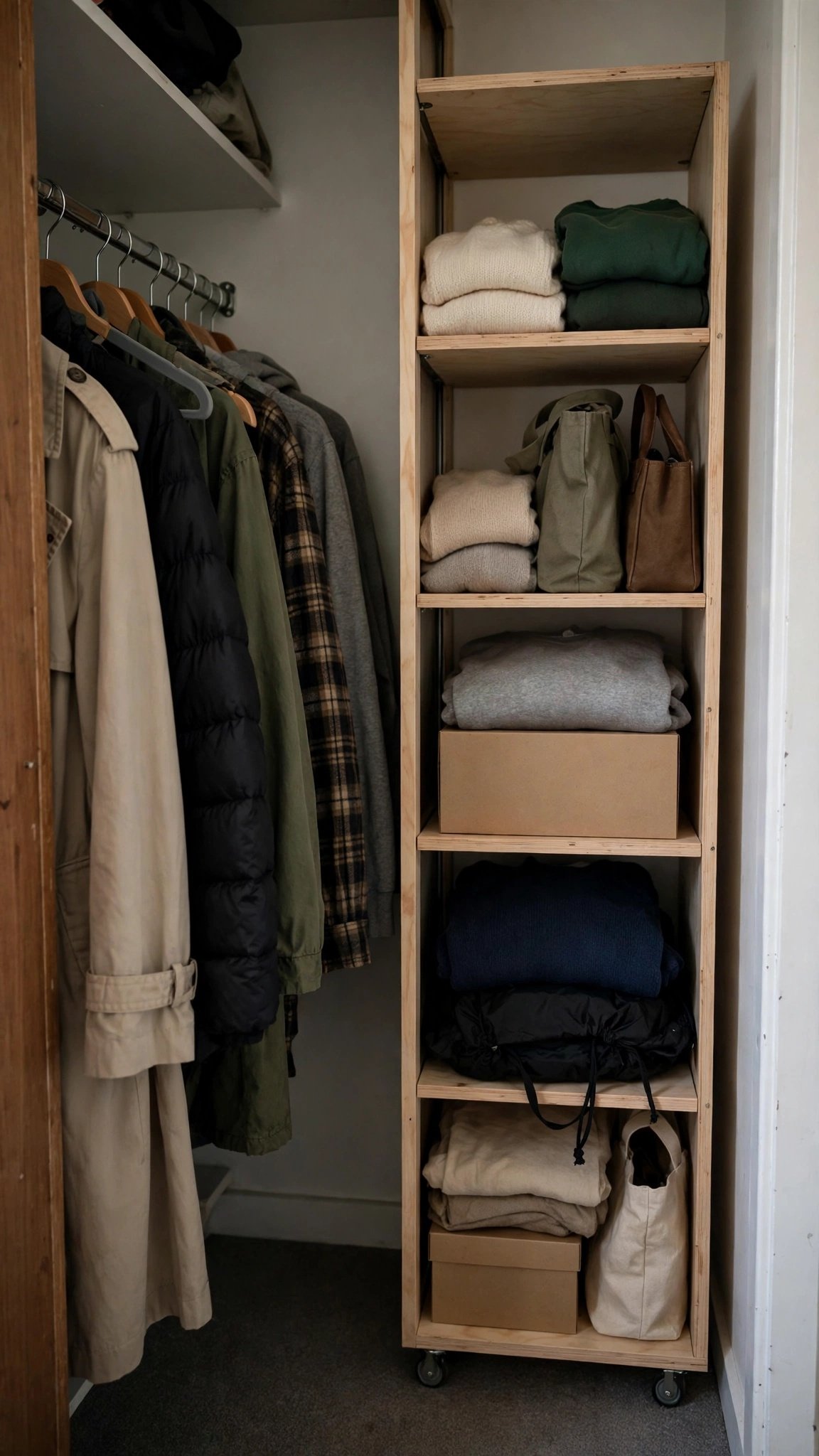
8. A Narrow Shelf Tower Inside the Closet
The tall, empty side of a closet — the strip beside the hanging clothes — is often the most wasted space in the room. A narrow shelf tower, a slim freestanding unit a foot wide, slides into that gap and turns it into four or five shelves of storage for folded clothes, bags, or boxes. No drilling, no building, and you can take it out whenever you want.
Measure the gap before you buy, since these towers come in a few widths, and pick the widest one that still slides in freely. Put the things you use most at the middle shelves and the rarely used things at the top and bottom. It is the closest thing to adding a built-in unit without touching a wall.
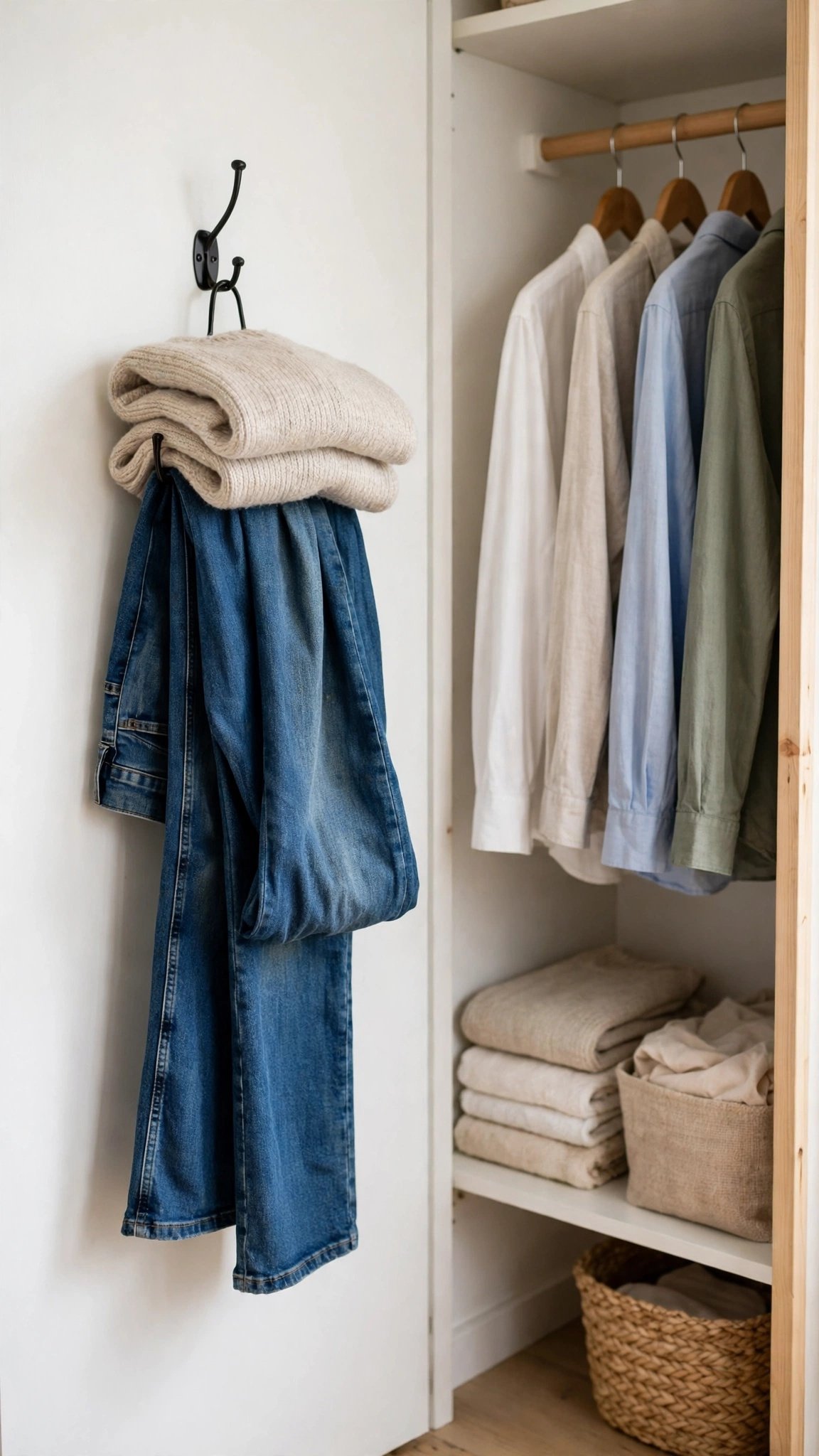
9. A Wear-Once-More Hook for In-Between Clothes
Some clothes are not dirty enough for the wash, but not fresh enough to go back on the rail — the jeans you wore once, the sweater from yesterday evening. They end up on a chair, or worse, on the floor. A single hook, or a small section of rail, set aside as the wear-once-more spot gives them a proper home between wears.
Keep it to one hook and a strict rule: if it hangs there for more than two days, it goes in the wash. The hook stops the chair pile from forming, and it keeps the worn-once clothes separate from the clean ones, so you never grab a yesterday shirt by mistake. It is a tiny habit that keeps the whole closet honest.
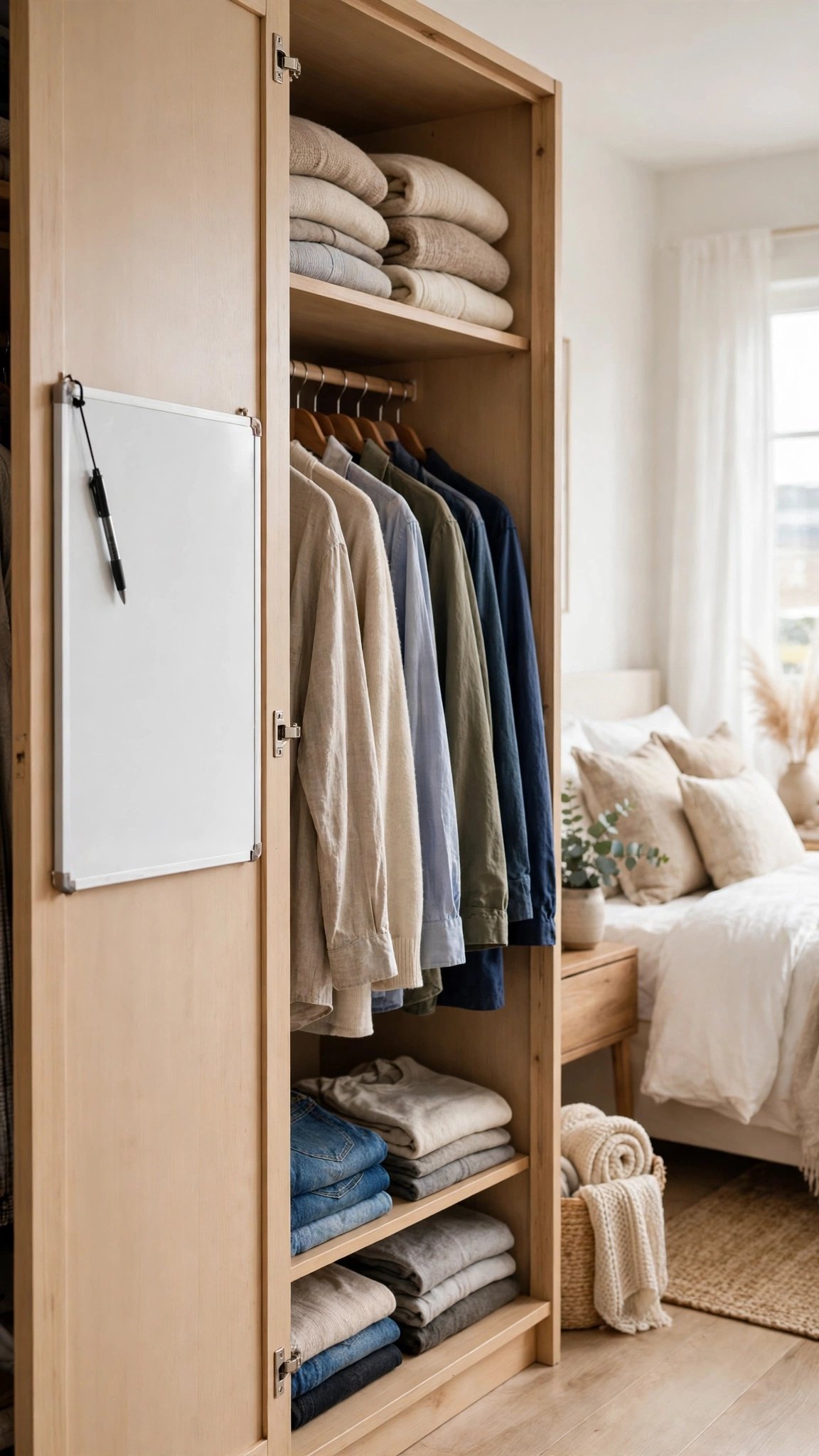
10. A Tiny Whiteboard on the Door for Outfit Plans
The inside of a closet door is the perfect spot for a tiny whiteboard. Use it to plan the week’s outfits, note the item you need to buy, or remind yourself of the event coming up on Friday. Writing it down means you stop standing in front of a full closet with no idea what to wear, because the decision is already made.
Pick a small board that fits the door panel, and keep a pen attached so it is always there. Wipe it clean every Sunday and plan the week ahead. It takes two minutes, and it turns the closet door from wasted space into the most useful surface in the bedroom.
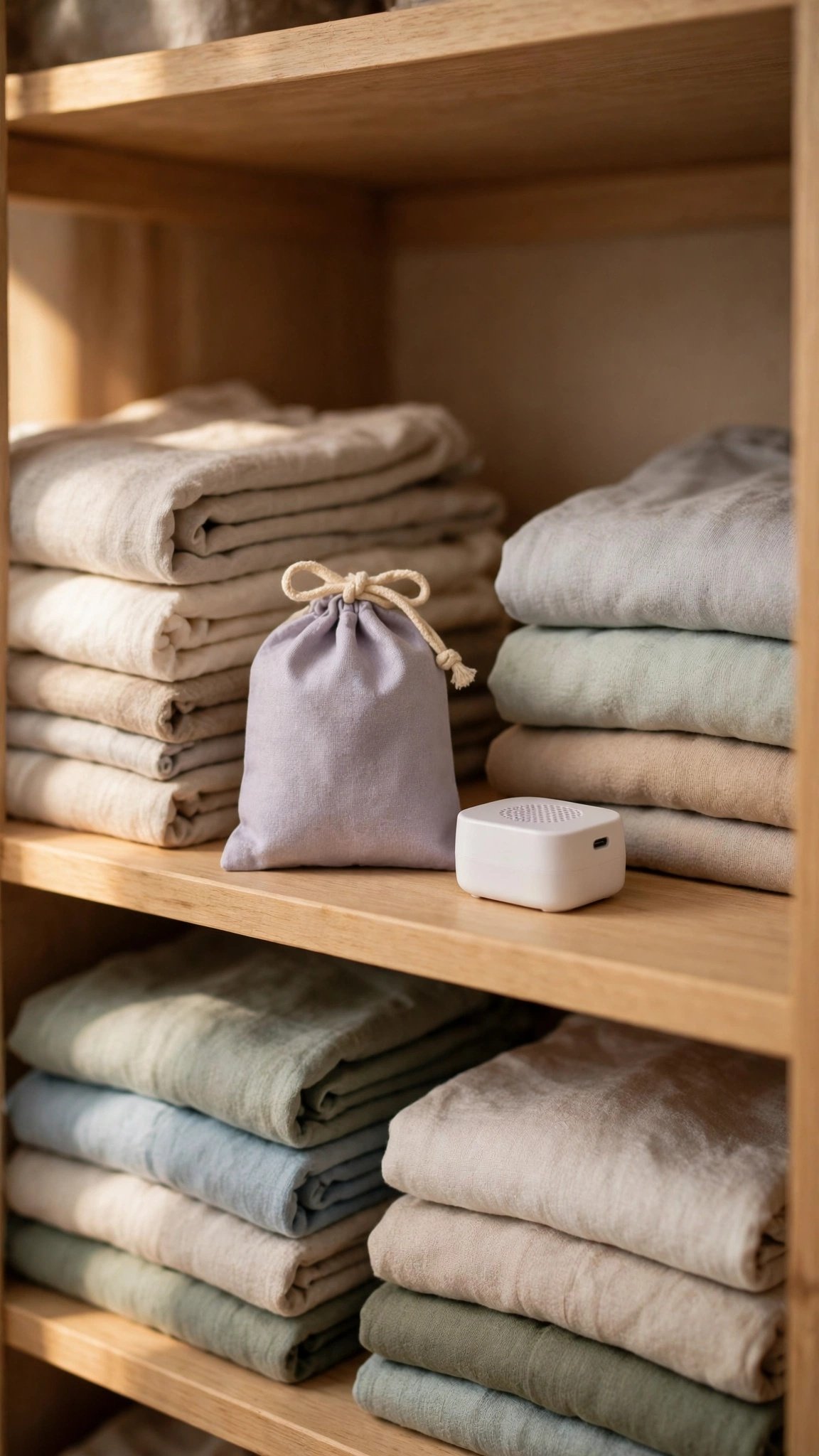
11. Keep a Small Sachet or Dehumidifier
Small closets get musty. Clothes packed tightly together trap moisture, and by the time you notice the smell, it is already in the fabric. A small sachet of lavender or cedar, or a tiny rechargeable dehumidifier tucked on a shelf, keeps the air fresh and protects your clothes from damp and moths at the same time.
Replace the sachet every few months, and recharge or empty the dehumidifier when it tells you to. Cedar is the classic choice — it smells good and moths hate it — but any scent you like will do. Fresh-smelling clothes are the quiet sign of a closet that is actually looked after.
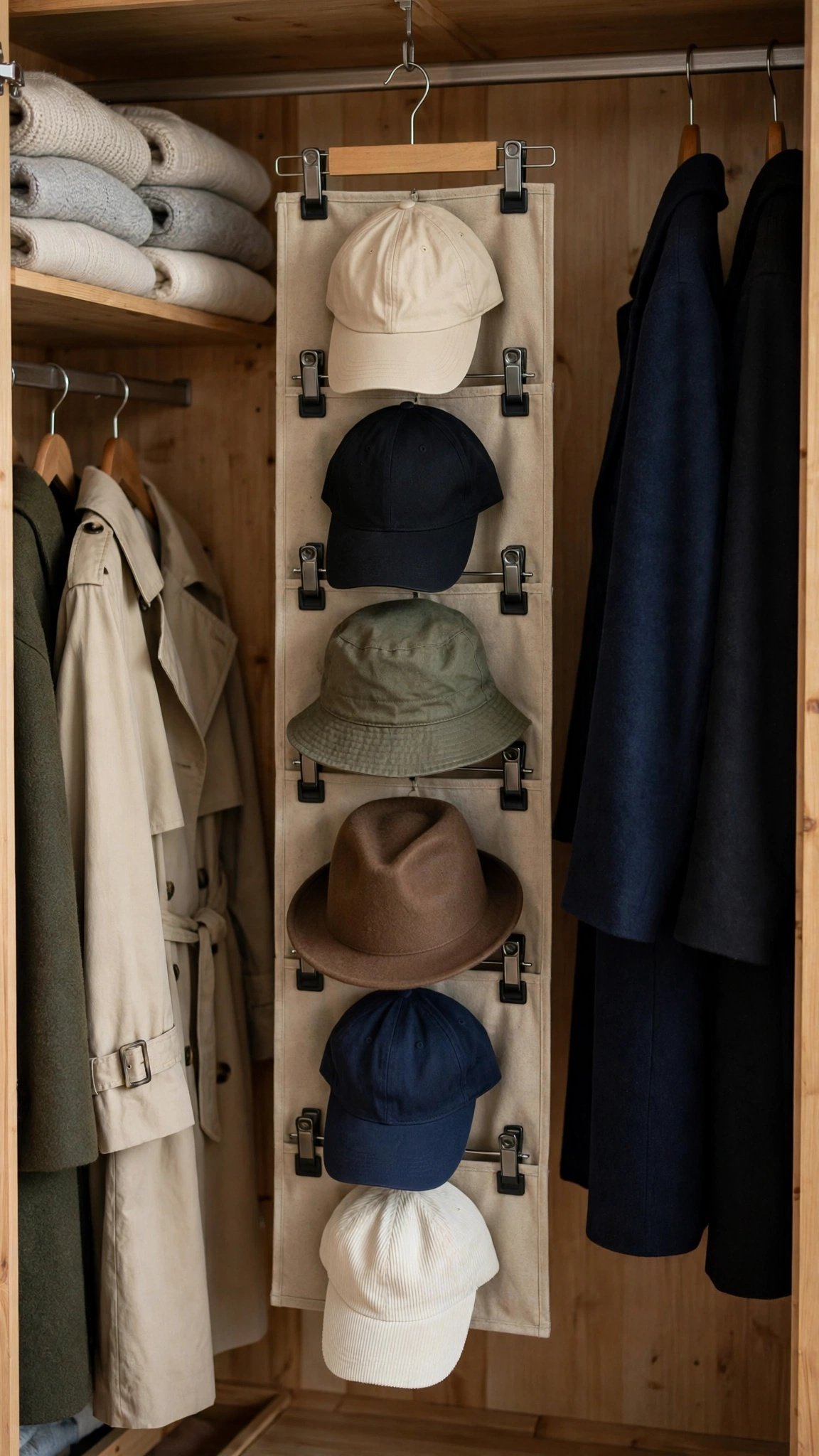
12. A Hanging Organizer for Hats and Caps
Hats and caps are awkward to store. Stacked on a shelf they crush each other, hung on a hook they lose their shape, and stuffed in a drawer they disappear. A hanging organizer — a set of clips on a single hanger, or a fabric organizer with pockets — keeps every hat visible, in shape, and easy to grab on the way out.
Hang it on the rail near your coats, so the hat goes with the outfit it belongs to. Clip each hat by its brim or band, not by the crown, so it keeps its shape. If you only own two or three hats, a single clip hanger is enough — the point is that they have a home, not a pile.
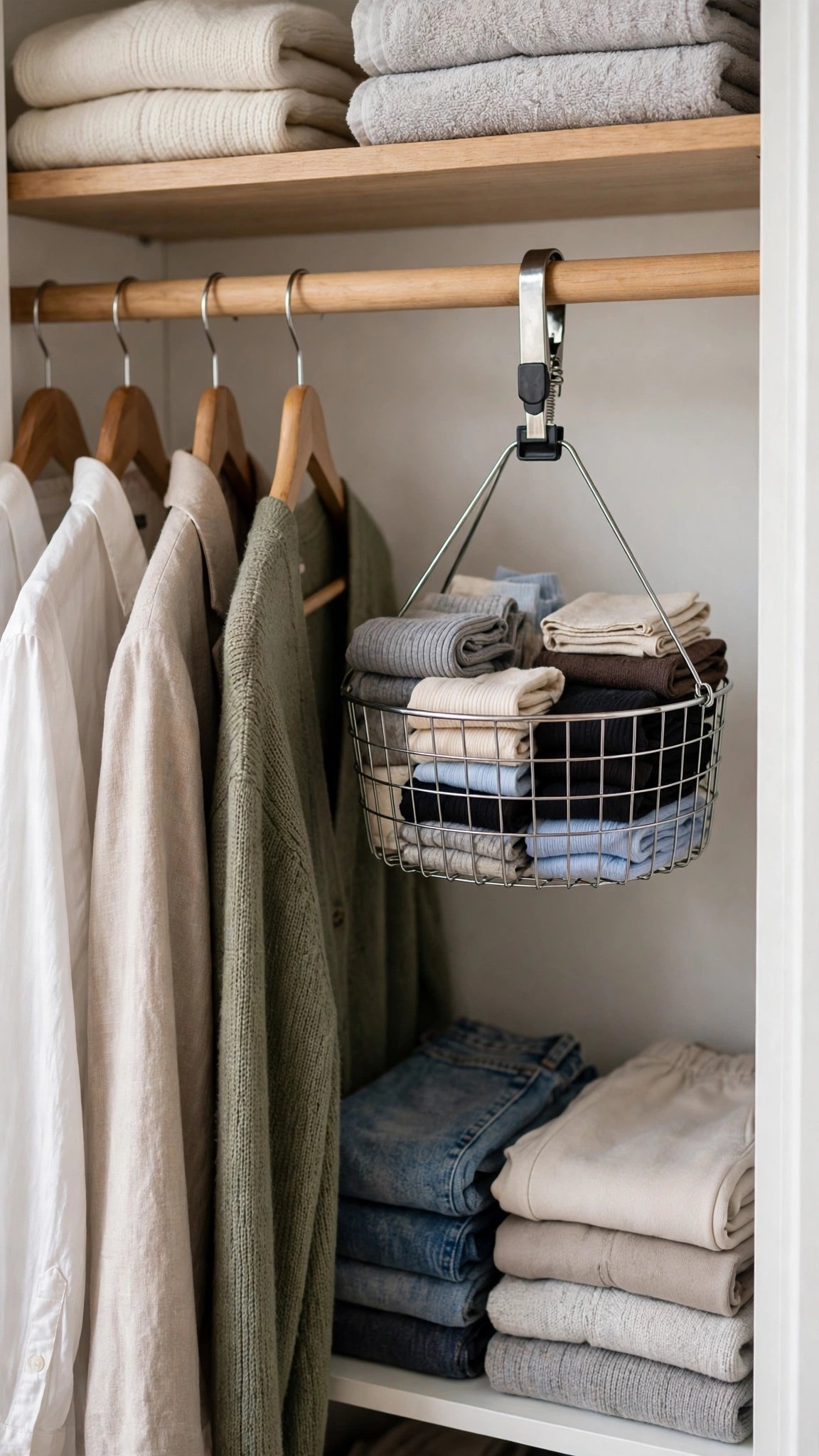
13. A Hanging Basket from the Rod for Small Items
The small things — socks, underwear, gloves, swimwear — are the hardest to store in a closet with no drawers. A small hanging basket, clipped to the rod itself, gives them a home that uses no shelf and no floor space. It hangs beside your clothes, within reach, and you can see what is inside at a glance.
Use one basket per category, and keep the baskets small so they do not crowd the rail. Wire baskets work best, since you can see through them, and they let the air circulate. It is a five-minute fix for the drawer you do not have.
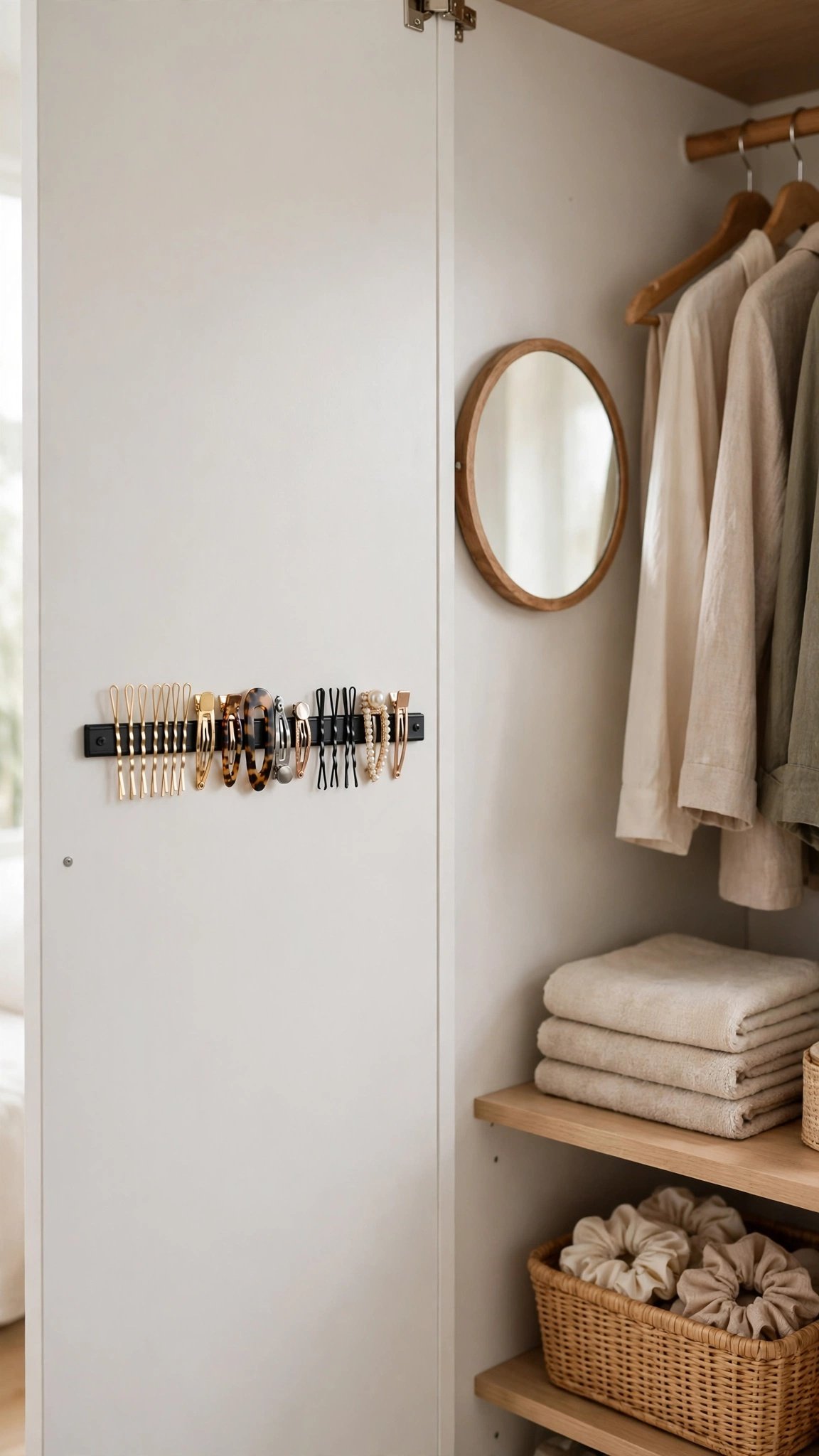
14. A Magnetic Strip for Bobby Pins and Clips
Bobby pins and hair clips vanish. They end up at the bottom of drawers, in pockets, and on the bathroom floor — everywhere except where you need them. A short magnetic strip, stuck to the inside of the closet door or on a shelf edge, holds them all in one visible row. Grab one, use it, put it back on the strip.
You can buy a magnetic strip for a few dollars, or use a magnetic knife strip cut to size. Keep it near the mirror if you have one in the closet, or by the door where you grab things on the way out. It is a tiny fix, but it ends the daily hunt for a pin that was always in the last place you looked.
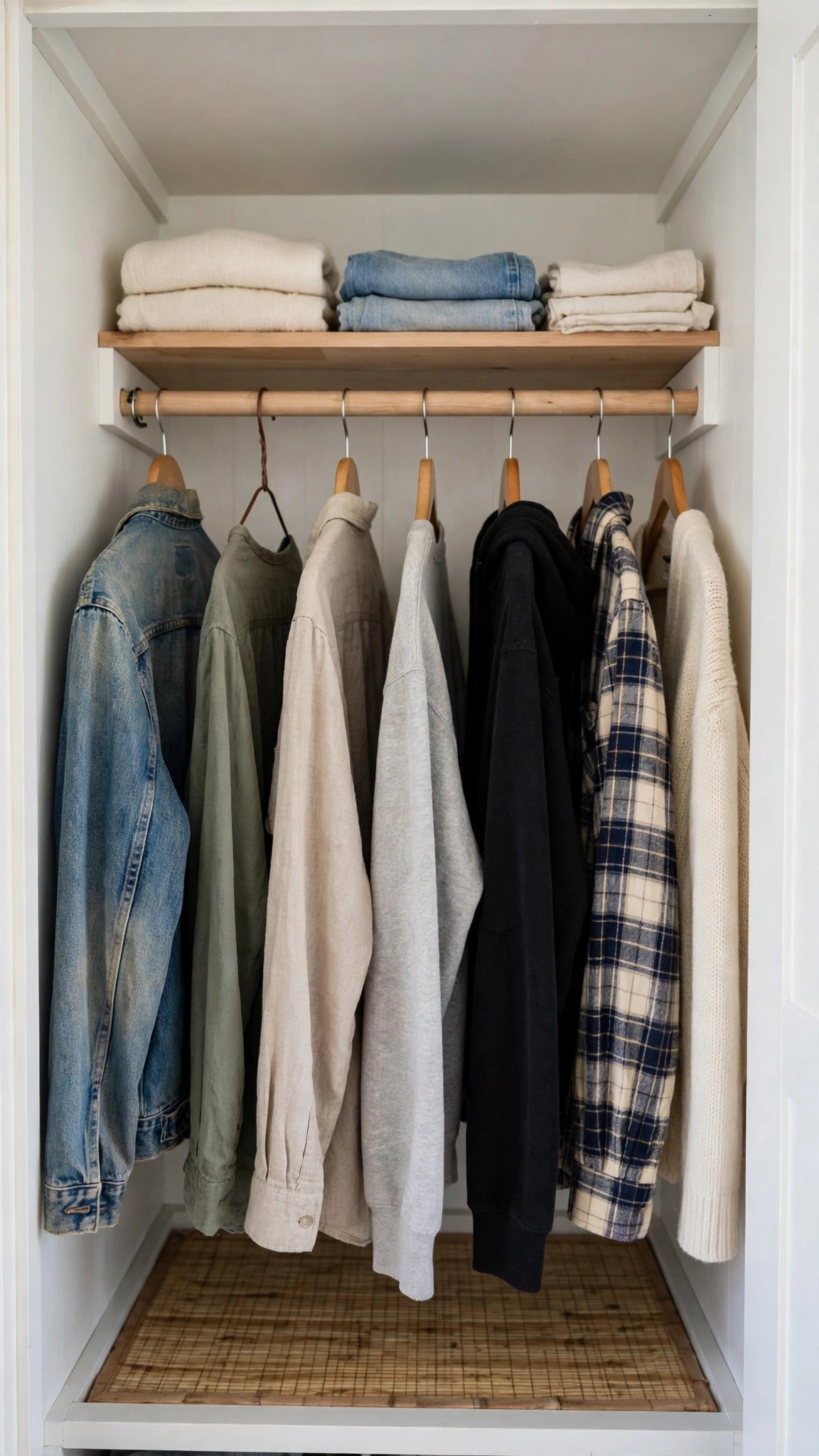
15. The Backwards-Hanger Trick to Find What You Never Wear
Here is the trick that tells you the truth about your closet. Turn every hanger around so the hook faces backwards. Each time you wear something, hang it back the normal way. After three months, look at the rail: every hanger still facing backwards holds something you never wore. Those are the pieces to donate, sell, or store elsewhere.
The trick works because it replaces guessing with evidence. You do not have to decide anything in the moment — just wear what you wear, and let the hangers keep score. Most people are surprised by how much of their closet never moves. Clearing those pieces out is the single biggest space gain a small closet can get, and it costs nothing at all.
Practical Tips
Measure your closet before you buy anything — a tape measure saves more money than any organizer. Start with one idea at a time instead of redoing the whole closet in a day. Keep the things you wear most at eye level, and the rarely used ones up high. Empty the closet once a year and put back only what you wear. Label every bin and drawer so anyone in the house can keep the system working. Finally, leave a little breathing room on the rail — a closet that is packed tight looks messy even when it is organized.
Frequently Asked Questions
1. How can I organize a small closet with no drawers?
Use the rod and the floor instead: clear stacking drawers on the floor, a hanging basket from the rod for small items, and a narrow shelf tower in the gap beside the hanging clothes. A turntable on the shelf handles accessories, and tension rods near the floor take care of shoes.
2. What is the cheapest way to organize a small closet?
Start with the free tricks: the backwards-hanger trick, rolling instead of folding, and hanging clothes by outfit. Then add one low-cost item at a time — tension rods, a turntable, or a magnetic strip — instead of buying a whole system at once.
3. How do I keep a small closet from getting messy again?
Give everything a fixed home and put it back every time. The two habits that matter most are the wear-once-more hook, which stops the chair pile, and the backwards-hanger trick, which keeps unworn clothes from creeping back onto the rail.
4. How do I make a small closet feel bigger?
Paint the inside a light colour, keep the floor clear except for shoes, and use clear storage so you can see everything. Light and visibility do more for the feeling of space than any organizer, and they cost almost nothing.
Final Thoughts
A small closet does not need a bigger budget — it needs smarter tricks. Tension rods for shoes, a turntable for accessories, a magnetic strip for the pins you always lose, and a hanger trick that tells you the truth about what you actually wear. Copy the ideas that fix your frustrations, skip the ones that do not, and let the closet earn its keep. The best small closets are not the ones with the most storage — they are the ones where everything has a home, and you can find it in seconds.