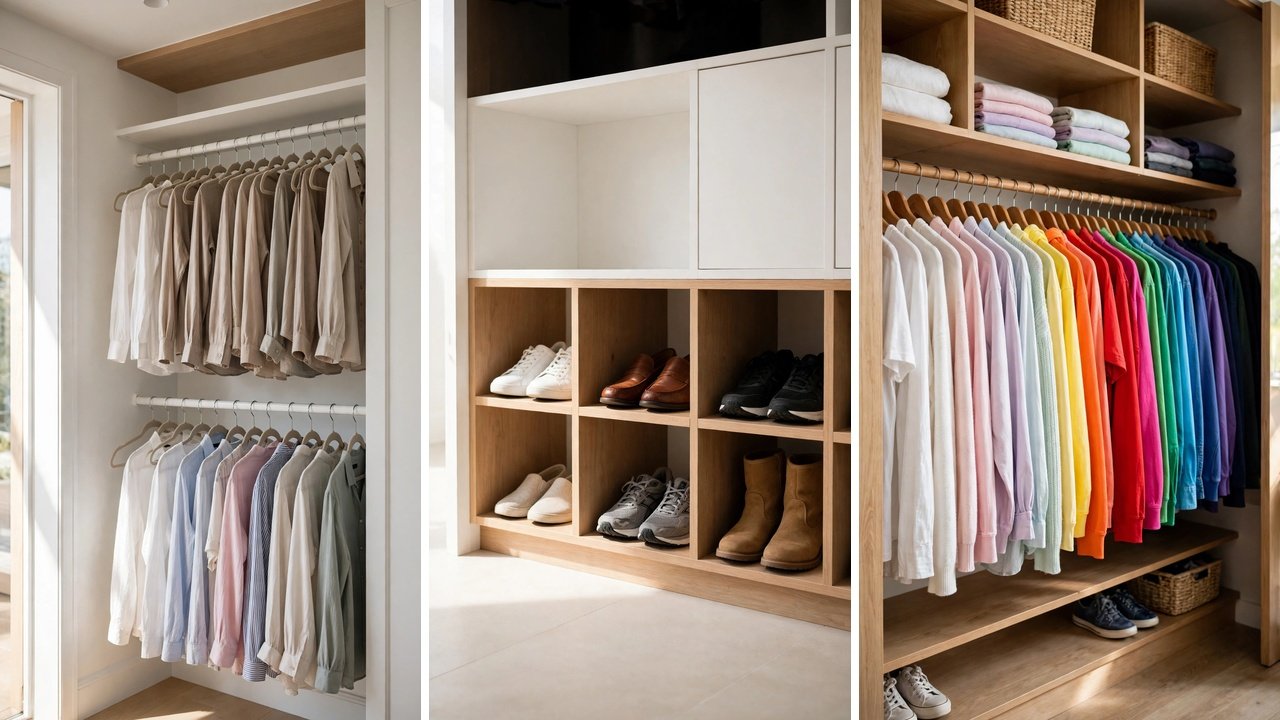
A messy closet can turn every morning into a small battle. Clothes pile up on the floor, hangers tangle together, and the one shirt you actually want hides behind three you forgot you owned. When your closet is cluttered, getting dressed takes longer, outfits feel harder to put together, and the whole room feels untidy even when the rest of the house is clean.
The good news is that a clutter-free closet does not need a big budget or a full renovation. A few smart systems — a second hanging rod, the right bins, a place for every pair of shoes — can completely change how your closet works. These 15 closet organization ideas are simple, affordable, and easy to try one at a time, so you can build a closet that stays tidy long after the first clean-out.
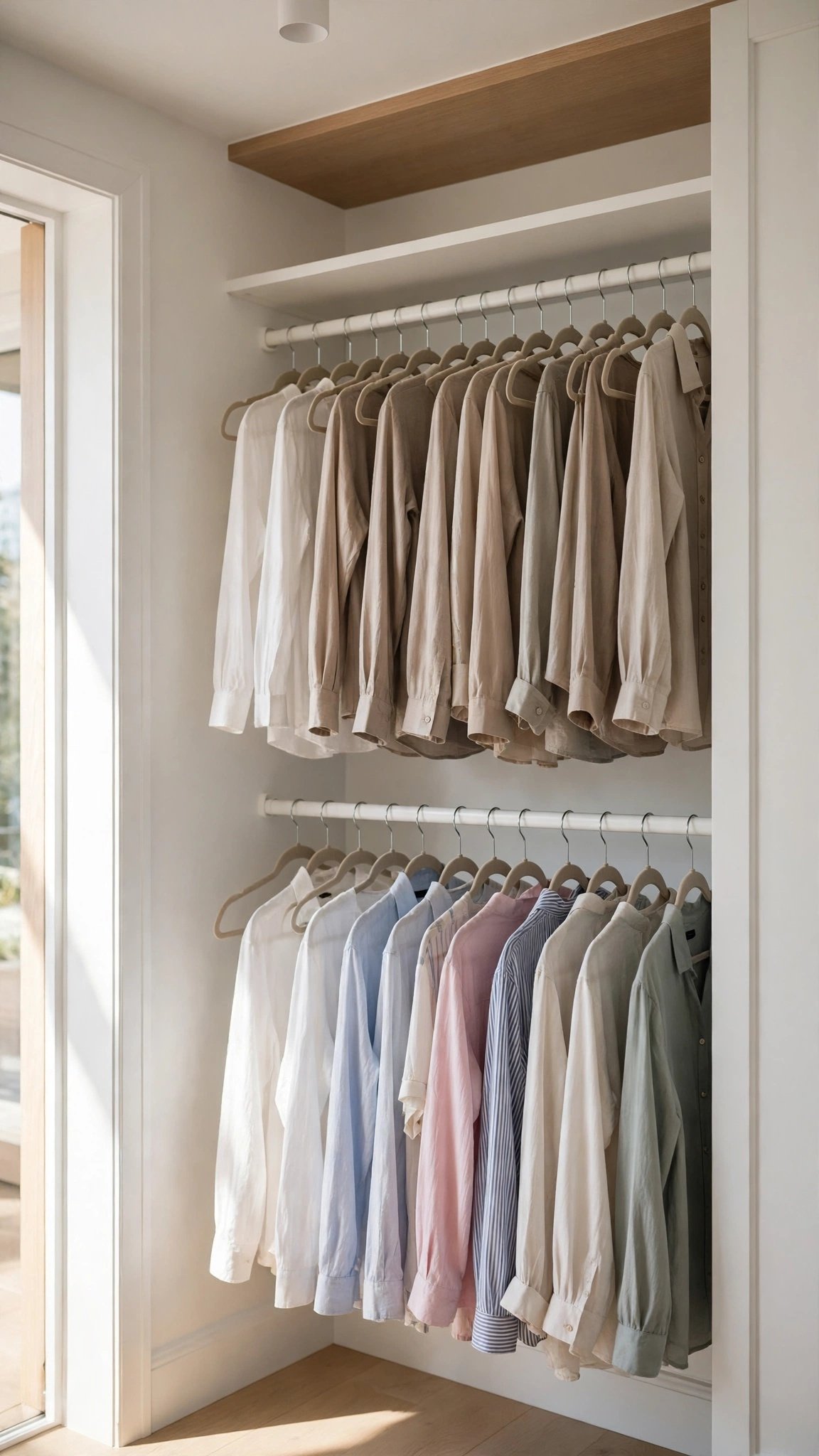
1. Double Hang Rod for Short Clothes
A double hang rod instantly doubles the hanging space in any closet. By adding a second rod below the first one, shirts, blouses, and folded trousers each get their own level, and nothing has to be squeezed onto a single crowded bar. It is one of the cheapest upgrades you can make, and most rods install in minutes with no tools beyond a drill.
The trick is to keep long items like dresses and coats on a separate single-rod section. Short clothes live on the double rod, long clothes hang freely beside them, and everything stays visible at a glance. Once you try it, a single rod will feel like a waste of space.
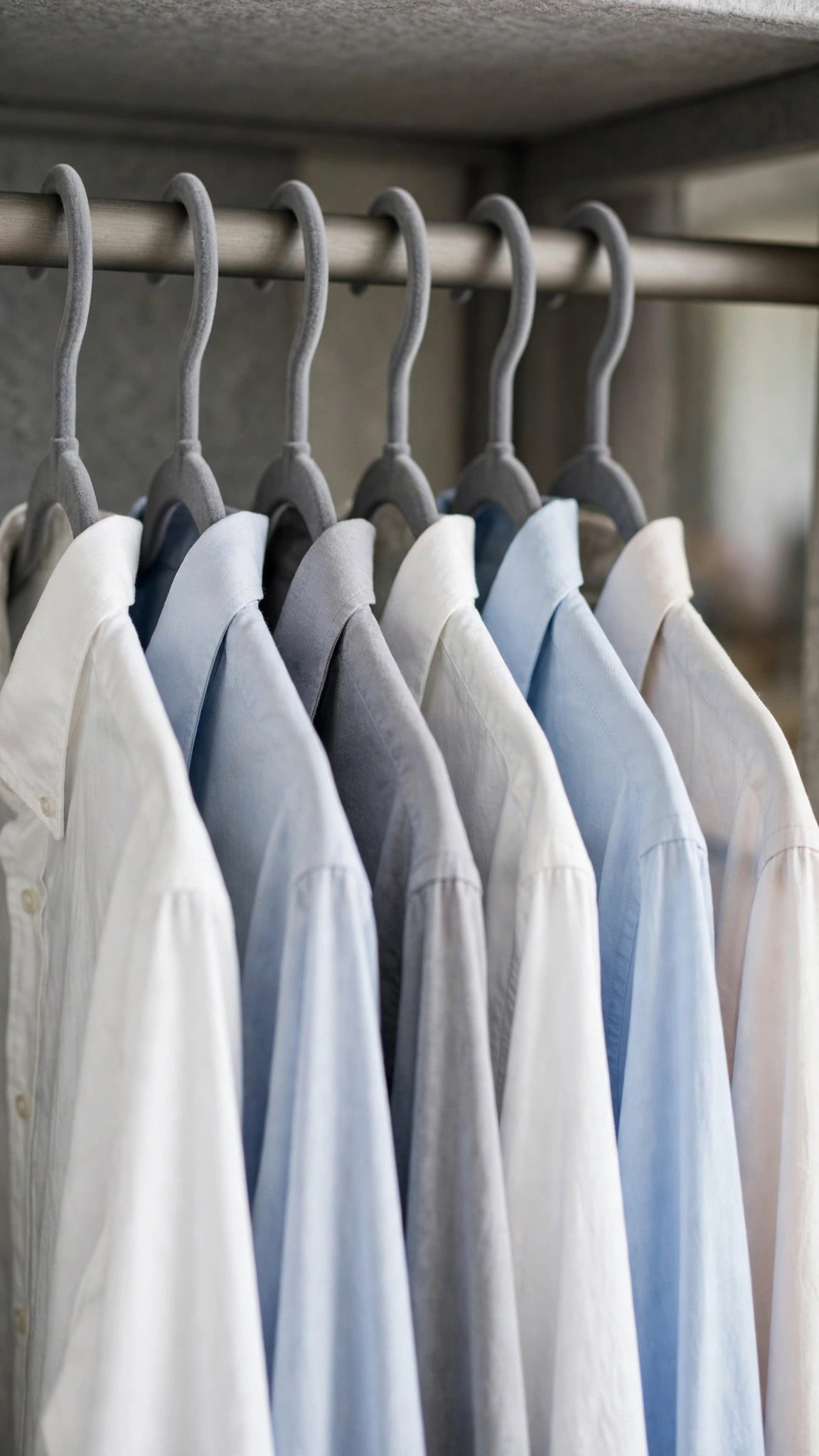
2. Slim Velvet Hangers in One Color
Bulky plastic and wire hangers eat up rod space and let clothes slip off onto the floor. Slim velvet hangers are barely thicker than a coin, so you can fit far more garments on the same rod, and the soft grip keeps even silky tops in place. Switching to one matching set also makes the whole closet look calm and intentional.
Pick a single color for every hanger and retire the mixed collection. The uniform look is not just pretty — it stops the visual noise that makes a closet feel messy even when it is technically organized. Your clothes become the focus, not the hangers holding them.
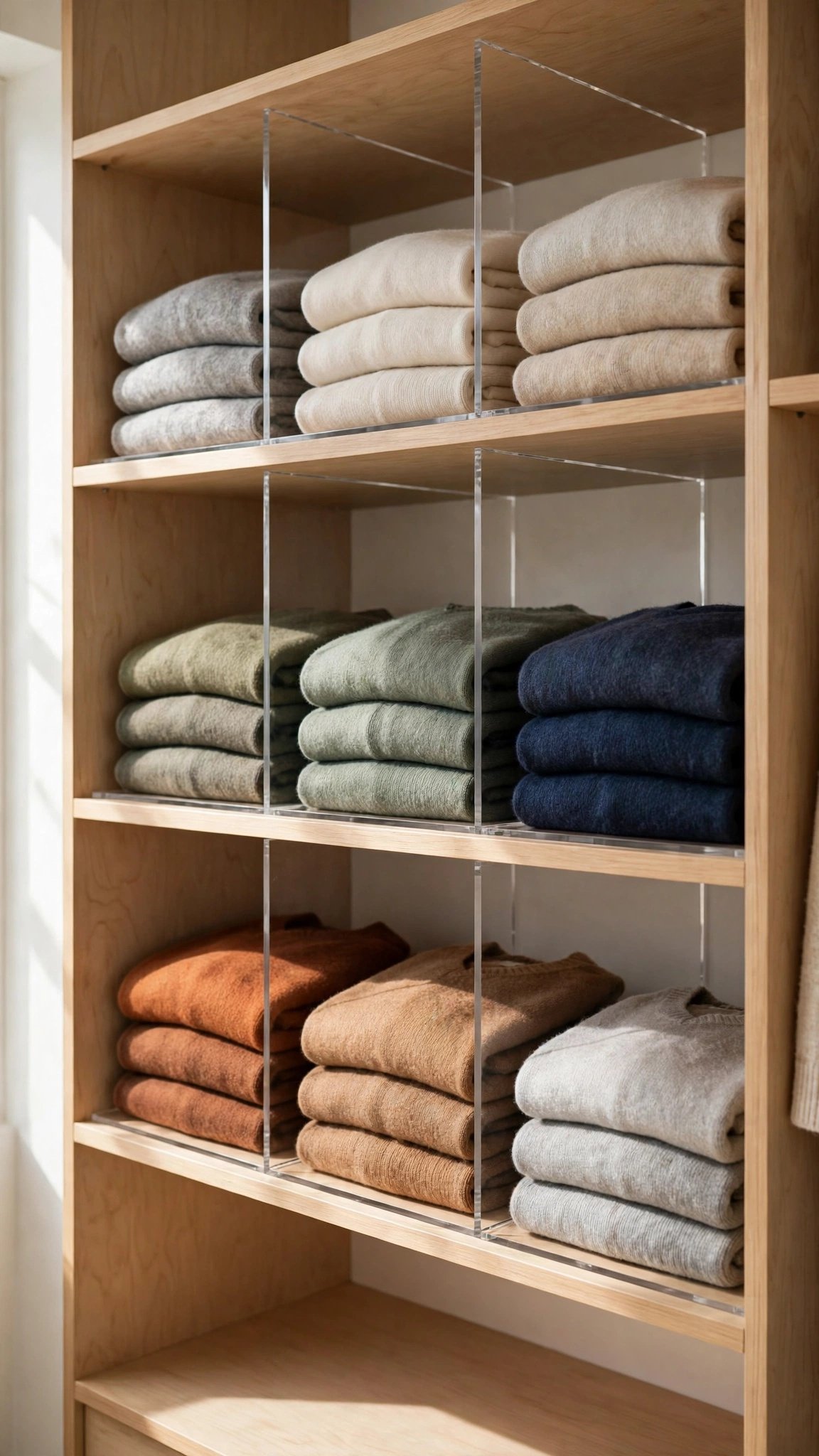
3. Shelf Dividers for Neat Stacks
Folded clothes have a habit of toppling sideways the moment you pull one item out of a stack. Shelf dividers fix that by giving every stack its own little bay, so sweaters, jeans, and T-shirts stand upright and stay put. They slide onto most shelves without screws and cost very little for the order they bring.
Sort each stack by type and keep the stacks low, around five or six items high. Lower stacks are easier to pull from without disturbing the rest, and the dividers keep the edges crisp. The result looks like a shop display and holds up far better than open piles.
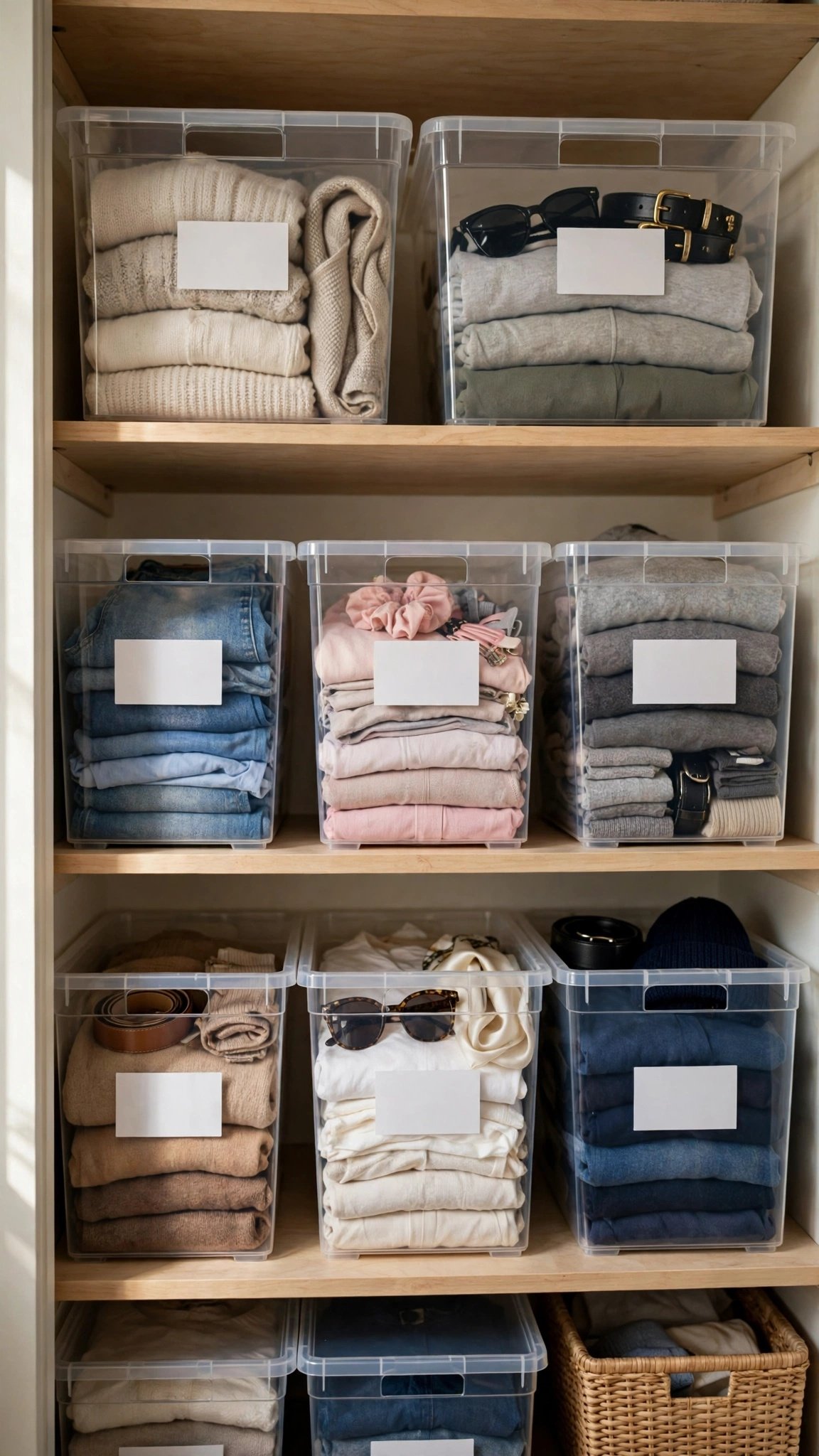
4. Clear Labeled Storage Bins
Clear bins let you see what is inside without opening anything, which is exactly what a busy closet needs. Use them for off-season accessories, extra bedding, or the clothes you only wear a few times a year, and add a simple label on the front so anyone in the house can find things without asking. Uniform bins in one size stack neatly and look far tidier than a mix of bags and boxes.
Keep the bins you reach for most at eye level and the rarely used ones up high. The label matters as much as the bin itself — a labeled bin gets used, while an unlabeled one slowly turns into a mystery box. A label maker or even neat handwriting on masking tape does the job.
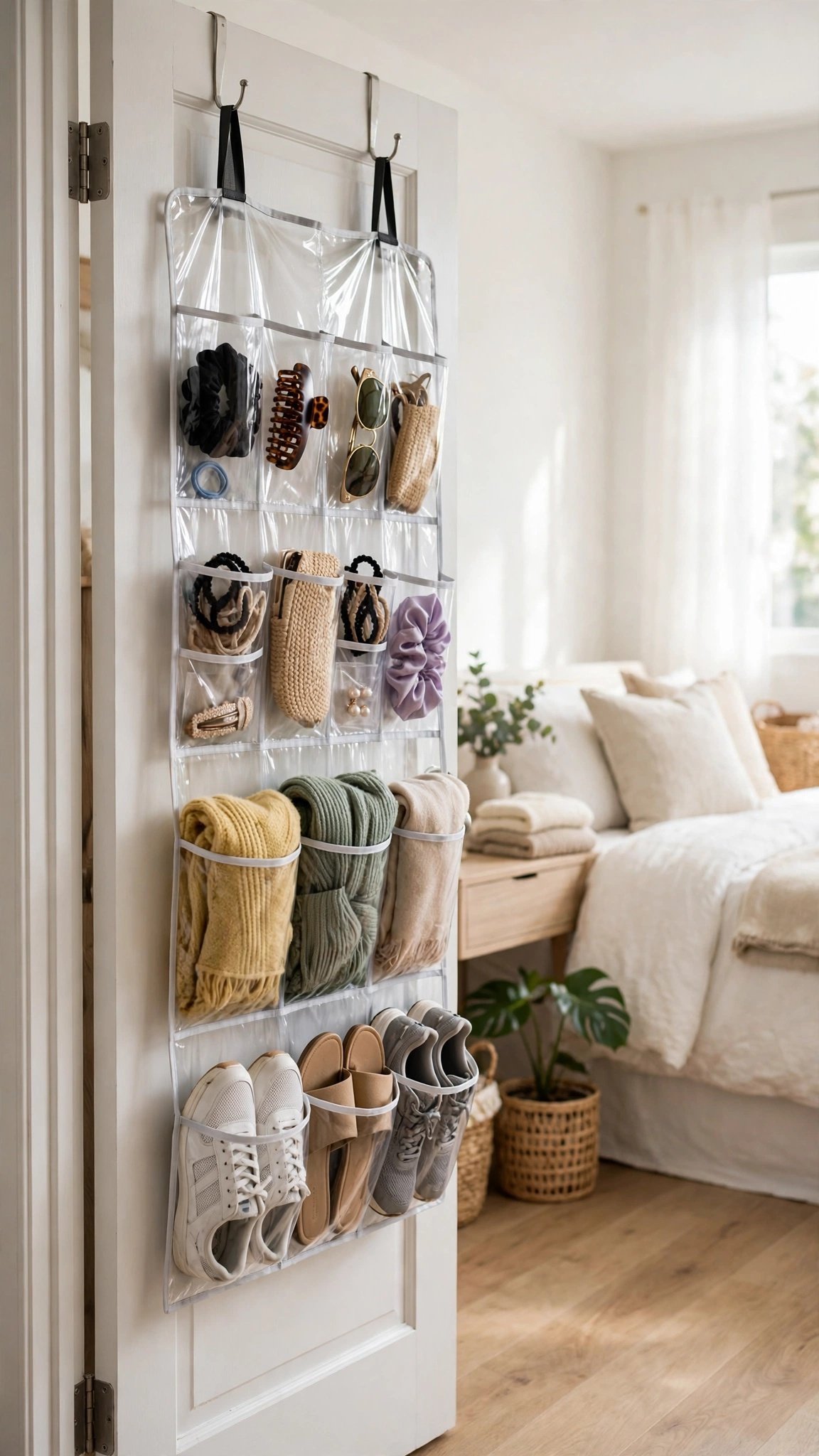
5. Over-the-Door Shoe Organizer
The back of the closet door is free storage space that most people never use. A clear over-the-door organizer turns it into a home for shoes, scarves, belts, and small accessories, keeping them visible and off the floor. It hangs in seconds, needs no drilling, and works just as well on a bedroom door if the closet door is a slider.
Use the pockets for the things you grab most — everyday shoes at the bottom, accessories at eye level. Because the pockets are clear, you can spot what you need without digging. It is a small change that frees up a surprising amount of shelf and floor space inside the closet.
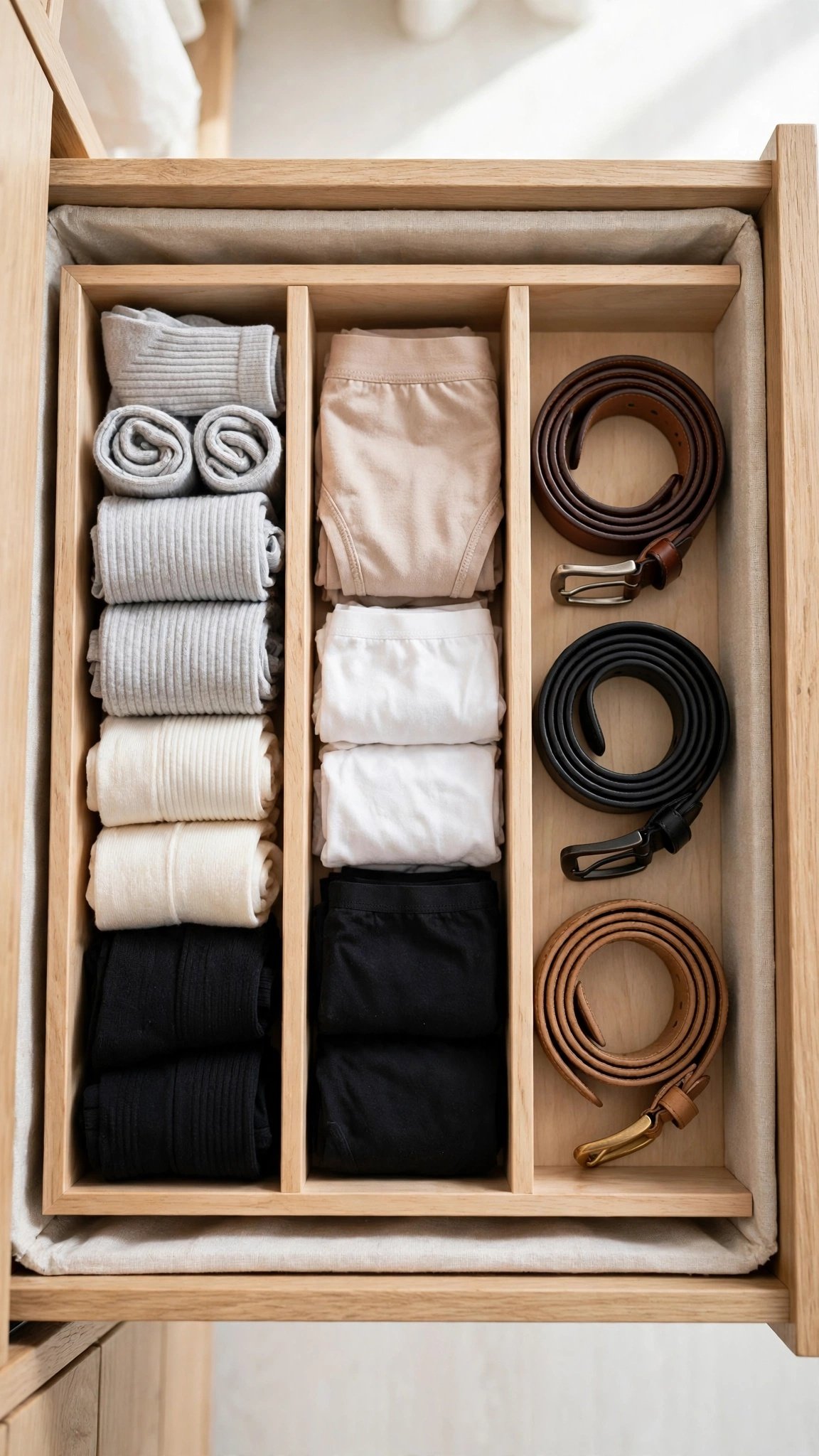
6. Drawer Dividers for Small Items
Small items are what make a closet feel chaotic: socks, underwear, ties, and belts end up in one jumbled drawer. Drawer dividers split that drawer into neat compartments, so every category has its own place and nothing migrates. Adjustable dividers fit almost any drawer, and fabric boxes work just as well if you prefer a softer look.
Give each compartment one job and keep it to that job. When every small item has a defined home, putting laundry away takes seconds instead of minutes, and the drawer stays organized without any extra effort. It is the lowest-effort upgrade with the highest daily payoff.
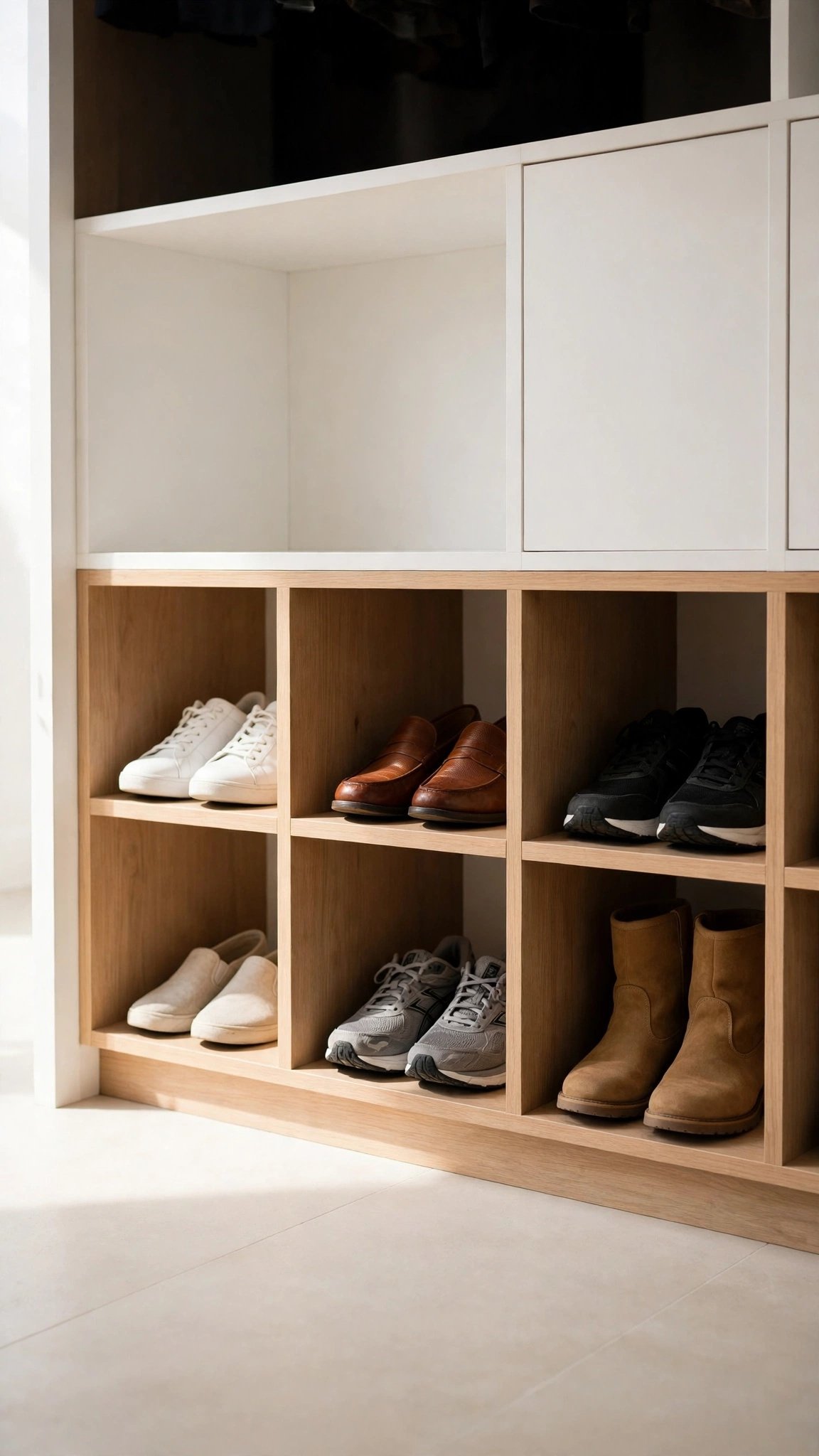
7. Shoe Cubbies at the Bottom
Shoes piled on the closet floor are the fastest way to make the whole space look messy. Low cubbies or a simple shoe rack along the bottom of the closet give every pair a slot, keep them off the floor, and make it easy to see your options when you are choosing an outfit. Stackable cubbies can be arranged to fit awkward corners and narrow closets.
Keep everyday shoes at the front and special-occasion pairs toward the back or up higher. If you have more shoes than cubbies, that is a useful signal to let a few pairs go. A closet floor you can actually see is the clearest sign the system is working.
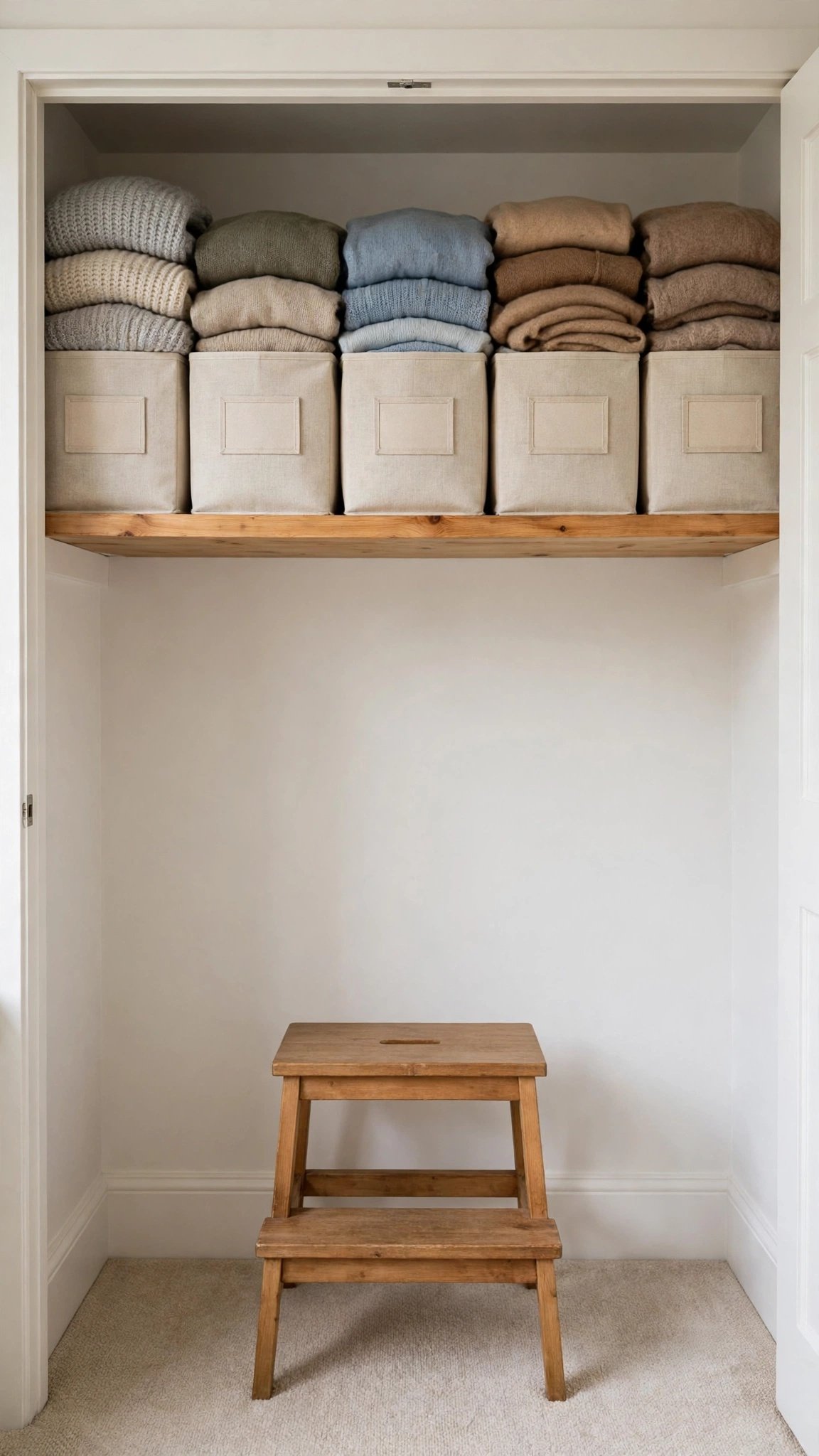
8. Seasonal Swap Bins on the Top Shelf
The top shelf is the hardest place to reach, so it should hold the things you need least often. Seasonal swap bins are perfect there — winter coats and heavy knits in summer, light linens and swimwear in winter. When the season changes, you swap the bins instead of reorganizing the whole closet, and the job takes under an hour.
Label each bin by season and keep a short list of what is inside taped to the lid. That way you never have to open three bins to find one scarf. Rotating seasonally also forces a mini declutter twice a year, which keeps the closet from slowly filling up again.
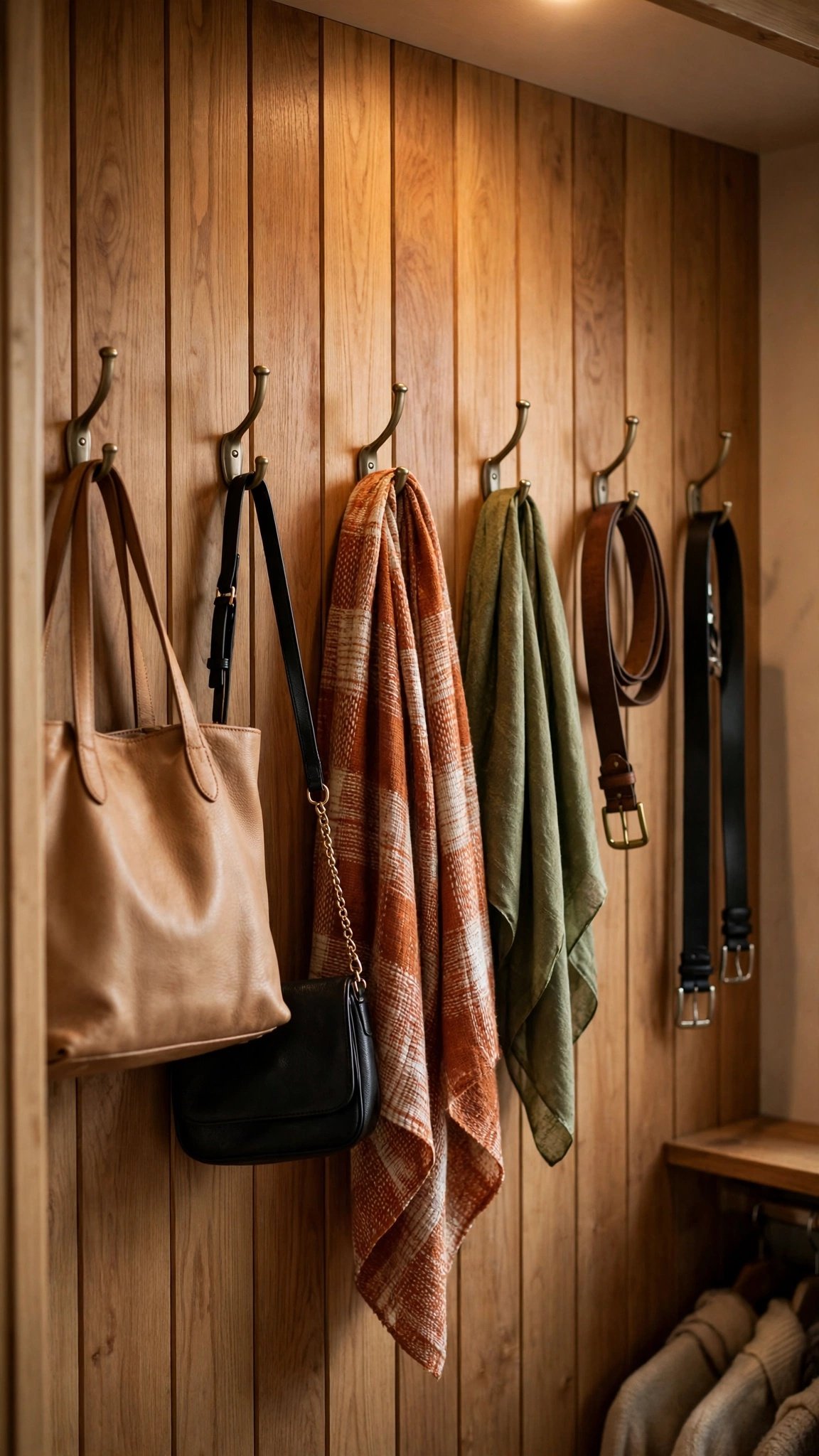
9. Wall Hooks for Bags and Scarves
Bags and scarves are awkward to fold and take up far too much shelf space when they are stacked. A row of sturdy wall hooks inside the closet door or on a side wall gives them a home where they hang freely, stay visible, and keep their shape. Hooks are cheap, install in minutes, and hold far more than they look like they should.
Hang your most-used bag at the front and rotate the rest behind it. Scarves draped over hooks stay wrinkle-free and easy to grab, unlike scarves buried in a drawer. It is a simple fix that clears a whole shelf in one move.
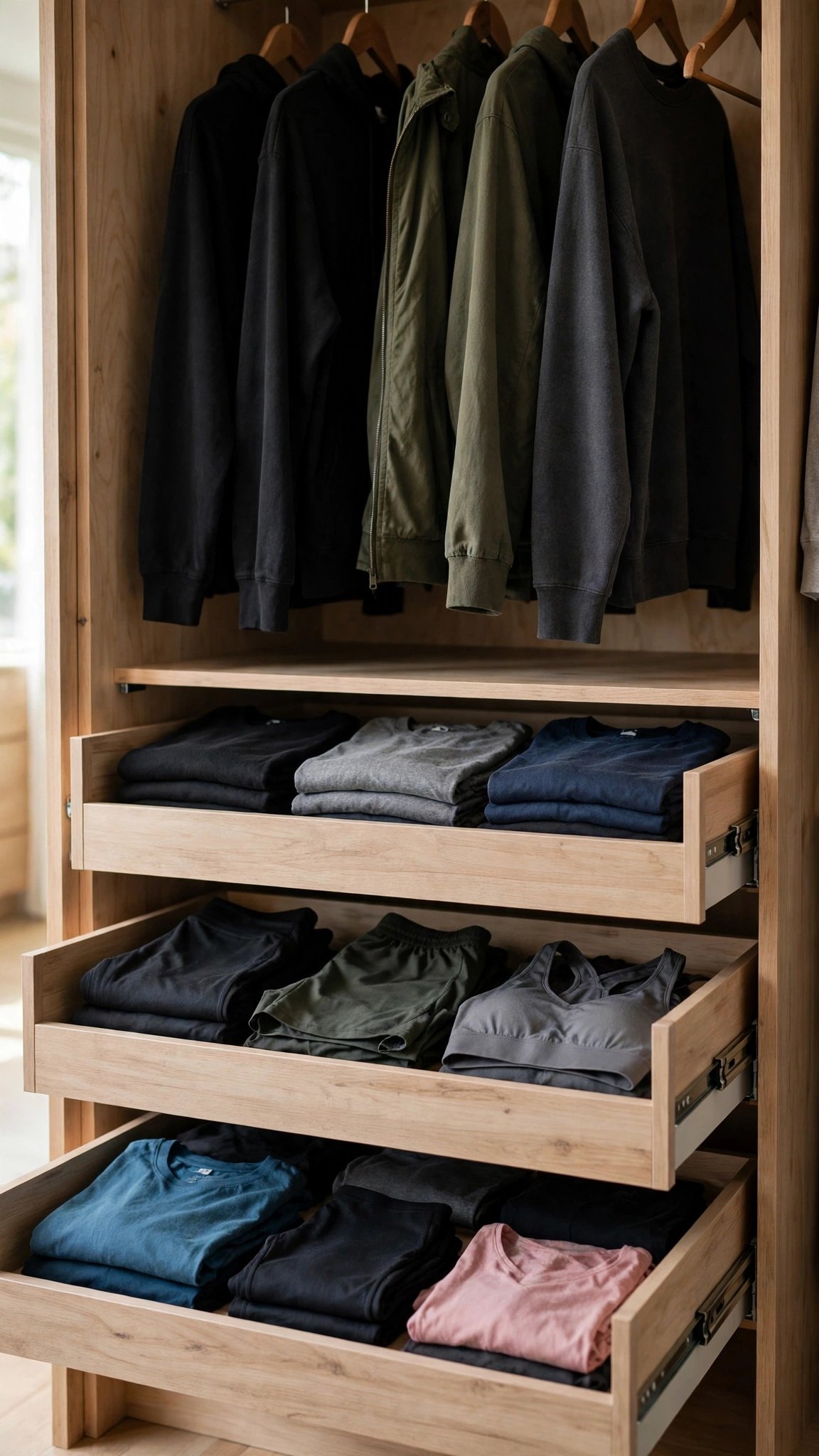
10. Pull-Out Drawers Under Hanging Clothes
The space under hanging clothes is often dead space — too low for hanging, too awkward for shelves. Shallow pull-out drawers fit perfectly there and turn it into storage for folded T-shirts, workout clothes, or underwear. Because they slide out, you can reach everything without crouching or moving other items out of the way.
Measure the height under your shortest hanging clothes before you buy. Even a single stack of two or three drawers can hold a surprising amount, and the smooth glide makes putting clothes away feel effortless. It is the closest thing to custom built-ins without the custom price.
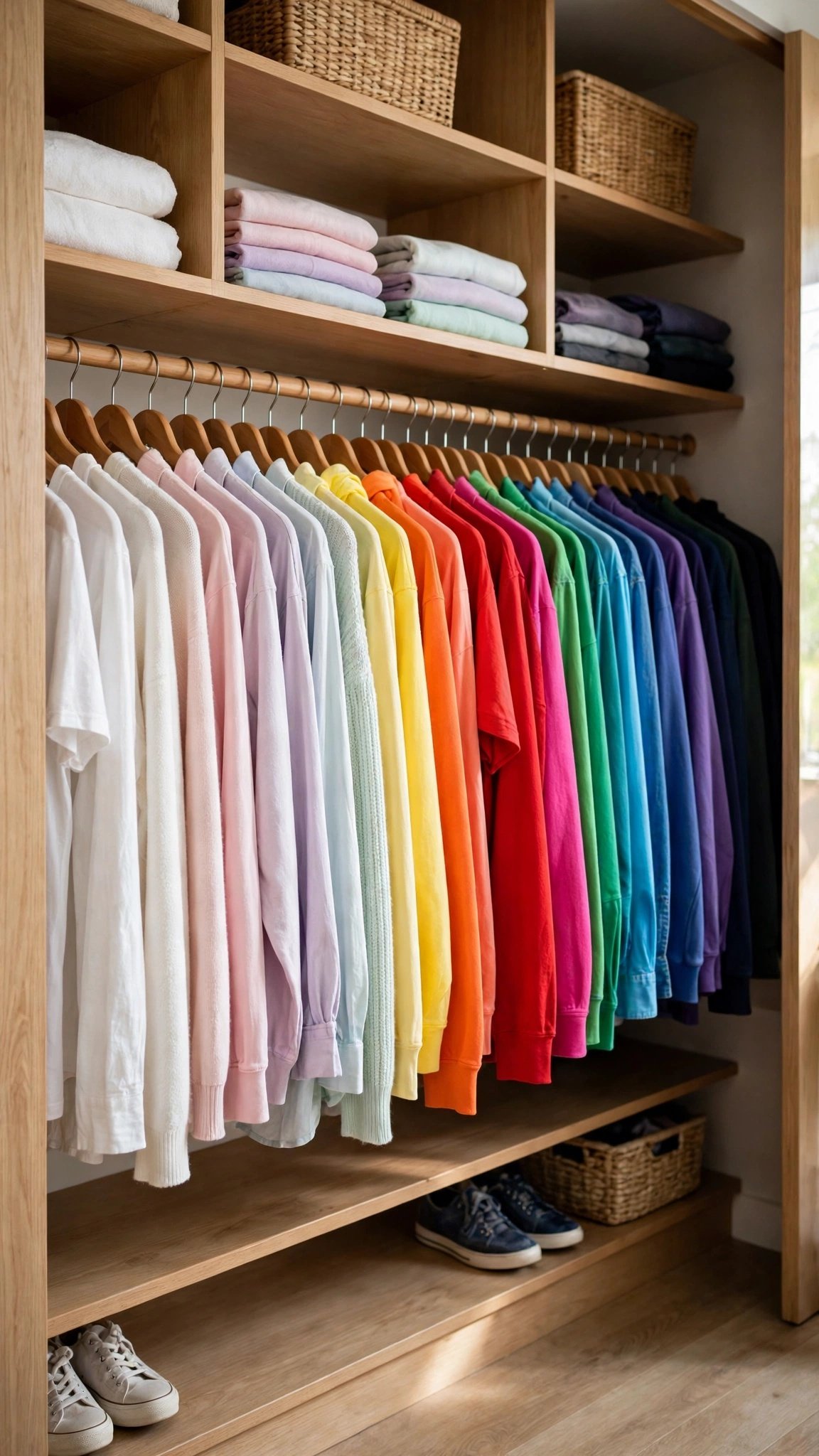
11. Color-Code Your Wardrobe
Color-coding sounds fussy, but it is one of the fastest ways to find anything in your closet. Arranging clothes from light to dark — whites, then pastels, then brights, then darks — turns a jumbled rod into a gradient that your eyes can scan in seconds. You stop hunting and start choosing.
Do it within each category rather than across the whole closet: all shirts in color order, then all trousers, then all dresses. That way the system helps you build outfits instead of just looking pretty. Once you get used to it, a non-coded closet feels surprisingly hard to use.
12. Vacuum Bags for Winter Bulk
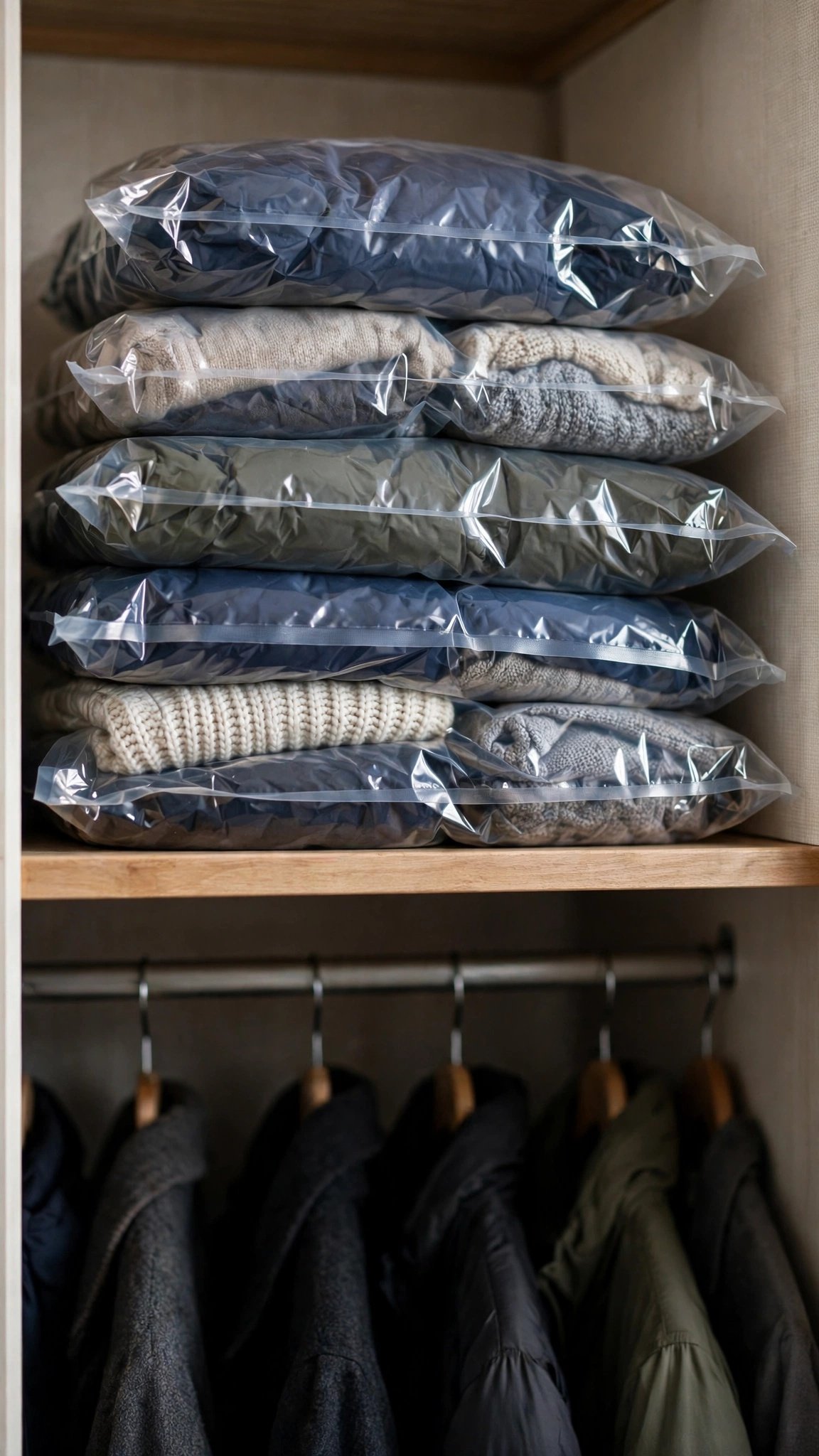
Bulky winter clothes — heavy coats, thick sweaters, spare blankets — take up a huge amount of closet space for the months you are not wearing them. Vacuum storage bags compress them to a fraction of their size, so a whole shelf of winter wear fits into one neat stack. They also protect against dust and damp while things are stored away.
Do not overfill the bags, and let heavy knits breathe for a day before you pack them away. Stack the sealed bags flat on the top shelf or under the bed, and label each one so you know which bag holds what. When winter returns, the clothes come out fresh and full again.
13. Jewelry Tray on a Shelf
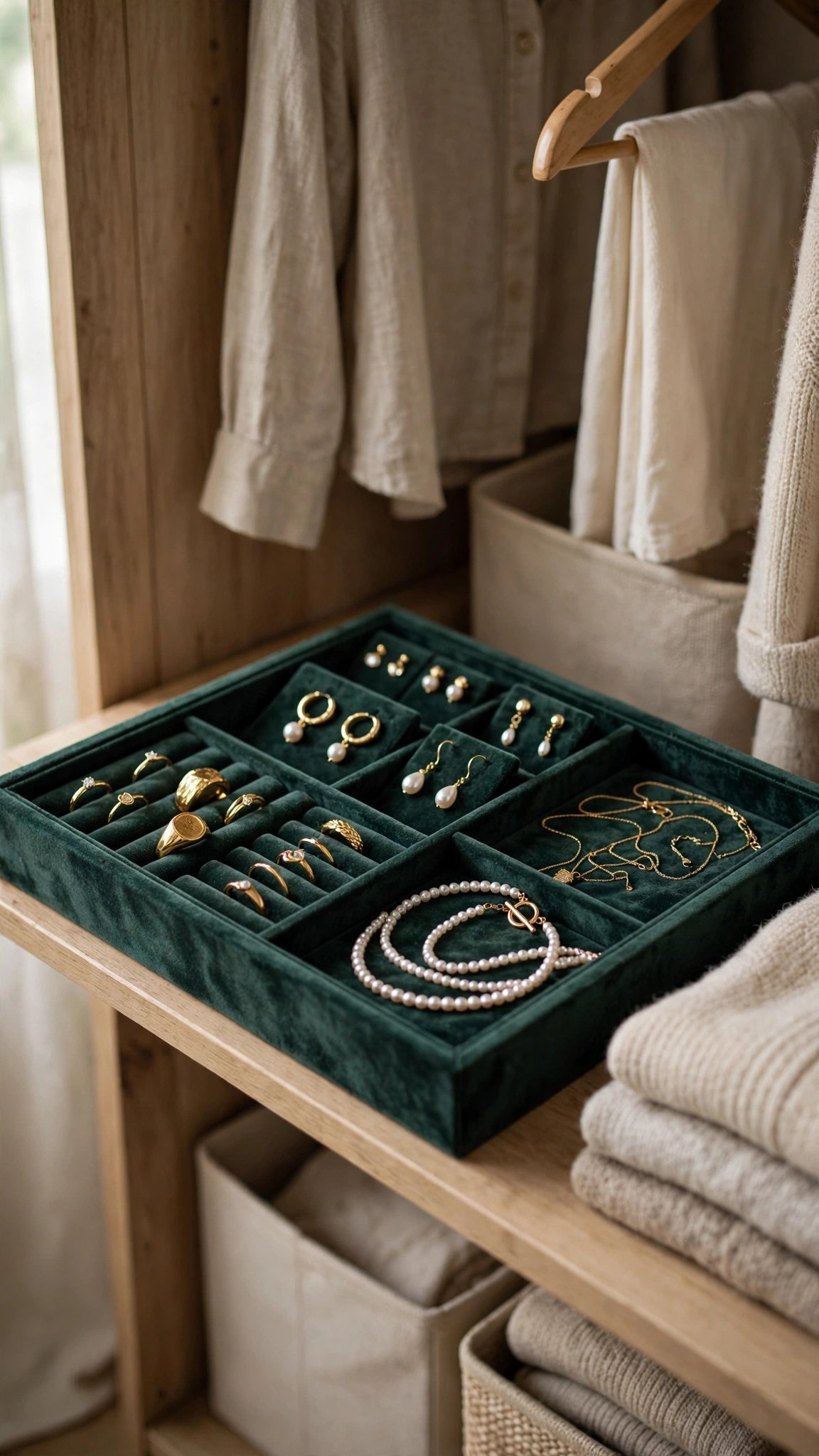
Jewelry tangles fast when it is tossed into a box or a drawer. A shallow jewelry tray with separate slots for rings, earrings, and necklaces keeps every piece visible and untangled, and it turns a cluttered corner of a shelf into a little display. Velvet-lined trays are gentle on delicate pieces and look lovely sitting out in the open.
Keep the tray where you get dressed so putting jewelry on becomes part of the routine instead of an afterthought. Hanging necklaces on small hooks beside the tray stops chains from knotting. When everything has a slot, you actually wear the pieces you own instead of forgetting them.
14. Mirror on the Closet Door
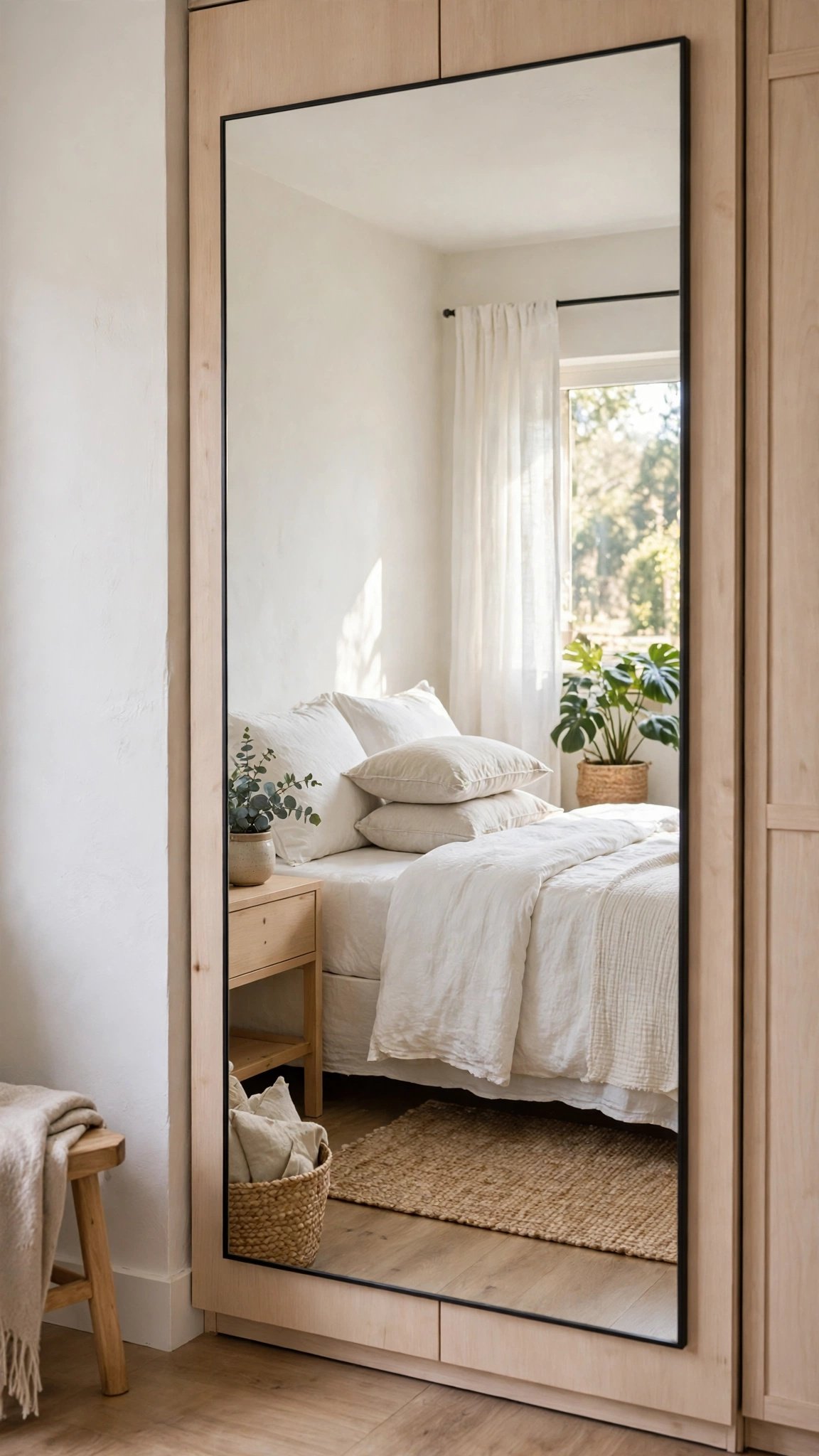
A full-length mirror on the closet door saves you a trip across the room every time you try something on. It makes outfit checks part of getting dressed instead of a separate step, and it bounces light around the closet so the interior feels brighter and bigger. Most door mirrors hang with simple over-the-door brackets, so there is no drilling involved.
Pick a mirror that covers most of the door so you can see a full outfit, not just your top half. If the closet has sliding doors, a leaning mirror just inside the closet works just as well. It is a practical addition that also makes the whole bedroom feel more finished.
15. The 10-Minute Weekly Reset
Every organization system slowly drifts without a little maintenance, and the fix is a short weekly reset. Once a week, spend ten minutes in the closet: rehang anything that slipped off, refold the stacks that toppled, return stray items to their bins, and pull out anything you noticed you never wear. Ten minutes is short enough to actually do it, and regular enough to stop clutter from building up.
Set the same day each week so it becomes a habit rather than a chore. Pair it with something pleasant, like a favorite song or a cup of tea afterward, and the reset stops feeling like work. A closet that gets ten minutes a week stays organized all year — the systems do the heavy lifting, and the reset just keeps them honest.
Frequently Asked Questions
1. How do I start organizing a messy closet?
Take everything out first, then sort it into three piles: keep, donate, and throw away. Clean the empty shelves and rods, then put back only the keep pile using one system at a time — hangers first, then bins, then shoes. Starting with an empty closet makes every decision easier.
2. What is the best way to store out-of-season clothes?
Wash everything, then pack it into labeled bins or vacuum bags and store them on the top shelf or under the bed. Keep a short list of what is inside each bin so you can find things without opening them all. Swap the bins when the season changes.
3. How can I organize a small closet with no built-ins?
Use the vertical space: add a second hanging rod, hang an over-the-door organizer, and stack slim bins on the top shelf. Slim hangers and shelf dividers add capacity without any construction, and a small set of drawers under the hanging clothes uses the dead space at the bottom.
4. How often should I declutter my closet?
Do a quick declutter every season when you swap the bins, and a deeper one once a year. If something has not been worn in a full year and is not a special-occasion piece, it is usually safe to let it go. Regular small clear-outs beat one giant annual purge.
Final Thoughts
A clutter-free closet is not about owning less — it is about giving everything you own a proper home. Start with one or two ideas from this list, the ones that fix your biggest daily frustration, and let the system grow from there. A double rod here, a labeled bin there, and suddenly mornings feel calmer and getting dressed feels easy. Your closet should work for you, not against you, and these 15 ideas are a practical way to make that happen.