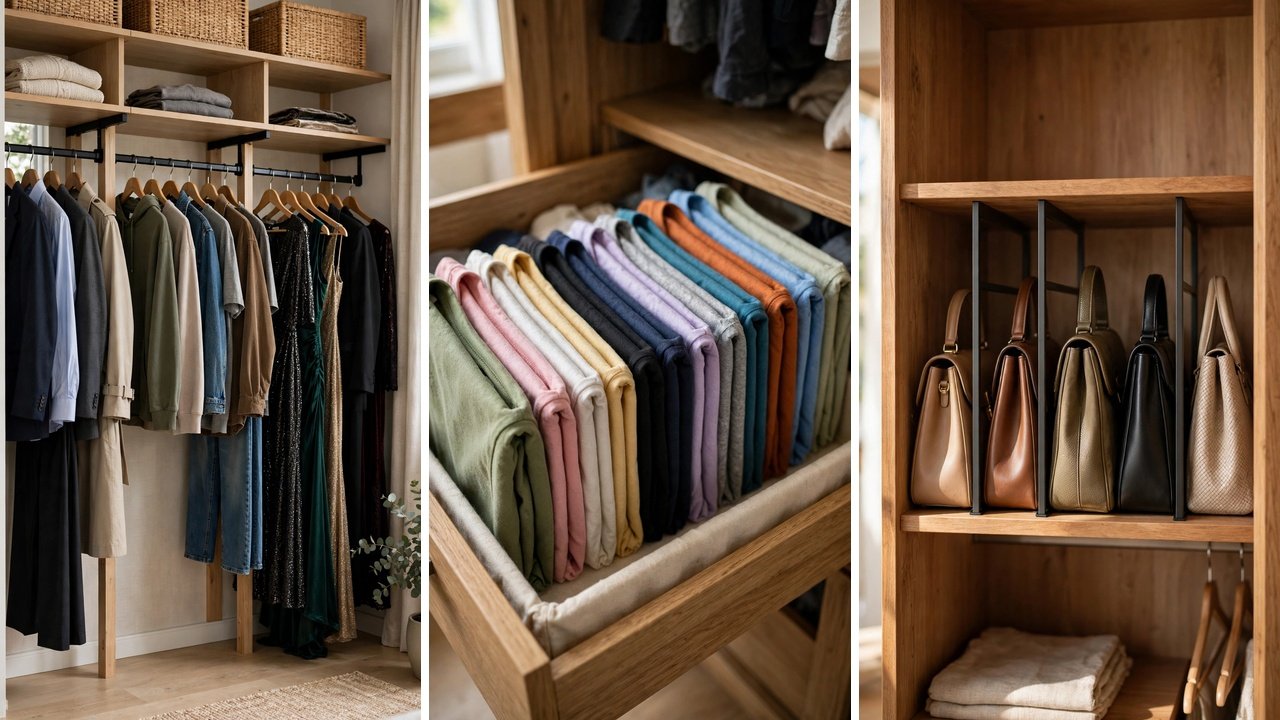
A wardrobe should make getting dressed easy. Instead, for most of us, it is a crowded rail, a drawer you have to dig through, and a shelf where things go to disappear. You know the outfit you want is in there somewhere — but finding it takes longer than wearing it. The problem is rarely how many clothes you own. It is that the wardrobe has no system.
These 15 wardrobe organisation ideas change how the space works, not just how it looks. Zones, better folding, and a home for every accessory mean you can see everything you own, reach it without a struggle, and put it back in seconds. Work through them one at a time, and the same wardrobe will feel like a completely different piece of furniture.
1. Zone Your Wardrobe by Category and Occasion
The simplest way to organise a wardrobe is to give every kind of clothing its own zone. Work clothes together, casual clothes together, party and occasion wear together — each in its own stretch of rail or shelf. When you need an outfit for a specific day, you walk straight to the right zone instead of scanning the whole wardrobe.
Zones also show you what you have too much of. If the casual zone is bursting while the work zone is nearly empty, you know exactly where to stop buying. Keep the zones in the order you use them, with the everyday zone at the front or at eye level, so the most-used clothes are always the easiest to reach.
2. File-Fold Everything in the Drawers
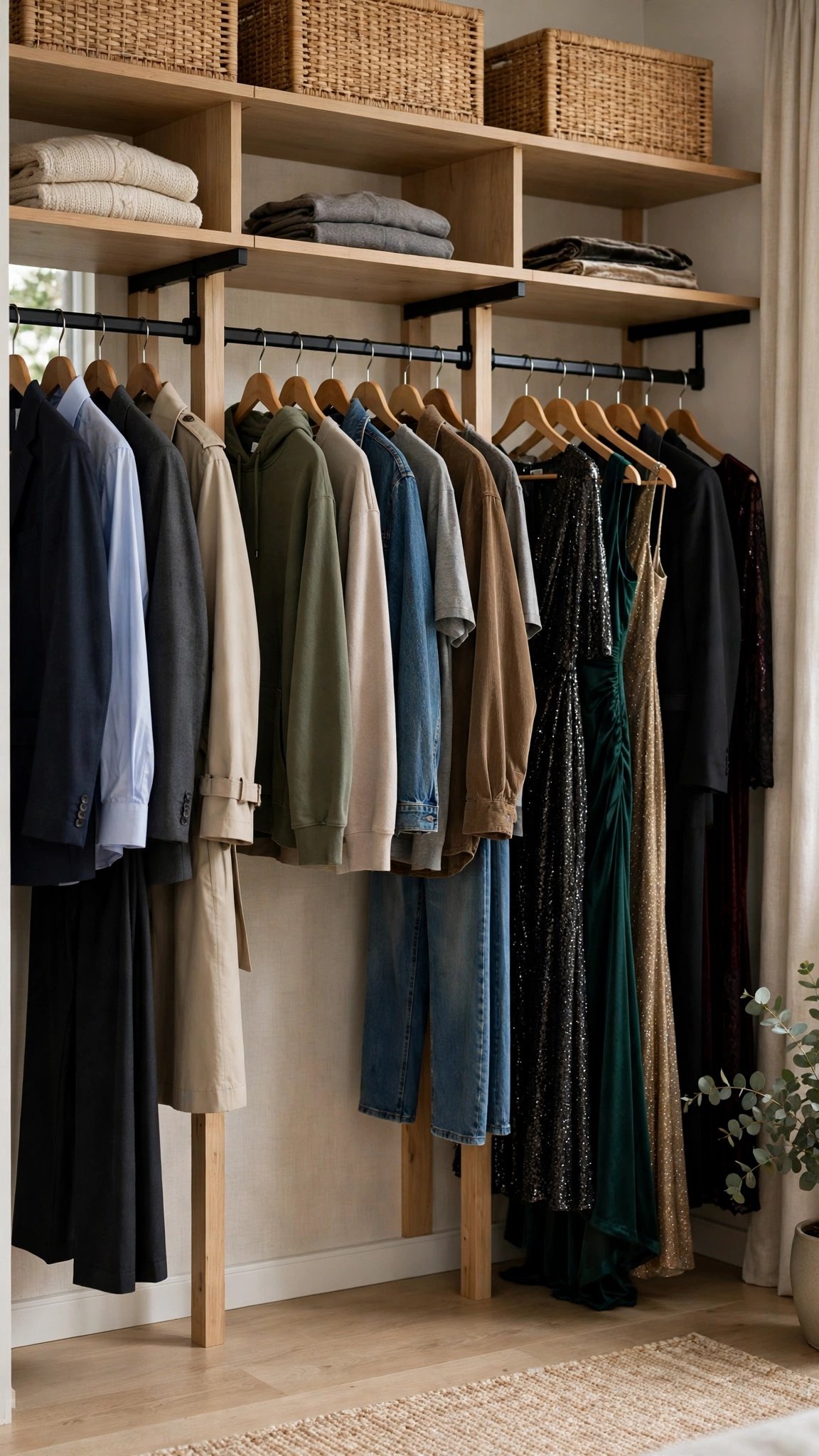
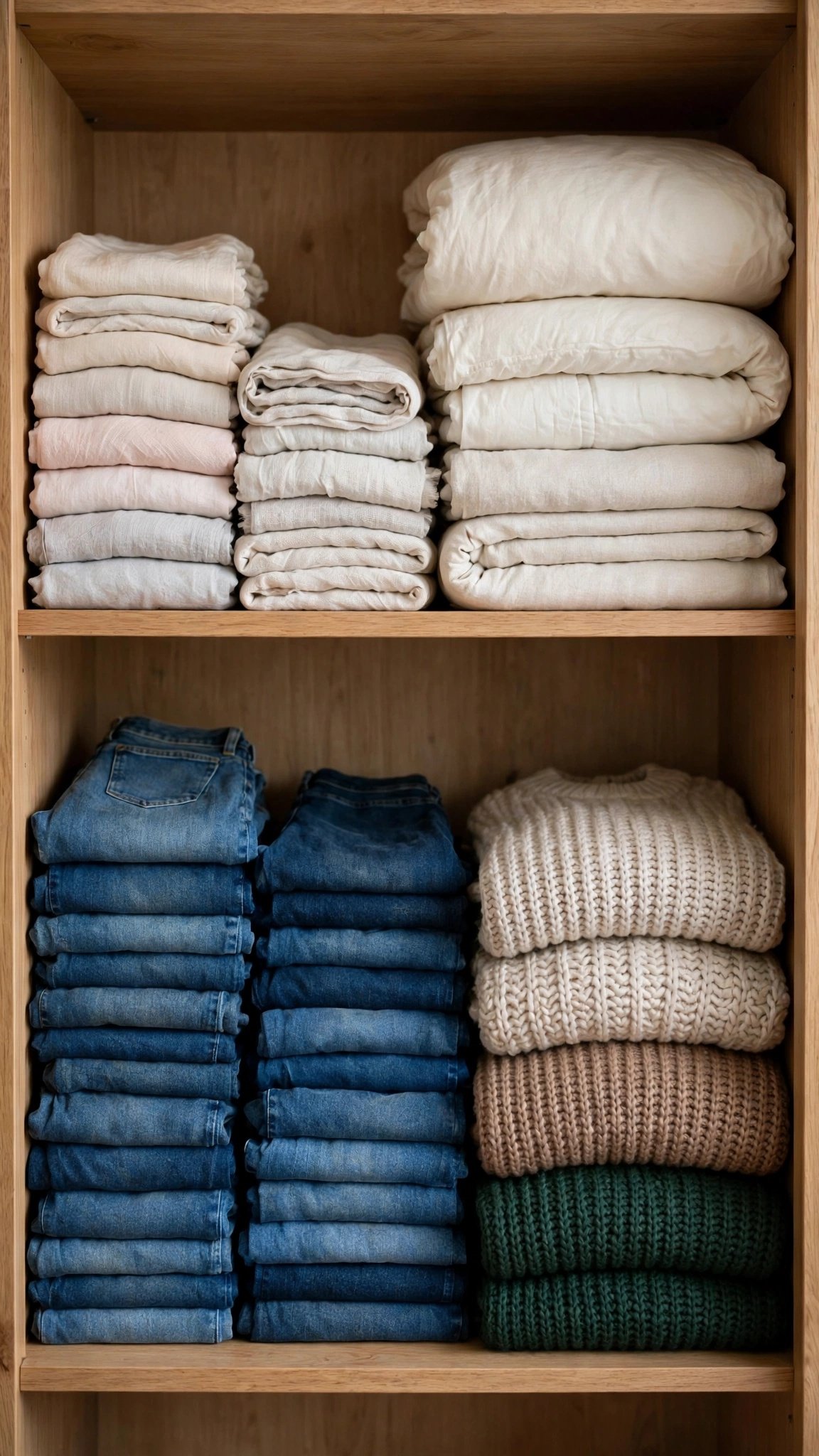
Most drawers are a mess because clothes are stacked flat, so you can only see the top item and the rest get buried. File-folding — folding each item into a small rectangle and standing it upright in a row, like files in a drawer — means you can see every single piece at a glance. Pull one out and the rest stay neat.
This works best for T-shirts, underwear, socks, and kids’ clothes. Fold each item to roughly the height of the drawer so nothing flops over, and pack the rows snugly enough that they support each other. A drawer that used to hold a jumble now holds a tidy, visible collection, and getting dressed in the morning gets noticeably faster.
3. Give Accessories Their Own Zone
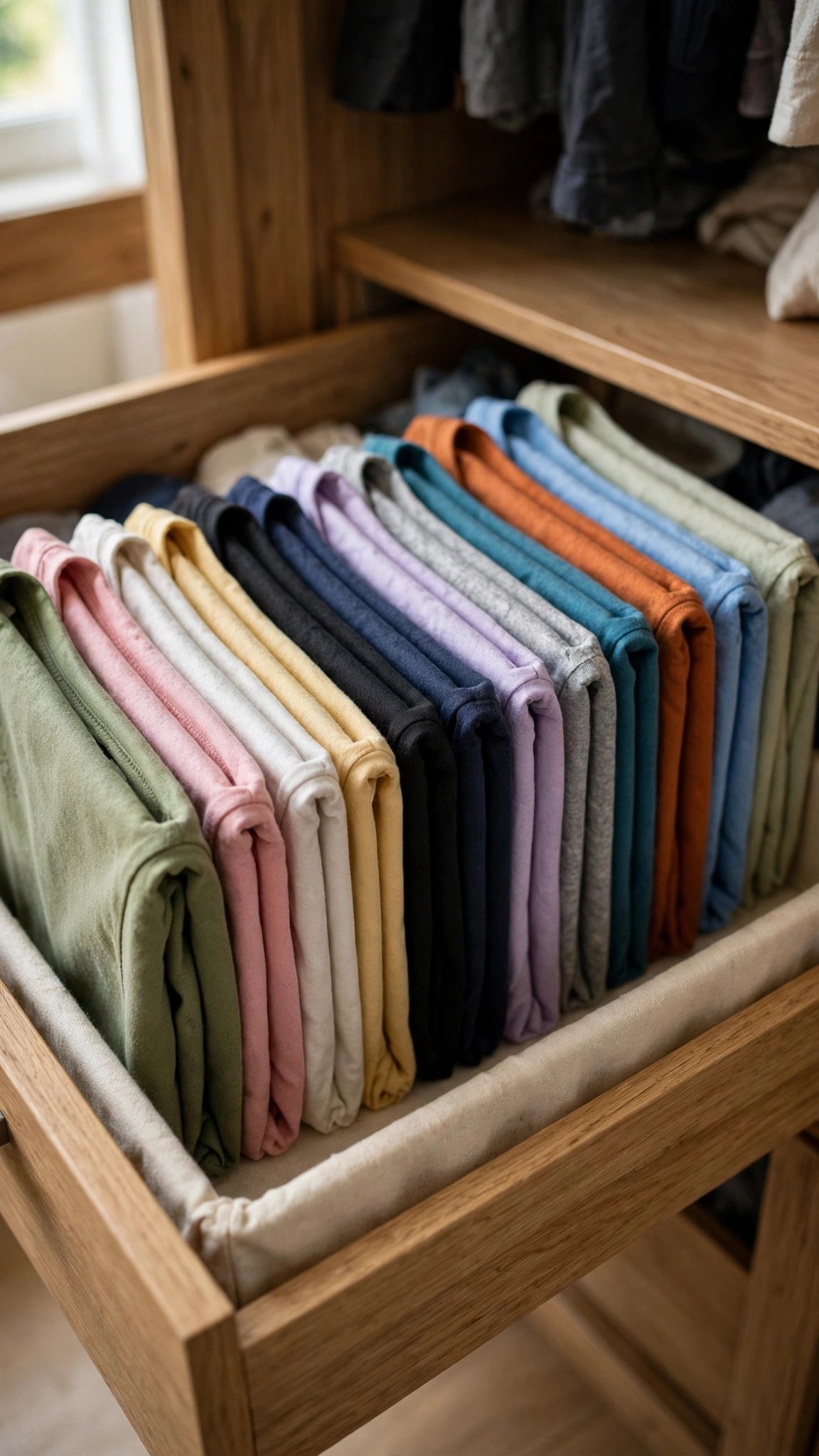
Accessories are the first things to get lost in a wardrobe — belts curled in a corner, scarves draped over a random hook, sunglasses at the bottom of a drawer. Give them a dedicated zone instead: one drawer, one shelf, or one section of the wardrobe where every accessory lives. When everything small has one home, nothing drifts.
Inside the zone, keep like with like: belts together, scarves together, sunglasses together. Small boxes or trays inside the drawer stop things from sliding around. The zone does not need to be big — even a single shallow drawer is enough — but having it means you stop losing the small things that finish an outfit.
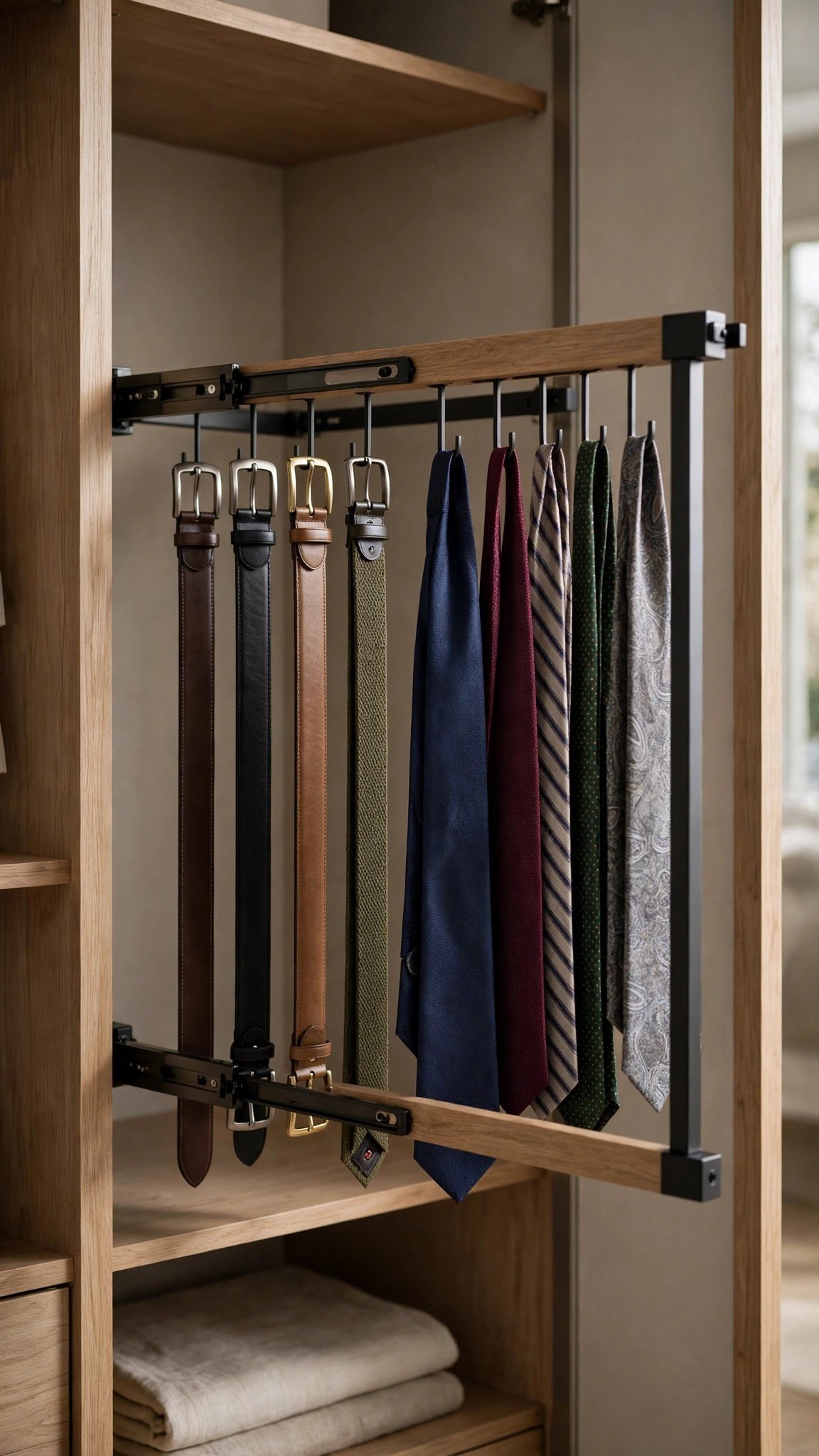
4. Pull-Out Belt and Tie Rack
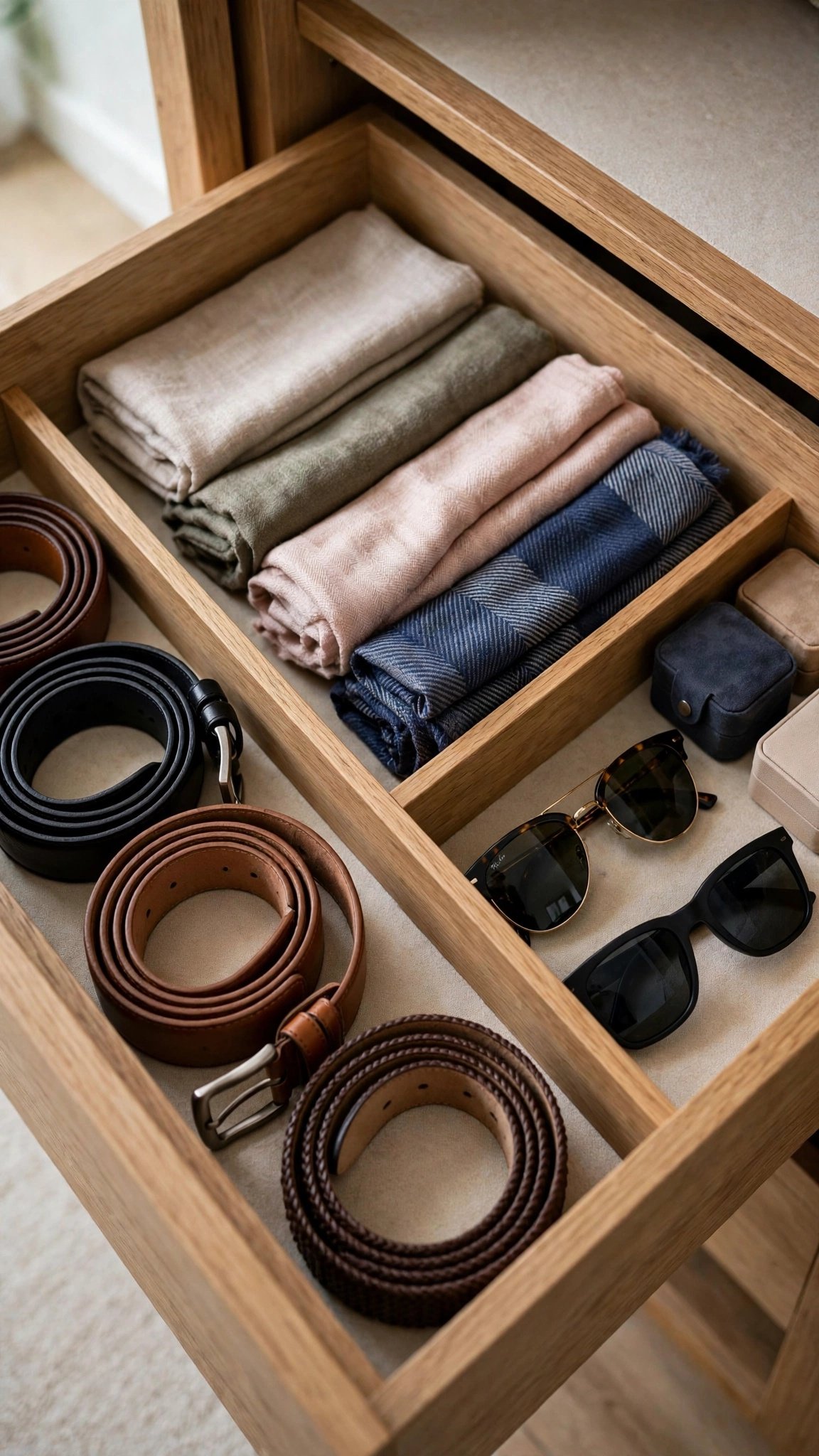
Belts and ties are awkward to store. Hung over the rail they slide off, coiled in a drawer they tangle, and draped on a hook they crease. A pull-out belt and tie rack — a slim rack that slides out from inside the wardrobe like a drawer — solves all three problems at once. Each belt and tie gets its own hook, and the whole rack slides away out of sight.
Mount the rack at a comfortable height, ideally near the shirts, so you can match a tie to a shirt without walking across the room. When you are done, it slides back in and the wardrobe looks untouched. It is a small piece of hardware that makes a daily ritual feel effortless.
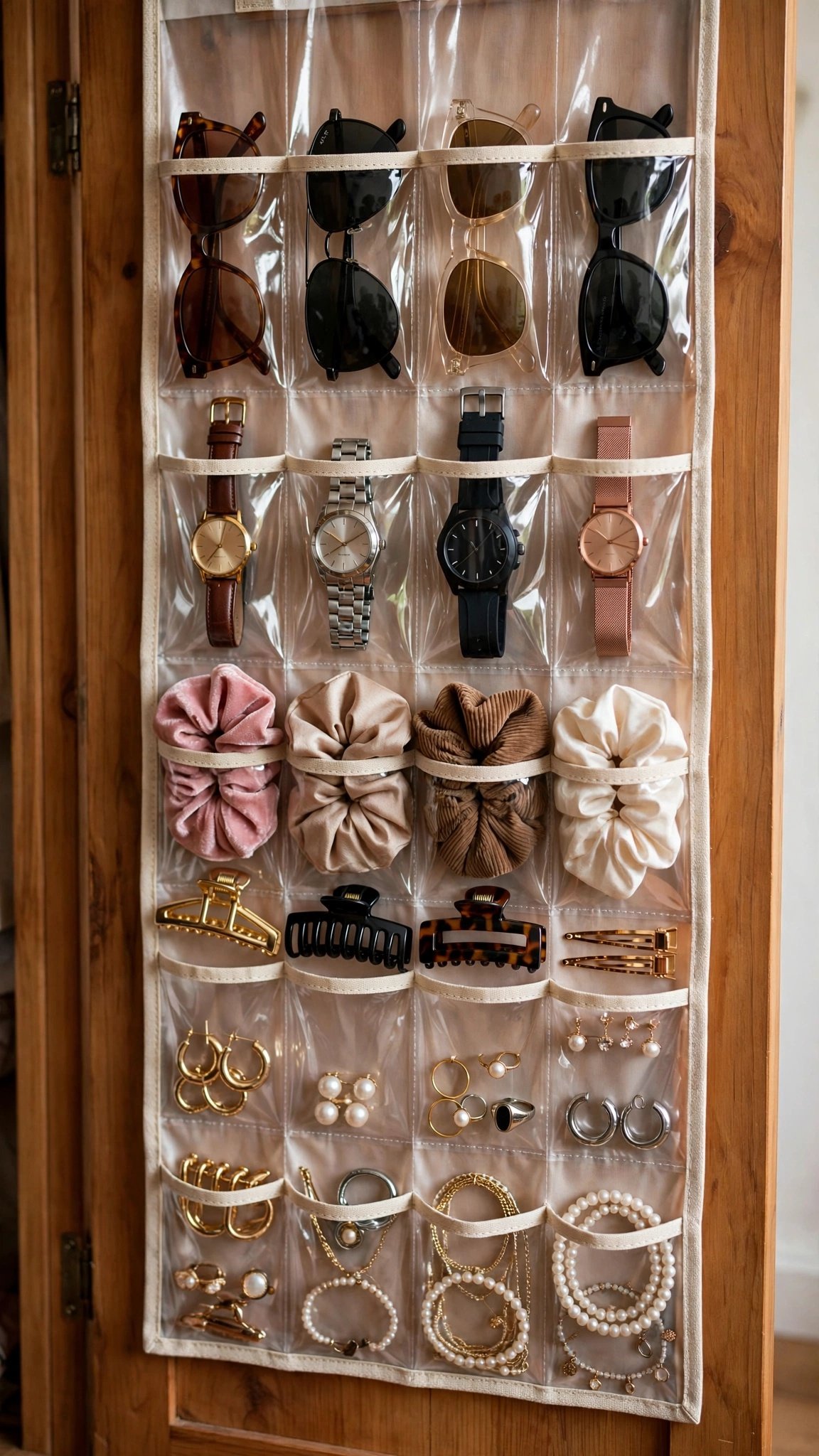
5. Inside-the-Door Pocket Organizer for Small Accessories
The inside of a wardrobe door is wasted space in most homes, but a clear pocket organizer hung there turns it into storage for all the small things that otherwise scatter: sunglasses, watches, hair accessories, spare buttons, and jewellery. The clear pockets let you see everything at once, so nothing hides at the back of a drawer.
Choose an organizer with pockets sized for accessories rather than shoes, and hang it on the door you open most. Keep the heaviest items in the lowest pockets so the door still closes smoothly. It is one of the cheapest upgrades you can make, and it frees up a whole drawer for clothes.
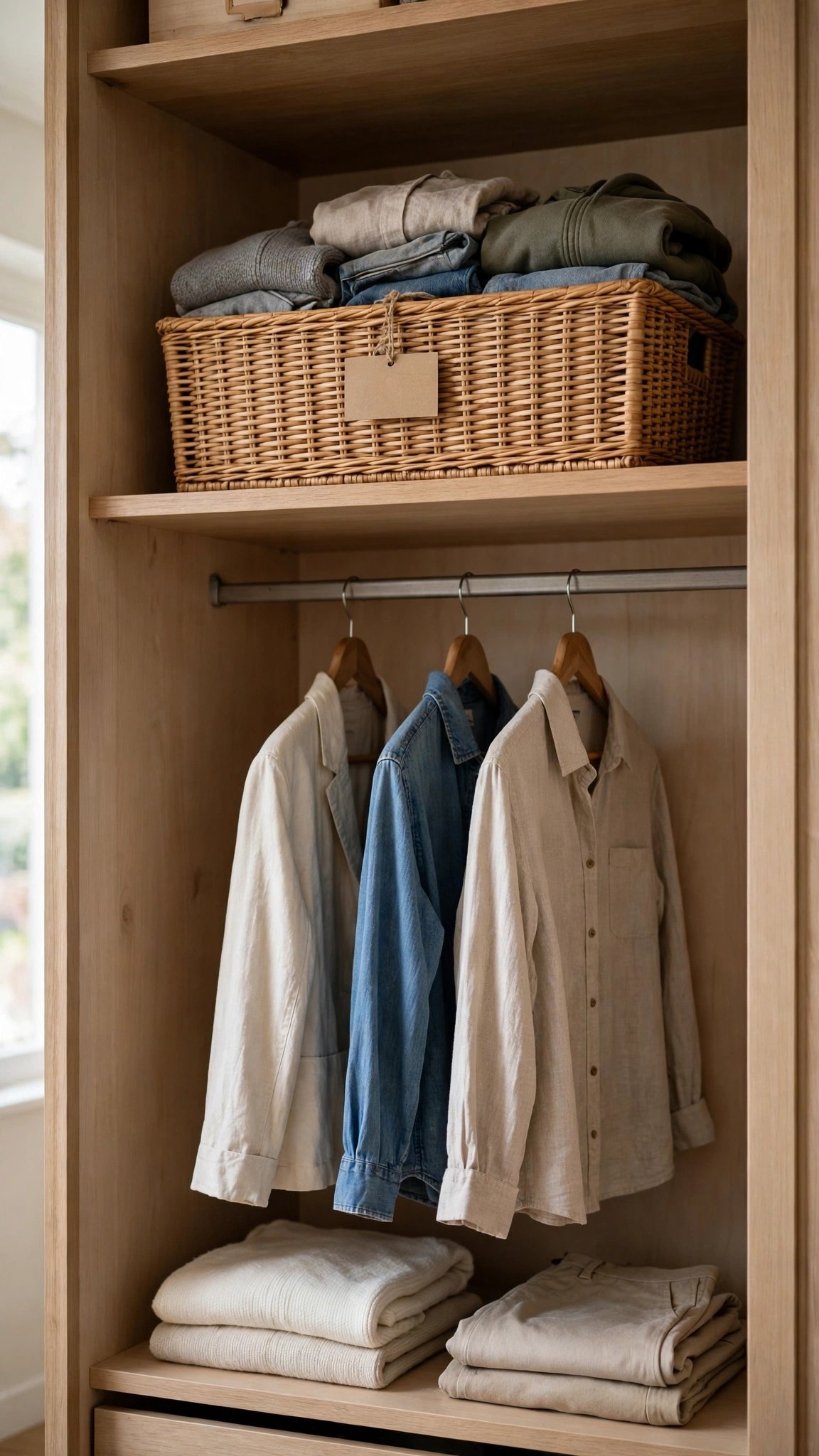
6. A “Maybe” Box for In-Between Clothes
Every wardrobe has clothes you are not sure about — the top that almost fits, the jacket you might wear one day, the gift you feel guilty about. They block the rail while you decide. A “maybe” box ends the deadlock: put the unsure items in a box, date it, and store it on a high shelf or under the bed. If you do not reach for anything in it within three months, donate the whole box unopened.
The box works because it removes the pressure of deciding right now. Your wardrobe instantly has more room, and the box gives the clothes a fair trial instead of a rushed verdict. Most people find they never open the box at all — which is the answer in itself.
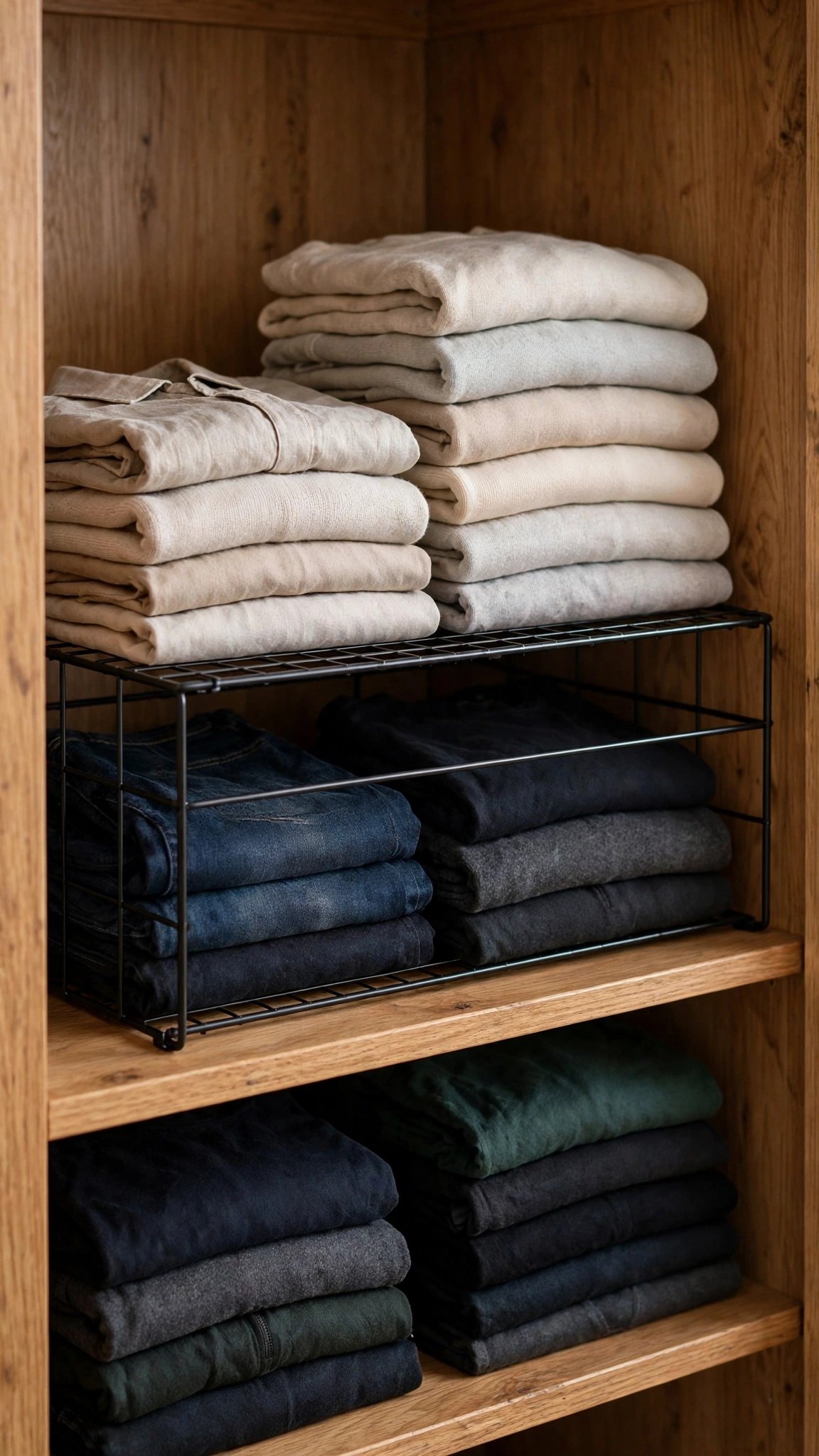
7. Stackable Shelf Risers to Double Shelf Space
A tall wardrobe shelf wastes its top half, because a stack of folded clothes can only go so high before it topples. A stackable shelf riser — a small freestanding shelf that sits on the existing shelf — adds a second level, doubling the usable surface without any drilling or building. Folded clothes go below, lighter items go above.
Risers work best for T-shirts, jeans, and knitwear, where a low stack is easy to manage. Use one riser per shelf, and keep the heaviest items on the bottom level so the riser stays stable. For a rented home, or a wardrobe you cannot modify, a riser is the fastest way to add a shelf.
8. Use the Top of the Wardrobe
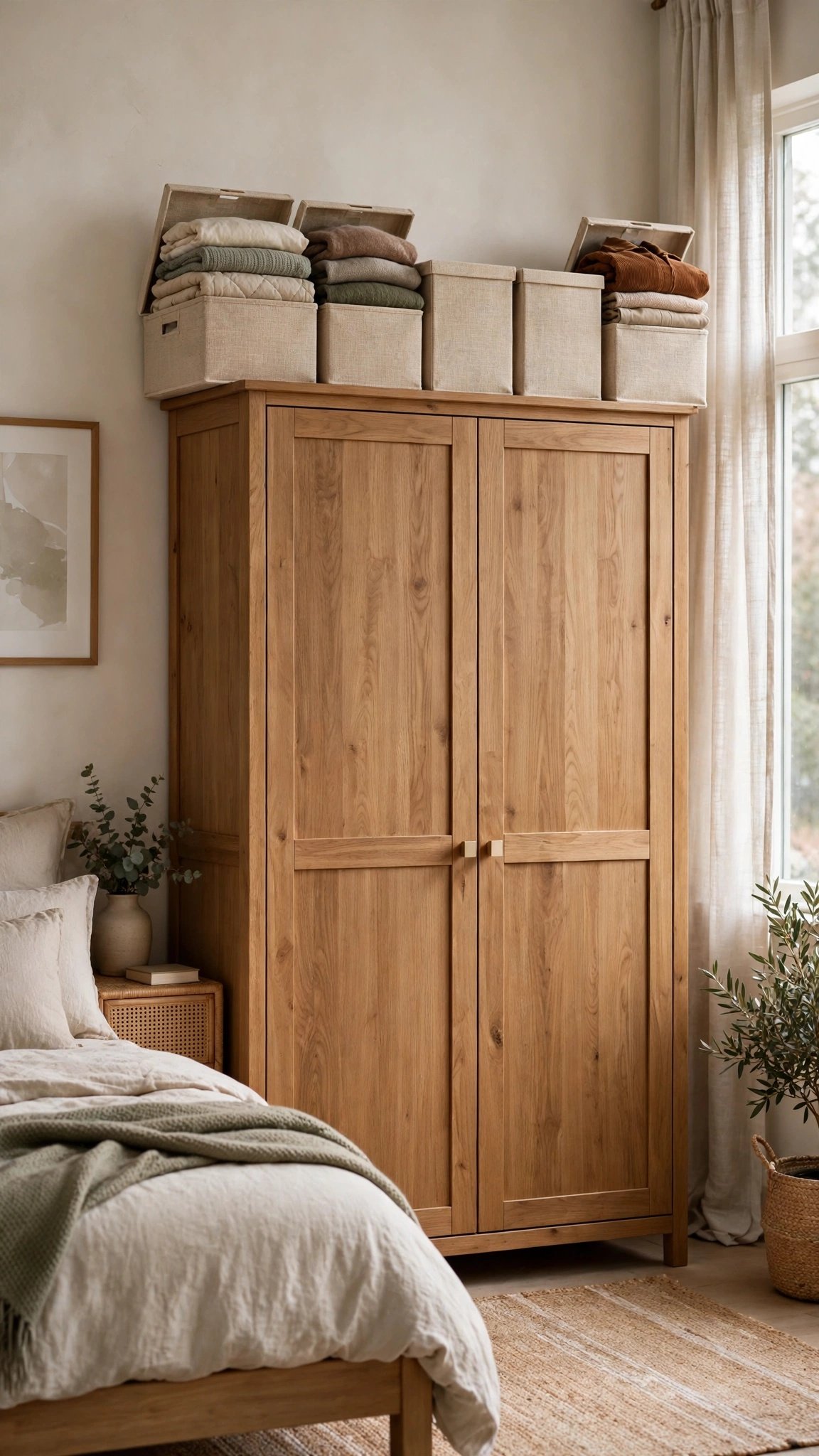
The top of a freestanding wardrobe is a whole shelf that most people leave empty, or worse, use as a dumping ground for one random bag. Put matching storage boxes or baskets up there instead, and it becomes proper storage for the things you rarely need — spare bedding, out-of-season clothes, or memory boxes. Matching boxes keep it looking deliberate rather than cluttered.
Keep the boxes light, since you will be lifting them down, and label the front of each one so you know what is inside without climbing up to check. A small step stool makes the top of the wardrobe genuinely usable. That one row of boxes can hold as much as a whole drawer.
9. A Slim Laundry Hamper Inside the Wardrobe
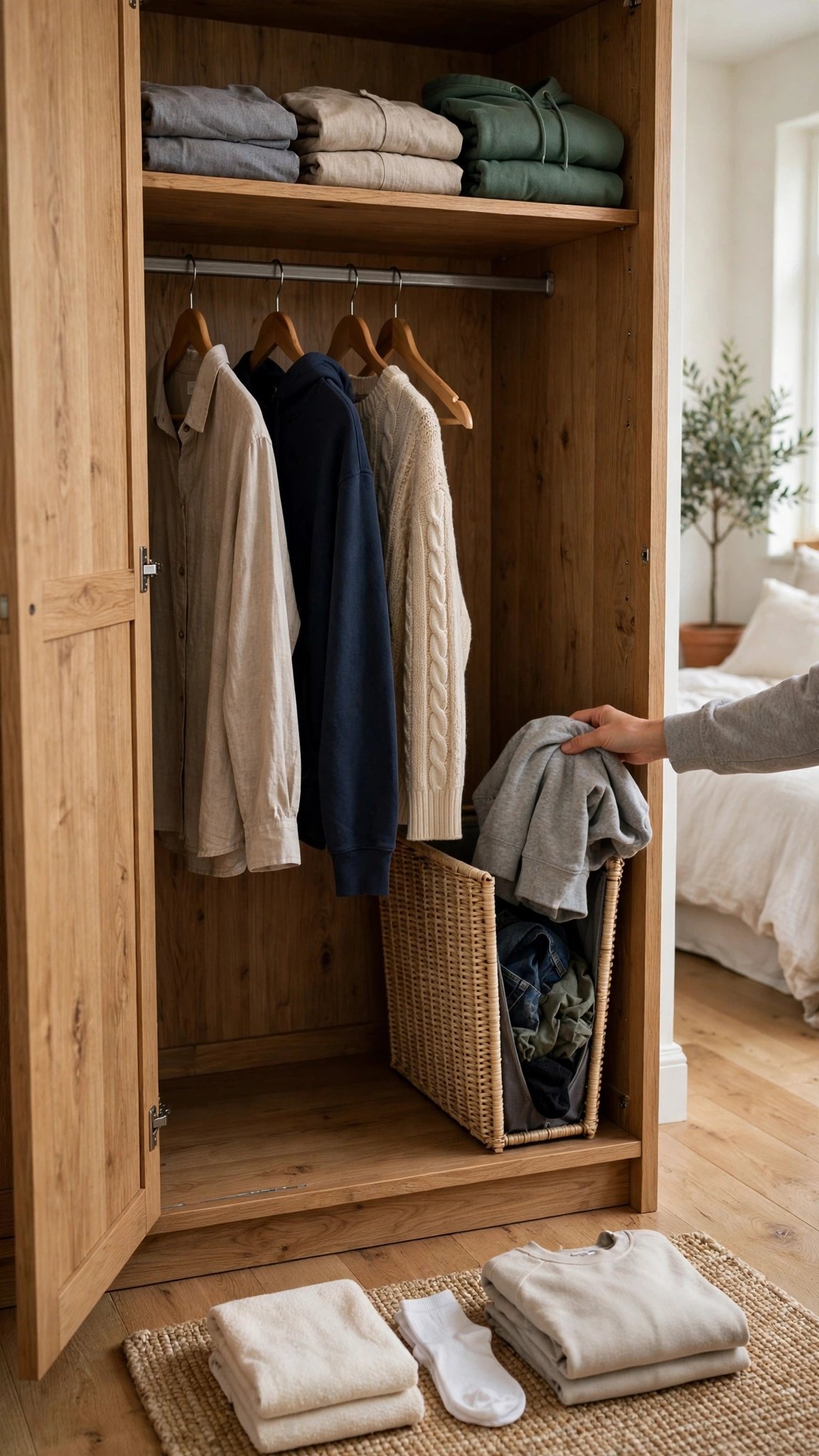
A laundry hamper takes up floor space in the bedroom, but a slim one fits neatly inside the wardrobe itself, at the bottom or in a corner. Dirty clothes go straight into the hamper the moment they come off, instead of landing on a chair or the floor, and the bedroom stays tidy without any extra effort.
Choose a hamper narrow enough to fit the gap you have, with a lid or a drawstring top so nothing spills out. Empty it on laundry day and put it straight back. Having the hamper inside the wardrobe closes the loop: clothes come out clean, go back on the rail, and come off again straight into the hamper.
10. Store Handbags Upright with Dividers
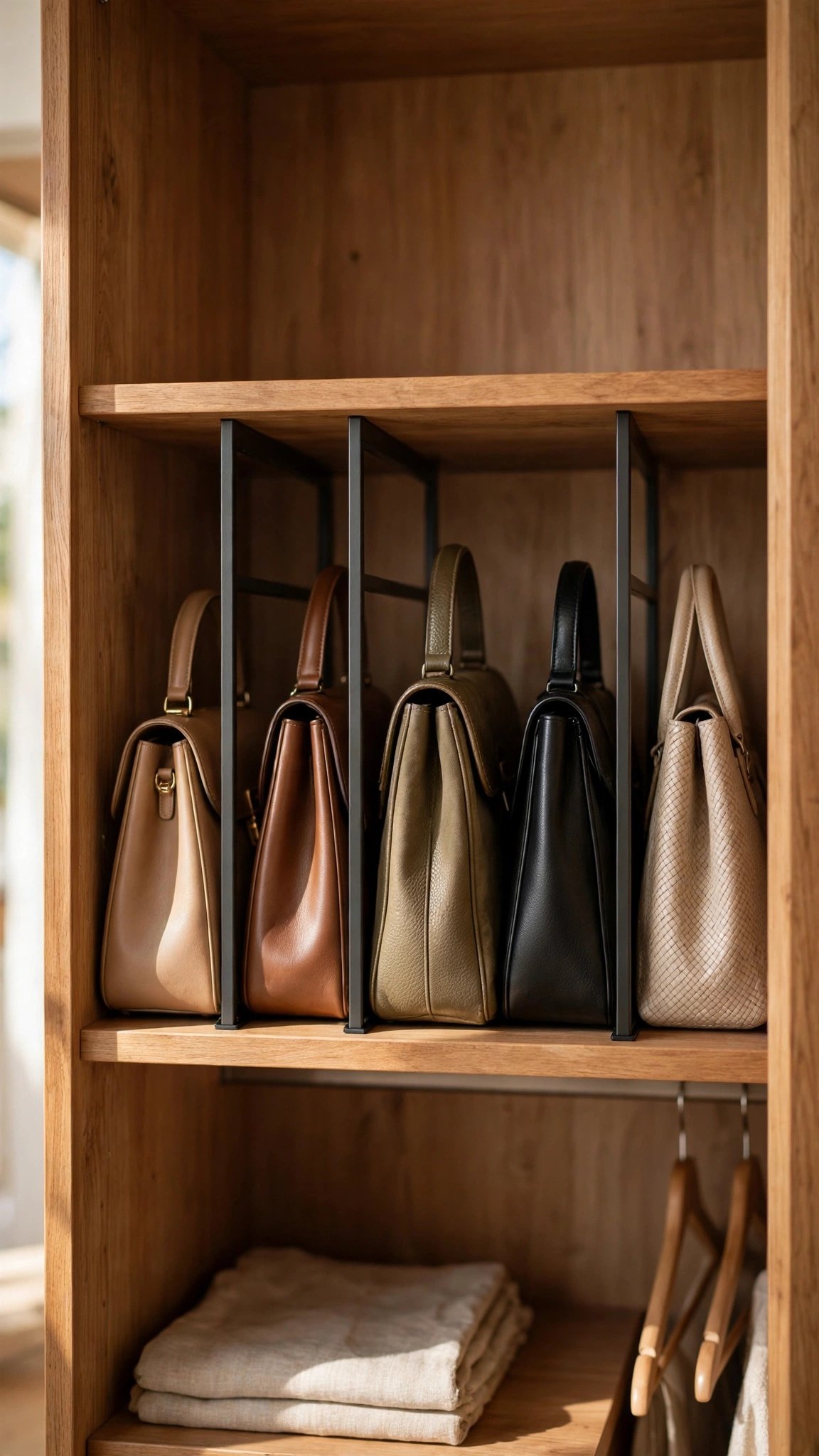
Handbags lose their shape when they are piled on top of each other, and they are hard to find when they are stacked in a heap. Storing them upright, side by side like books on a shelf, keeps their shape and lets you see every bag at once. Shelf dividers or simple bookends hold them in place so they do not flop over.
Give each bag its own slot, and keep the ones you use most at eye level. Stuff the bags you rarely use with tissue paper so they hold their shape in storage. A shelf of upright handbags looks like a boutique display — and it means you actually wear the bags you own instead of forgetting them.
11. Scarf Rings on One Hanger
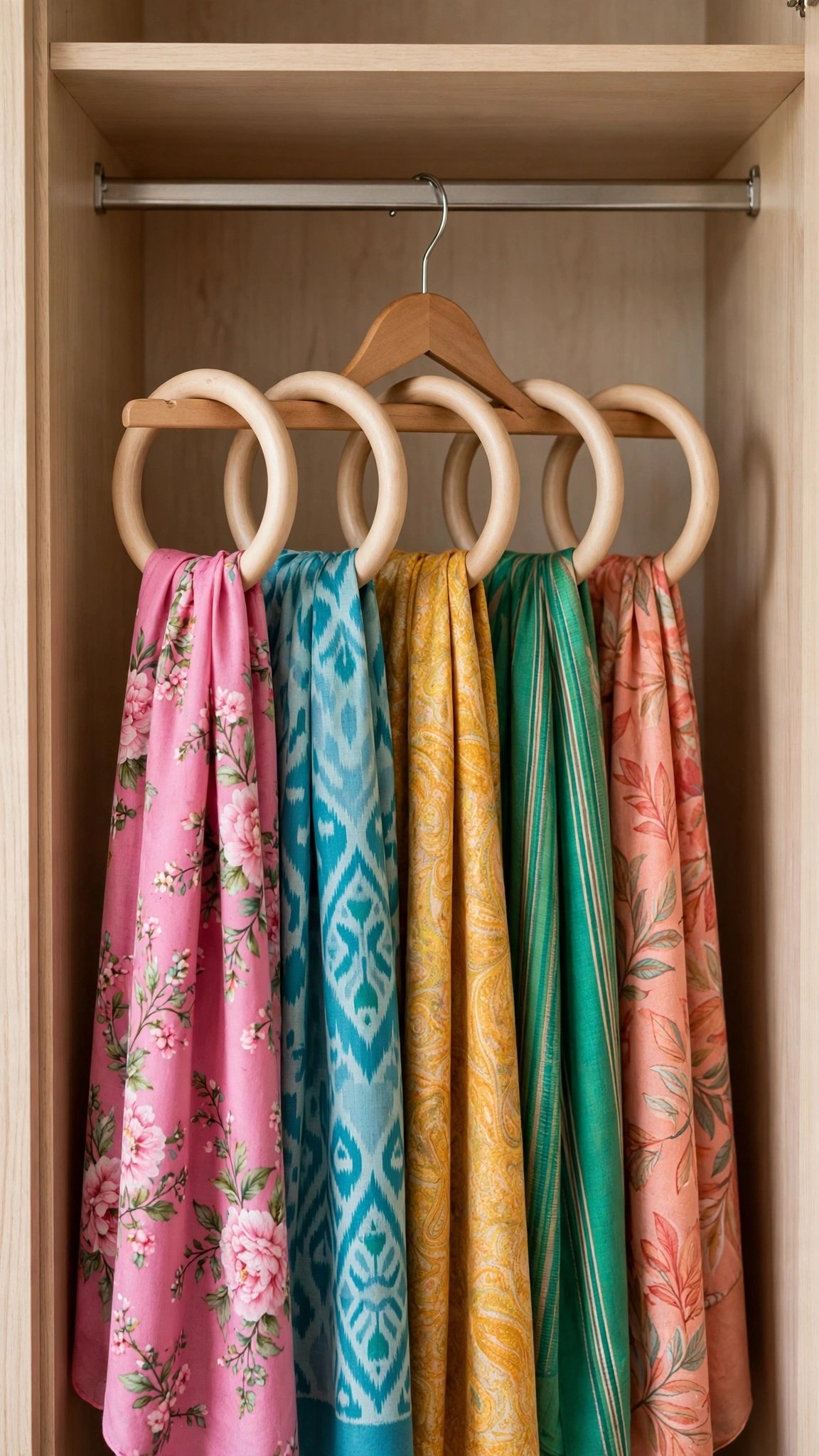
Scarves are notorious for disappearing in a wardrobe, draped over hangers or stuffed into a drawer where they crease and tangle. A set of scarf rings — large rings threaded onto a single hanger, or a hanger with built-in holes — lets you hang every scarf in one place, each one visible and easy to pull out without disturbing the rest.
Thread one scarf through each ring and hang the whole set on the rail near your coats, so you can match a scarf to an outfit in seconds. The rings keep the scarves from slipping off, and because they all hang vertically, they take up almost no space at all. It is a tiny accessory that ends the daily scarf hunt.
12. A Pegboard Panel for Accessories
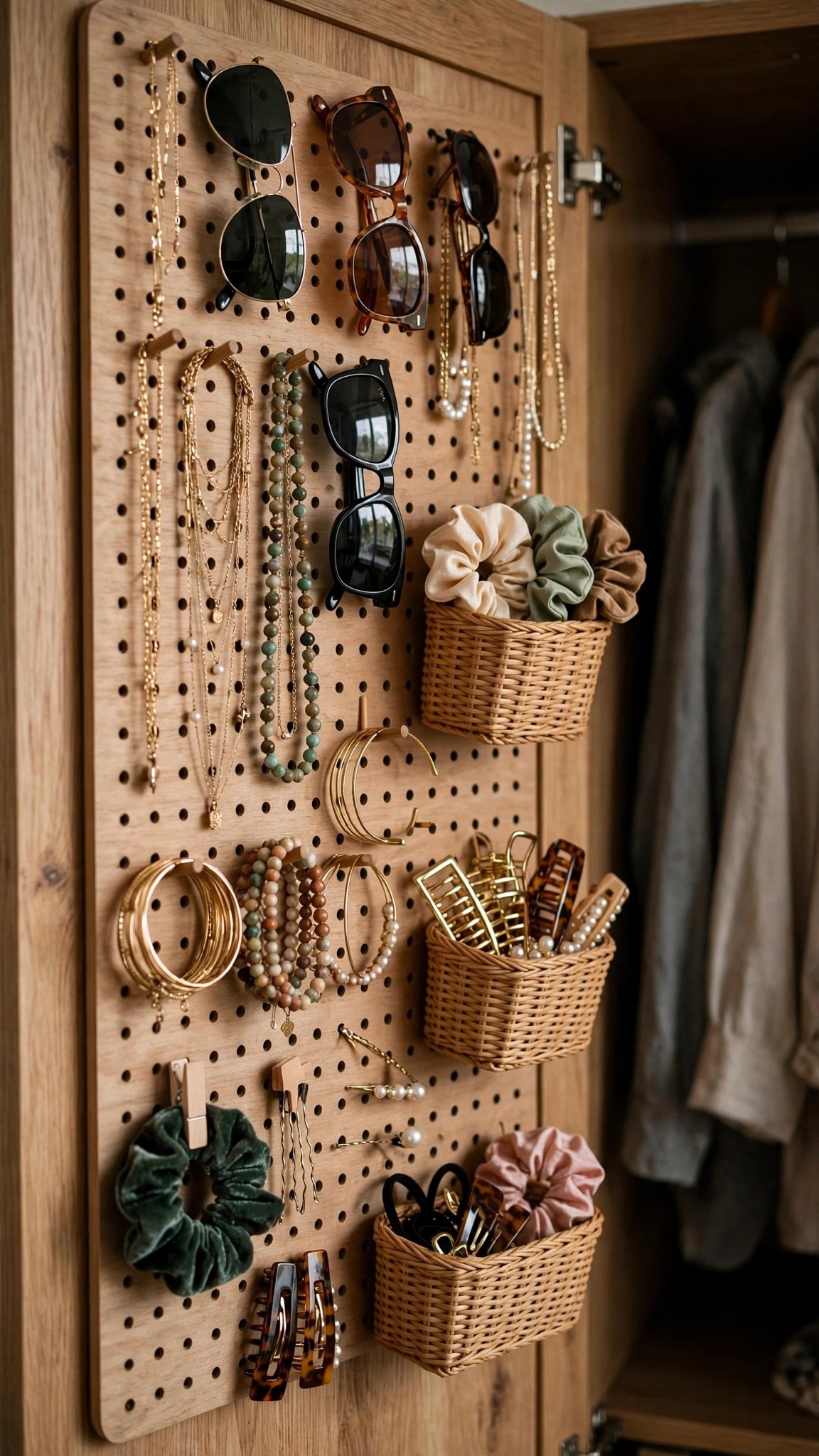
A pegboard panel fixed to the inside of a wardrobe door, or on the wall beside the wardrobe, turns a flat surface into flexible storage. Hooks, small baskets, and clips hold necklaces, bracelets, sunglasses, and hair accessories, all visible at a glance. Move the hooks around whenever your collection changes, and the board changes with it.
Keep the pegboard for accessories only, not for clothes, so it stays tidy and useful. Hang the pieces you wear most at eye level and the rest below. A pegboard makes getting dressed feel like choosing from a display rather than digging through a drawer, and it costs very little to set up.
13. Keep Everyday Items at Eye Level
Every wardrobe has prime real estate — the rail and shelf at eye level — and dead zones at the very top and very bottom. The everyday items, the clothes you reach for three or four times a week, should live in the prime zone, while the rarely worn pieces go up high or down low. It sounds obvious, but most wardrobes are organised the other way round, with the favourite shirt buried at the back.
Do a quick audit: pull out the ten things you wore most in the last month and move them to eye level. Move the occasion wear and the out-of-season clothes to the top shelf. The change takes fifteen minutes, and it makes every morning easier, because the clothes you actually want are the first ones you see.
14. Heavy Low, Light High
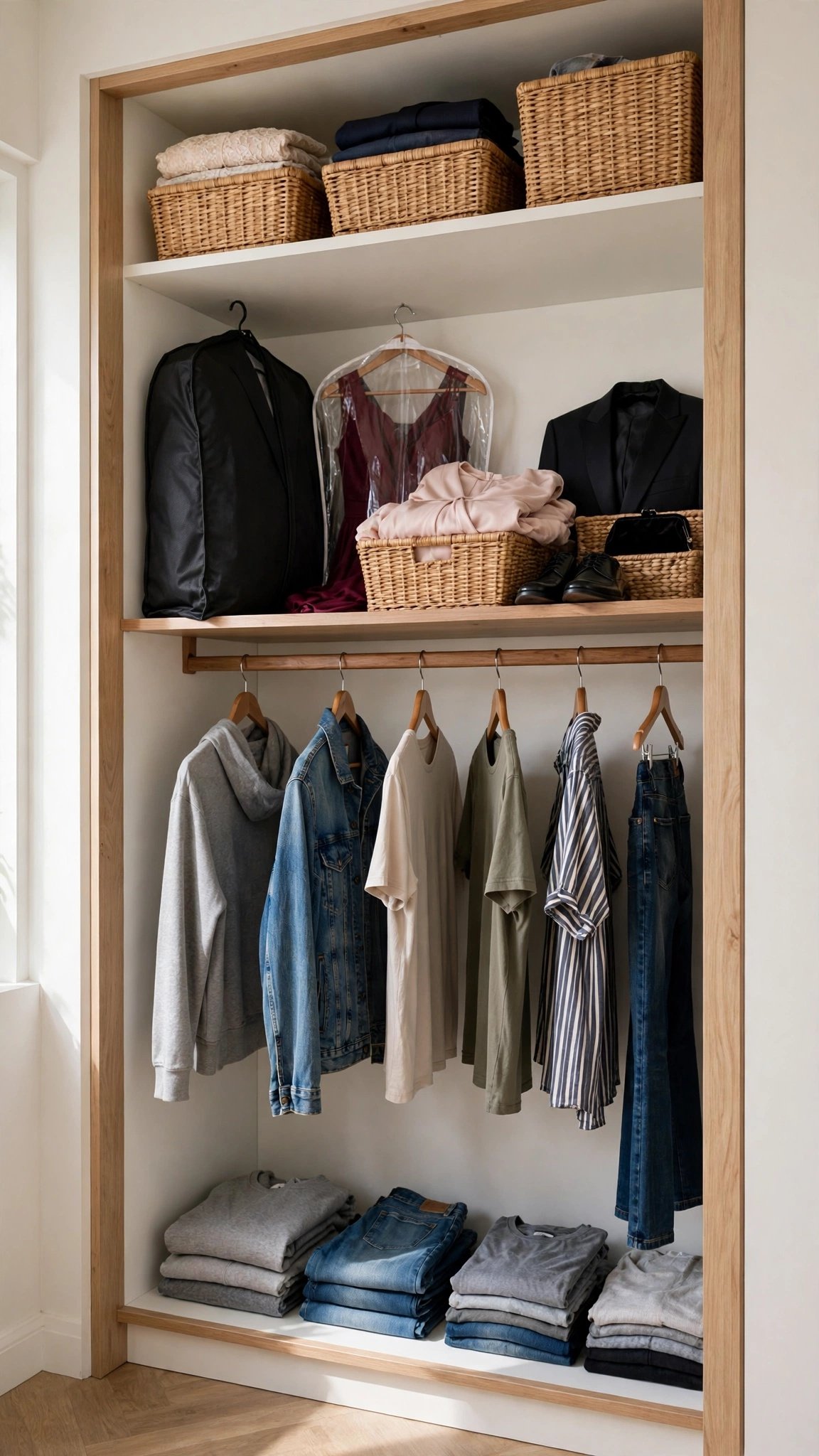
A wardrobe is easier to use — and safer — when heavy things live low and light things live high. Heavy jeans, thick knitwear, and full storage boxes go on the bottom shelves, where they are easy to lift and cannot fall on you. Light things like scarves, spare bedding, and empty bags go on the top shelf, where their weight does not matter.
This rule also protects the wardrobe itself: heavy loads on a high shelf can bow the shelf over time, while the same weight at the bottom is fully supported. When you put something away, ask yourself one question — is this heavy or light? — and let the answer choose the shelf. It is a habit that keeps the wardrobe sturdy and your mornings safe.
15. A Photo Inventory of Your Wardrobe
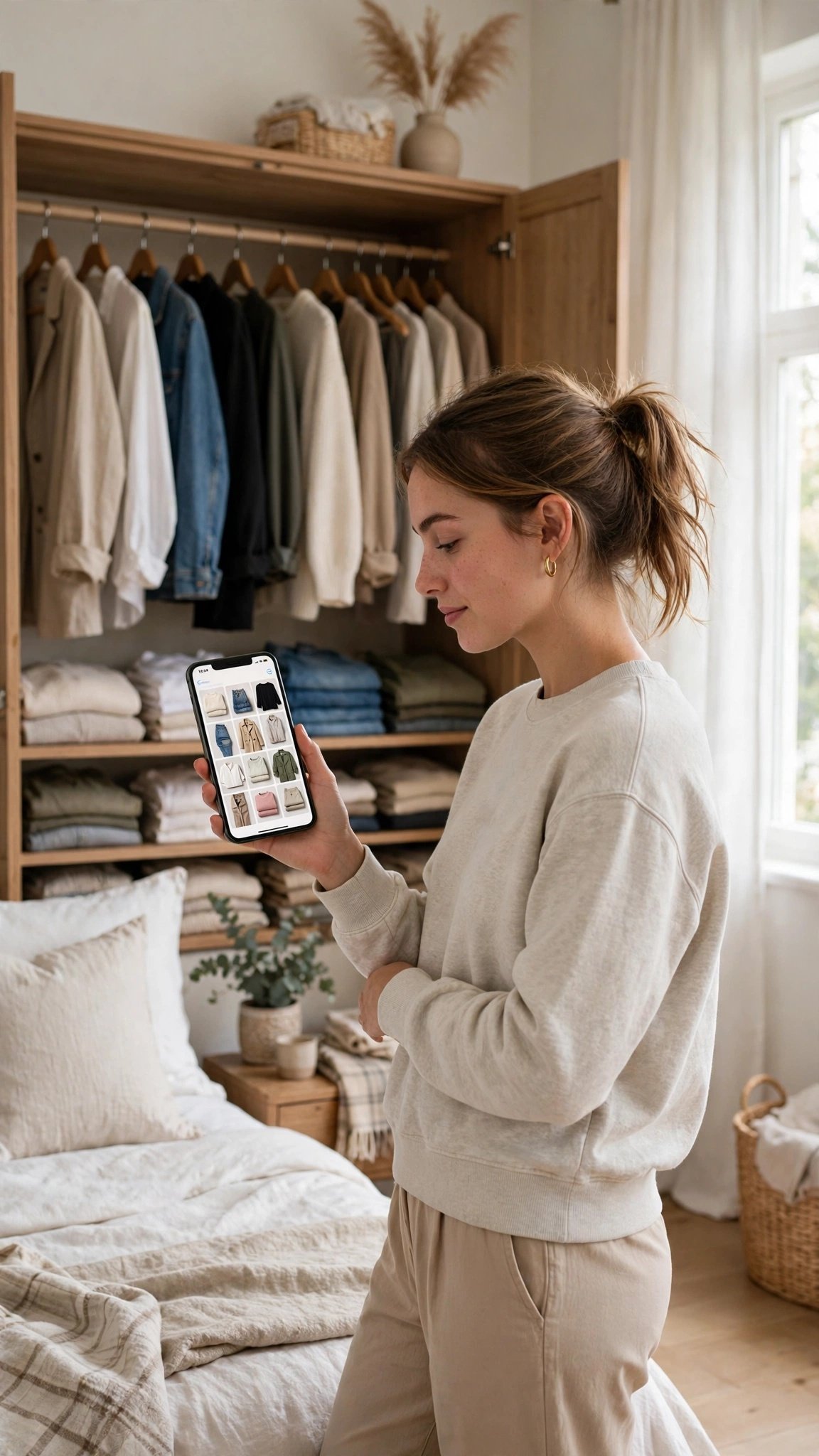
When you cannot see everything you own, you buy duplicates and forget pieces you love. A photo inventory — a quick photo of each item, kept in a folder on your phone or in a wardrobe app — fixes that. You can scroll through your whole wardrobe on the train, plan outfits before you get home, and check whether you already own something before you buy it.
Take the photos in one session, hanging each item against a plain background, and group them by category in the folder. It takes an afternoon, but the inventory pays for itself the first time it stops you buying a fifth black top. It also makes decluttering easier, because you can see the whole collection at once and spot the pieces you never wear.
Frequently Asked Questions
1. How do I organise a wardrobe with no drawers?
Use the rail and shelves instead: file-fold clothes into shelf risers or stackable boxes, hang a fabric shelf organizer from the rail, and use the inside of the door for accessories. A slim rolling cart beside the wardrobe can hold the small things a drawer normally would.
2. What is the best way to organise a small wardrobe?
Zone it first — everyday clothes at eye level, occasion wear up high — then add space with shelf risers and cascading hangers. Keep only the clothes you actually wear in the wardrobe and store the rest elsewhere, and follow the one in, one out rule so it never fills up again.
3. How often should I declutter my wardrobe?
Do a quick pass every season and a deeper one once a year. The “maybe” box makes it painless: unsure items go in the box, and anything still in there after three months leaves the house. In a small wardrobe, even five items leaving makes a visible difference.
4. How do I stop my wardrobe from getting messy again?
Give everything a fixed home — a zone, a shelf, or a hook — and put things back in that home every time. The two habits that matter most are the nightly reset, hanging tomorrow’s outfit in one place, and the one in, one out rule for new purchases.
Final Thoughts
A wardrobe is not just a place to keep clothes — it is the first thing you use every morning, and it sets the tone for the day. Zones, better folding, and a home for every accessory turn the same piece of furniture into a system that works for you instead of against you. Start with the idea that fixes your biggest frustration, whether that is the buried drawer or the lost scarf, and let the rest follow. The wardrobe you already have is probably enough — it just needs organising.